
Detailed Analysis of 24 mesh stainless steel screen Applications and Performance

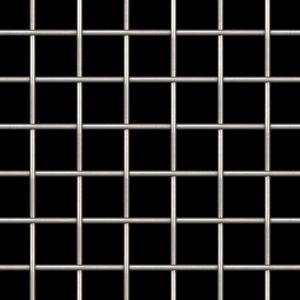
In the demanding world of construction and civil engineering, the longevity and structural integrity of paved surfaces are paramount. Driveway wire mesh stands as a critical component in achieving these goals, offering a robust and cost-effective method for reinforcing concrete slabs against cracking and failure. This high-tensile steel reinforcement is strategically placed within the concrete pour to absorb tensile stresses, effectively distributing loads and minimizing the impact of ground movement and thermal expansion. For B2B buyers, contractors, and project managers sourcing materials for commercial, industrial, or residential developments, selecting the right driveway reinforcement mesh is a decision that directly impacts project durability, maintenance costs, and client satisfaction. This comprehensive product page details the specifications, benefits, and applications of our premium-grade driveway wire mesh, engineered to meet the highest international standards.
Our driveway wire mesh, also commonly referred to as welded wire fabric (WWF) or concrete reinforcement mesh, is manufactured from high-quality, low-carbon steel wire. The wires are precision-welded at every intersection using advanced electric resistance welding technology, creating a uniform grid of exceptional strength and stability. This product is specifically engineered for use in concrete ground slabs, including driveways, parking lots, warehouse floors, and access roads. By integrating this mesh into the concrete matrix, you create a composite material that significantly enhances the slab's ability to withstand heavy vehicular traffic, point loads, and environmental stresses. Unlike loose rebar, which requires tedious tying and spacing, driveway reinforcement mesh arrives in easy-to-handle sheets or rolls, ensuring faster installation, consistent reinforcement placement, and superior on-site efficiency for your projects.
Our driveway wire mesh is produced in a range of standard sizes and specifications to suit various load-bearing requirements and slab thicknesses. The specification is typically denoted by a mesh style (e.g., A142, B196), where the letter indicates the wire type and the number represents the cross-sectional area in square millimeters per meter width. Below is a detailed table of our most commonly supplied specifications for driveway and pavement applications.
| Mesh Designation | Wire Diameter (Longitudinal) mm | Wire Diameter (Transverse) mm | Mesh Size (Pitch) mm | Sheet Dimensions (Standard) m | Typical Application |
|---|---|---|---|---|---|
| A142 | 6.0 | 6.0 | 200 x 200 | 2.4 x 6.0 / 4.8 x 2.4 | Light-duty domestic driveways, paths, shed bases. |
| A193 | 7.0 | 7.0 | 200 x 200 | 2.4 x 6.0 / 4.8 x 2.4 | Standard residential driveways, garage floors. |
| A252 | 8.0 | 8.0 | 200 x 200 | 2.4 x 6.0 / 4.8 x 2.4 | Heavy-duty driveways, commercial parking, light industrial floors. |
| B196 | 7.0 | 7.0 | 100 x 200 | 2.4 x 6.0 | High-specification pavements, areas with poor subgrade, heavy vehicular traffic. |
| B385 | 10.0 | 10.0 | 100 x 200 | 2.4 x 6.0 | Industrial yards, logistics hubs, areas subject to HGV traffic. |
Note: Custom sizes, wire diameters, sheet dimensions, and coatings (galvanized, epoxy) are available upon request for large-scale or specialized projects.
The versatility of driveway wire mesh extends beyond simple residential applications. It is a fundamental material in a wide array of paving and slab projects where performance and durability are non-negotiable.
Choosing to incorporate our driveway wire mesh into your concrete projects delivers a compelling return on investment through both performance and economic benefits.
In a competitive international market, partnering with a reliable and expert supplier is crucial. We distinguish ourselves through an unwavering commitment to quality, service, and client success.
A: The "A" designation denotes a square mesh (e.g., 200mm x 200mm), where the longitudinal and transverse wires are of the same diameter and spacing. "B" type mesh is a rectangular mesh (e.g., 100mm x 200mm), offering closer spacing in one direction for higher reinforcement density, making it suitable for heavier loads or weaker subgrades.
A: For optimal performance, the driveway wire mesh should be positioned in the upper third of the slab's thickness. Typically, it is supported on "chairs" or spacers approximately 2 inches (50mm) from the sub-base. This placement ensures it effectively resists the tensile stresses that occur in the bottom of the slab under load.
A: Yes, absolutely. Structural synthetic or steel fibers can be used in conjunction with welded wire mesh. This combination is often specified for high-performance floors, offering enhanced crack control and impact resistance from the fibers, alongside the primary structural reinforcement from the mesh.
A: We do offer hot-dip galvanized versions. Galvanization is recommended for projects in coastal environments, where de-icing salts are frequently used, or in any application where long-term protection against corrosion is a priority, thereby extending the service life of the reinforcement and the concrete structure.
A: Quantity is calculated based on the total area to be reinforced, with allowance for standard sheet sizes and typical lapping requirements (usually a minimum of one full mesh spacing). Our technical sales team can assist you with precise take-offs and quotations based on your project drawings to ensure you order the correct amount with minimal waste.
A: Mesh is typically bundled securely with steel strapping on wooden pallets for safe ocean or land freight. Lead times vary based on specification, quantity, and destination. We provide clear production and shipping schedules upon order confirmation and maintain proactive communication throughout the logistics chain.
PREV:2x4 welded wire mesh
NEXT:wire mesh tile
Detailed Analysis of 24 mesh stainless steel screen Applications and Performance

Understanding 30 Mesh Stainless Steel Screen Applications and Material Properties
Understanding 16 Mesh Stainless Steel Screen Applications and Performance
Understanding the Versatility of 10 mesh stainless steel screen Applications
Understanding 20 mesh stainless steel screen Applications and Performance
Ready to move your project from technical blueprint to precision reality? Whether you require large-scale CNC machining, complex structural assembly, or specialized fabrication with rare alloys like Titanium and Nickel, our engineering team is prepared to assist. At metalfabricationcn.com, we solve the manufacturing challenges that others find too large or too complex. Reach out today to discuss your specific requirements, and let us help you optimize your supply chain with ISO 9001 certified reliability.