Strategic Custom Metal Fabrication Services

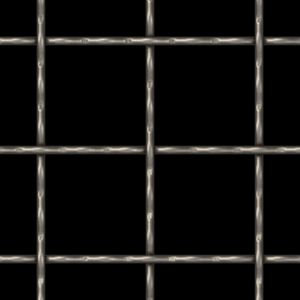
In the demanding world of modern construction, the integrity of concrete structures is paramount. Wire mesh for concrete reinforcement stands as a critical, time-tested solution for enhancing the tensile strength and durability of concrete slabs, walls, and pavements. This welded wire fabric (WWF) is a prefabricated grid of high-strength steel wires, precision-welded at each intersection to create a robust, two-dimensional reinforcement mat. Designed for seamless integration into concrete pours, it effectively controls cracking caused by shrinkage and thermal stresses, while distributing loads evenly across a wider area. For contractors, engineers, and procurement managers sourcing reliable building materials, understanding the specifications and applications of quality welded wire mesh is a fundamental step in ensuring project longevity, safety, and compliance with international building codes.
Our wire mesh for concrete reinforcement is engineered to exceed industry standards, providing a dependable backbone for your most critical projects. We focus on manufacturing excellence to deliver a product that performs consistently from the first roll to the last.
Selecting the correct wire mesh for concrete reinforcement requires careful attention to technical parameters. The following table outlines our standard product range, compliant with major international standards including ASTM A1064 and BS 4483. Custom sizes, wire spacings, and sheet dimensions are available upon request for specialized engineering requirements.
| Mesh Designation | Wire Diameter (mm) | Longitudinal Spacing (mm) | Transverse Spacing (mm) | Cross-Sectional Area (cm²/m) | Standard Sheet Size (m) | Primary Application |
|---|---|---|---|---|---|---|
| A142 | 6.0 | 200 | 200 | 1.42 | 2.4 x 6.0 | Light-duty slabs, paths |
| A193 | 7.0 | 200 | 200 | 1.93 | 2.4 x 6.0 | Domestic floor slabs |
| A252 | 8.0 | 200 | 200 | 2.52 | 2.4 x 6.0 | Heavier duty slabs, raft foundations |
| A393 | 10.0 | 200 | 200 | 3.93 | 2.4 x 6.0 | Heavy-duty industrial floors, paving |
| B1131 | 12.0 (Long.) / 8.0 (Trans.) | 100 | 200 | 11.31 | 2.4 x 4.8 | Heavy structural walls, culverts |
| C785 | 10.0 (Long.) / 6.0 (Trans.) | 100 | 400 | 7.85 | 2.4 x 4.8 | Walls, shotcrete, trench mesh |
Note: All wires conform to a minimum yield strength of 485 MPa (70,000 psi). Specifications are subject to manufacturing tolerances as per relevant standards. Galvanized and coated meshes have slightly increased wire diameters.
The versatility of wire mesh for concrete reinforcement makes it indispensable across a broad spectrum of construction and civil engineering projects. Its primary function is to provide secondary reinforcement, controlling shrinkage and temperature cracking, while also serving as primary structural reinforcement in many applications.
Choosing the right reinforcement strategy impacts project cost, schedule, and structural performance. Our wire mesh for concrete reinforcement offers a compelling set of advantages that explain its widespread global adoption.
In the competitive landscape of international construction supply, partnership matters. We are not just a vendor; we are a technical partner committed to the success of your projects through reliable materials and expert support.
Rebar (reinforcing bar) is typically used as the primary structural reinforcement for carrying tensile and compressive loads in beams, columns, and heavily loaded slabs. Wire mesh for concrete reinforcement is primarily used for crack control (shrinkage and temperature reinforcement) in slabs-on-grade, walls, and pavements, though heavier meshes (like A393, B1131) can serve as primary reinforcement in many applications. Mesh offers faster installation and better crack control for surface elements.
The required specification should always be determined by the project's structural engineer based on design loads, slab thickness, subgrade conditions, and exposure class. Common specifications like A142, A193, and A252 are used for progressively heavier-duty slabs. We strongly recommend consulting the project's technical drawings and specifications before ordering.
For ground-supported slabs (slabs-on-grade), wire mesh for concrete reinforcement should be positioned in the upper third of the slab, typically 2 inches below the surface. This placement is most effective for controlling shrinkage cracks that originate at the surface. It should be supported on chairs or dobies to ensure correct positioning during the concrete pour.
Yes, we supply hot-dip galvanized wire mesh for concrete reinforcement conforming to ASTM A1064. Galvanization is recommended for concrete exposed to de-icing salts (e.g., bridge decks, parking garages), in coastal marine environments, or in structures where long-term corrosion resistance is critical to durability, potentially extending service life significantly.
We supply both. Standard flat sheets (e.g., 2.4m x 6.0m) are common for heavy meshes and ease of handling on site. Lighter meshes (A142, A193) are often available in rolls (typically 2.4m wide x 30-50m long) for faster coverage of large areas like warehouse floors, reducing the number of overlaps required.
Mesh sheets must be overlapped by a minimum distance, usually specified as a multiple of the wire spacing (e.g., one full grid spacing plus 50mm). The overlapping wires must be securely tied together with soft iron wire to ensure continuity of reinforcement. Detailed lap splice requirements are provided in project specifications or relevant building codes.
PREV:wire mesh containers
NEXT:6x6 6 6 wire mesh
Strategic Custom Metal Fabrication Services

Understanding 30 Mesh Stainless Steel Screen Applications and Material Properties

Understanding the Versatility of 10 mesh stainless steel screen Applications

Understanding 1mm Stainless Steel Wire Mesh for Filtration and Industrial Applications
Detailed Analysis of 24 mesh stainless steel screen Applications and Performance
Ready to move your project from technical blueprint to precision reality? Whether you require large-scale CNC machining, complex structural assembly, or specialized fabrication with rare alloys like Titanium and Nickel, our engineering team is prepared to assist. At metalfabricationcn.com, we solve the manufacturing challenges that others find too large or too complex. Reach out today to discuss your specific requirements, and let us help you optimize your supply chain with ISO 9001 certified reliability.