
Comprehensive Guide to Durable 316 Stainless Steel Security Screens

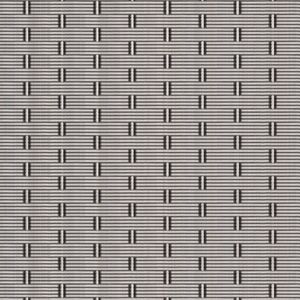
In the demanding world of industrial processing, separation, and quality control, precision is paramount. Our professionally engineered wire mesh sieve stands as a cornerstone tool for countless operations, from mining and aggregates to pharmaceuticals and food production. Designed for durability, accuracy, and consistent performance, this sieve is crafted to meet the rigorous standards of international industries. Whether you are classifying raw materials, ensuring product uniformity, or conducting precise laboratory analysis, a reliable wire mesh sieve is an indispensable asset. This product page details the superior construction, versatile applications, and tangible benefits that make our sieves the preferred choice for B2B buyers worldwide.
Our wire mesh sieve is a high-performance screening tool constructed from robust, corrosion-resistant materials. It features a precisely woven mesh panel, securely mounted within a durable frame to withstand repetitive use in both laboratory and light industrial environments. The core function of any wire mesh sieve is to separate particles by size, a critical process for quality assurance, grading, and purification. Unlike inferior alternatives, our sieves are manufactured with meticulous attention to mesh integrity and aperture uniformity, ensuring that every separation is accurate and repeatable. This commitment to precision translates directly to improved product quality, reduced waste, and enhanced process efficiency for your operations.
| Parameter | Specification | Details / Options |
|---|---|---|
| Mesh Material | Stainless Steel, Brass, Bronze, or Synthetic | Type 304 (standard), Type 316 (acid/corrosion resistance), Brass for non-sparking environments. |
| Frame Material | Stainless Steel or Brass | Sturdy construction with reinforced edges to prevent warping. |
| Mesh Count / Aperture Size | Standard & Custom Ranges | Range from coarse (2 mesh / 9.5mm) to very fine (500 mesh / 25µm). Conforms to ISO, ASTM, and Tyler standards. |
| Diameter / Size | Multiple Standard Sizes | Common lab sizes: 3", 8", 12", 200mm, 300mm. Production sizes up to 24" or custom diameters. |
| Frame Depth | Full Height or Half Height | Full-height frames for sample retention; half-height for stacking in sieve shakers. |
| Weave Type | Plain Weave, Twilled Weave | Plain weave for standard applications; twilled weave for heavier wires and finer meshes. |
| Working Temperature | Material Dependent | Stainless steel suitable for continuous use up to 800°C (1472°F) in oxidizing atmospheres. |
The versatility of a high-quality wire mesh sieve makes it a critical component across a vast spectrum of industries. Its primary role is to ensure material consistency and purity, which are fundamental to product quality and process stability.
For grading crushed stone, sand, gravel, and ores. A durable wire mesh sieve is used to separate materials into specified size fractions for construction, concrete production, and mineral processing.
Essential for sieving powders, granules, and active ingredients to guarantee uniform particle size, which is crucial for tablet compaction, dissolution rates, and reaction consistency.
Used to sift flour, sugar, spices, and powders, and to filter liquids. Food-grade stainless steel sieves ensure hygiene and prevent contamination while classifying ingredients.
Employed in soil analysis, seed grading, and fertilizer screening. The robust construction handles abrasive materials common in agricultural testing and processing.
The backbone of particle size analysis. Precision wire mesh sieves are used in stack sets with mechanical sieve shakers to determine the particle size distribution of any granular material.
Filters pigments and other components to eliminate agglomerates, ensuring a smooth, consistent finish in the final product.
Investing in our professional-grade wire mesh sieve delivers immediate and long-term operational advantages that directly impact your bottom line.
As a trusted supplier in the international industrial marketplace, we differentiate ourselves through more than just product supply. We are a partner dedicated to your operational success.
A: The correct mesh size is determined by the size of the particles you need to retain or allow to pass. Mesh count refers to the number of openings per linear inch. A higher number means smaller openings. It's crucial to reference particle size distribution data of your material. Our technical team can assist you in selecting the appropriate wire mesh sieve aperture based on your target cut-point and industry standards.
A: A wire mesh sieve uses woven wires to create square or rectangular openings, offering a high open area for good throughput and precise sizing. A perforated plate sieve has holes punched or drilled into a solid metal sheet, typically with round holes. Wire mesh is generally preferred for finer separations and lighter materials, while perforated plates are used for heavier, more abrasive materials where strength is the primary concern.
A: For daily cleaning, use a soft brush or compressed air to remove residual particles. For more thorough cleaning, ultrasonic cleaners with a mild detergent are effective. Avoid using hard-bristled brushes or sharp tools that can distort the mesh. Always dry the sieve completely after washing to prevent corrosion. Regular visual inspection for mesh tears or frame damage is recommended.
A: Absolutely. Customization is one of our core strengths. We regularly produce wire mesh sieve units with custom diameters, frame depths, special alloys (like Monel or Hastelloy), and non-standard mesh counts to meet unique process requirements. Please contact our sales engineering department with your specifications for a quotation.
A: Yes. We can provide material certification (e.g., 3.1 Mill Certificate for stainless steel) upon request. For precision testing sieves, we offer inspection certificates that document the measured average aperture size and wire diameter, traceable to national standards, ensuring the accuracy required for certified quality control procedures.
A: Standard sieve sizes and common mesh counts are typically available for shipment within 5-10 business days. Lead times for custom-designed wire mesh sieves depend on the complexity and quantity but generally range from 3 to 6 weeks. We provide firm timelines upon order confirmation and keep you updated throughout the manufacturing process.
PREV:wire mesh deck
NEXT:wire mesh size chart
Comprehensive Guide to Durable 316 Stainless Steel Security Screens
Understanding 12 mesh stainless steel screen Applications and Technical Details

Understanding 304 Stainless Steel Mesh Screen for Industrial Applications

Detailed Analysis of 24 mesh stainless steel screen Applications and Performance

Understanding 1mm Stainless Steel Wire Mesh for Filtration and Industrial Applications
Ready to move your project from technical blueprint to precision reality? Whether you require large-scale CNC machining, complex structural assembly, or specialized fabrication with rare alloys like Titanium and Nickel, our engineering team is prepared to assist. At metalfabricationcn.com, we solve the manufacturing challenges that others find too large or too complex. Reach out today to discuss your specific requirements, and let us help you optimize your supply chain with ISO 9001 certified reliability.