
Comprehensive Guide to Durable 316 Stainless Steel Security Screens

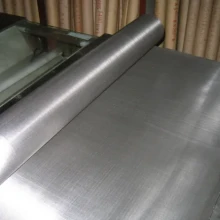
Our welded wire mesh 16 gauge represents a pinnacle of engineered strength and precision in industrial wire products. Manufactured through a high-resistance electric welding process, this mesh features a uniform grid of steel wires fused at every intersection, creating a rigid, non-slip panel with exceptional structural integrity. The 16 gauge specification indicates a wire diameter of approximately 0.0625 inches (1.6 mm), striking an optimal balance between formidable strength, manageable weight, and material efficiency. This product is a cornerstone material for contractors, fabricators, and industrial buyers seeking a reliable, versatile, and cost-effective solution for reinforcement, partitioning, and security applications. Engineered for durability and consistent performance, our welded wire mesh 16 gauge is available in a variety of sheet sizes, mesh openings, and protective coatings to meet the rigorous demands of global industrial and construction projects.
| Specification | Detail / Standard Value | Notes |
|---|---|---|
| Wire Gauge (Standard) | 16 AWG (American Wire Gauge) | Approx. 1.6 mm / 0.0625" diameter |
| Common Mesh Opening Sizes | 1" x 1", 2" x 2", 1/2" x 1/2", 4" x 4" | Other custom spacings available upon request |
| Standard Sheet Dimensions | 4' x 8', 4' x 10', 5' x 10', 1m x 2m, 1.2m x 2.4m | Rolls available for specific mesh configurations |
| Primary Material | Low-Carbon Steel Wire (AISI 1008/1010) | High-tensile steel and stainless steel options available |
| Tensile Strength | Minimum 65,000 PSI (448 MPa) | Varies with base material specification |
| Standard Finishes | Mill Finish, Electro-Galvanized, Hot-Dip Galvanized (HDG) | HDG recommended for severe outdoor corrosion resistance |
| Welding Type | Electric Resistance Welding (ERW) | Creates a strong, uniform bond at each intersection |
| Common Standards | ASTM A185, ASTM A497, ISO 9001 | Manufactured under strict quality management systems |
The inherent strength and versatility of welded wire mesh 16 gauge make it indispensable across a broad industrial spectrum. In construction, it is extensively used as reinforcement in concrete slabs, foundations, and walls to control cracking and add tensile strength, often serving as an alternative to rebar in certain applications. For security and perimeter control, this mesh is fabricated into sturdy fencing panels, machine guards, safety barriers, and window grilles, providing a robust physical deterrent. Within industrial facilities, it is employed for partitioning, shelving, storage racks, and catwalks. In agricultural and animal husbandry, it functions as durable cages, runs, and partitions. Furthermore, its clean aesthetic and functional properties lend it to architectural uses such as decorative screens, trellises, and facade cladding. The choice of a 16 gauge welded wire mesh is particularly strategic where a combination of strength, visibility, and airflow is required without the bulk of a heavier material.
Selecting the right supplier for critical construction materials is paramount. We distinguish ourselves not merely as vendors, but as technical partners in your supply chain. Our production of welded wire mesh 16 gauge is governed by rigorous ISO-certified quality control protocols at every stage, from raw material sourcing to final inspection, guaranteeing product consistency and compliance with international standards (ASTM, BS, etc.). We maintain a vast ready inventory of the most popular specifications, ensuring reliable lead times and just-in-time delivery capabilities to keep your projects on schedule. Our technical support team, comprised of industry veterans, is available to assist with specification review, load calculations, and application advice, ensuring you select the optimal mesh configuration for your specific need. Furthermore, we offer extensive customization—from non-standard sheet sizes and unique mesh patterns to specialized coatings—providing a tailored solution rather than an off-the-shelf compromise. For global B2B clients, we streamline international logistics, handling documentation, certification, and container optimization to deliver your order efficiently to job sites worldwide.
A: The gauge number refers to the thickness of the wire. A 14 gauge wire (approx. 2.0 mm) is thicker and stronger than a 16 gauge wire (approx. 1.6 mm). Therefore, 14 gauge mesh will be heavier and offer higher load-bearing capacity but at a higher material cost. Choosing welded wire mesh 16 gauge is ideal for applications requiring a strong yet more economical and lighter-weight solution, such as light concrete reinforcement, garden fencing, or interior partitions.
A: For marine or coastal areas with high salt spray, we strongly recommend hot-dip galvanized (HDG) welded wire mesh 16 gauge. The hot-dip process coats the entire mesh, including the welds, in a thick layer of zinc, providing superior sacrificial protection against corrosion compared to electro-galvanizing. For extreme exposure, PVC-coated or stainless steel options should be considered.
A: Yes, one of the practical advantages of welded wire mesh 16 gauge is its workability. It can be cleanly cut using heavy-duty wire cutters, angle grinders, or hydraulic shears. It can also be bent or formed, though its rigidity requires proper tools and techniques. For large or complex fabrication, pre-cutting to your specifications at our facility is available to ensure precision and save on-site labor.
A: We optimize packaging for secure ocean freight. Standard welded wire mesh 16 gauge panels are typically bundled on wooden pallets and securely wrapped in waterproof plastic and steel strapping. For roll formats, they are packed in sturdy wooden crates. We provide clear package marking and all necessary shipping documentation (Packing List, Commercial Invoice, Certificate of Origin, Mill Test Certificates) to ensure smooth customs clearance.
A: The mesh opening (e.g., 1"x1", 2"x2") is selected based on function. For concrete reinforcement to control shrinkage cracking, smaller openings (1/2" or 1") are common. For fencing and security, the opening size balances visibility, airflow, and the size of objects or animals you need to contain or exclude. Our technical sales team can guide you through this selection based on your specific application requirements and load expectations.
Comprehensive Guide to Durable 316 Stainless Steel Security Screens
Understanding 12 mesh stainless steel screen Applications and Technical Details

Understanding 20 mesh stainless steel screen Applications and Performance

Understanding 30 Mesh Stainless Steel Screen Applications and Material Properties

Understanding 304 Stainless Steel Mesh Screen for Industrial Applications
Ready to move your project from technical blueprint to precision reality? Whether you require large-scale CNC machining, complex structural assembly, or specialized fabrication with rare alloys like Titanium and Nickel, our engineering team is prepared to assist. At metalfabricationcn.com, we solve the manufacturing challenges that others find too large or too complex. Reach out today to discuss your specific requirements, and let us help you optimize your supply chain with ISO 9001 certified reliability.