
Detailed Analysis of 24 mesh stainless steel screen Applications and Performance

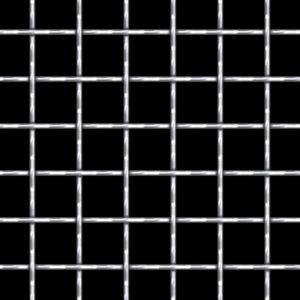
In the demanding world of industrial and commercial food processing, the quality of equipment directly impacts output, safety, and longevity. At the heart of many high-temperature processing systems lies a critical, yet often underappreciated component: the wire grill mesh. Engineered for resilience and performance, our wire grill mesh is manufactured to withstand extreme thermal and mechanical stress, providing a reliable cooking surface for a vast range of applications. More than just a simple grid, it is a precision-engineered product designed to ensure consistent heat distribution, maximum airflow, and unparalleled durability. This product page details why our wire grill mesh is the preferred choice for OEM manufacturers, food processing plants, and commercial kitchen equipment suppliers worldwide.
Our wire grill mesh is a high-performance fabric constructed from premium-grade stainless steel or carbon steel wires, meticulously welded at every intersection to form a rigid, uniform grid. This construction method creates an exceptionally strong, flat, and stable platform capable of supporting significant loads while exposed to direct flame and intense, sustained heat. Unlike woven mesh, the welded structure prevents wire movement, ensuring consistent spacing and preventing food particles from falling through or becoming trapped. Designed for integration into industrial ovens, conveyor grills, barbecue equipment, and food dehydrators, this wire grill mesh is the definitive solution for operations where hygiene, efficiency, and equipment lifespan are non-negotiable. We offer extensive customization in wire diameter, mesh opening size, panel dimensions, and material grade to perfectly match your specific engineering requirements.
| Parameter | Specification Details | Available Options / Notes |
|---|---|---|
| Primary Material | Stainless Steel, Carbon Steel | AISI 304, 316, 430; Low-Carbon Steel, Galvanized Steel |
| Wire Diameter (SWG/mm) | 1.0 mm to 6.0 mm | Standard range; custom diameters available upon request |
| Mesh Opening (Pitch) | 10 mm x 10 mm to 100 mm x 100 mm | Square mesh standard; rectangular openings also possible |
| Panel Dimensions | Custom up to 2000mm x 6000mm | Sheared, laser-cut, or framed to your blueprint |
| Welding Type | Fully Electric Resistance Welded | Consistent weld nugget at every intersection for maximum strength |
| Surface Finish | Mill Finish, Electropolished, Passivated, Galvanized | Electropolishing recommended for ultra-hygienic applications |
| Maximum Continuous Service Temperature | Up to 800°C (1472°F) for SS304 | Varies by material; consult for specific high-temp alloys |
| Edge Finishing | Hemmed, Banded, Framed, Tabbed | Critical for safe handling and secure installation |
The versatility of a high-quality wire grill mesh makes it indispensable across numerous industries. Its primary function is to provide a stable, permeable cooking surface in high-heat environments.
Choosing the correct wire grill mesh is a critical engineering decision. Our product offers distinct advantages that translate into operational benefits for your equipment and processes.
In a global market, partnership matters. We are not just a vendor; we are a technical solutions provider dedicated to the success of your product.
A: Welded wire grill mesh is created by welding individual wires at their intersections, forming a rigid, fixed grid. Woven mesh is interlinked, making it more flexible. For grilling, the welded construction is superior as it prevents wires from shifting under load or heat, maintains precise spacing for consistent searing, and offers greater structural strength and stability in heavy-duty applications.
A: AISI 304 stainless steel offers excellent general corrosion resistance and is the most common, cost-effective choice for most commercial cooking environments. AISI 316 stainless steel contains molybdenum, providing significantly higher resistance to chlorides and acids (e.g., salty conditions, acidic sauces, marinades). For coastal areas, highly processed foods, or where aggressive cleaning chemicals are used, 316 is recommended.
A: Absolutely. Our advanced laser cutting and fabrication capabilities allow us to produce wire grill mesh panels in any shape—circular, trapezoidal, or with complex internal cut-outs for fixtures, burners, or sensors. We work directly from your CAD files to ensure a perfect fit for your assembly.
A: The selection depends on the load (weight of the food), the desired sear mark pattern, and the need for support versus open area. A finer mesh (smaller opening) provides more support for smaller items but may restrict airflow. Our technical team can guide you through this decision based on your specific product type, cooking temperature, and throughput requirements.
A: For OEM orders, we typically use palletized, wooden-crate packaging to prevent damage during international shipping. Each panel is often separated and protected. Standard lead times range from 4-6 weeks for custom orders, depending on complexity and quantity. We provide detailed pre-shipment photos and logistics tracking for complete transparency.
Ready to integrate premium, durable wire grill mesh into your equipment? Contact our engineering sales team today with your specifications or project challenges for a detailed quotation and technical consultation.
Detailed Analysis of 24 mesh stainless steel screen Applications and Performance

Understanding 1mm Stainless Steel Wire Mesh for Filtration and Industrial Applications
Understanding 16 Mesh Stainless Steel Screen Applications and Performance

Understanding 12 mesh stainless steel screen Applications and Technical Details

Understanding 30 Mesh Stainless Steel Screen Applications and Material Properties
Ready to move your project from technical blueprint to precision reality? Whether you require large-scale CNC machining, complex structural assembly, or specialized fabrication with rare alloys like Titanium and Nickel, our engineering team is prepared to assist. At metalfabricationcn.com, we solve the manufacturing challenges that others find too large or too complex. Reach out today to discuss your specific requirements, and let us help you optimize your supply chain with ISO 9001 certified reliability.