
Understanding the Versatility of 10 mesh stainless steel screen Applications

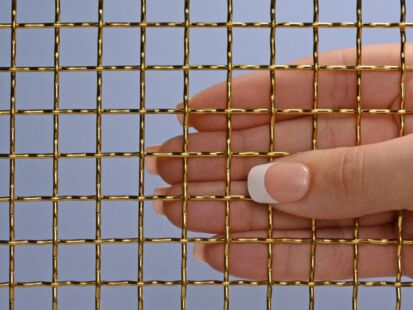
In the world of precision filtration, architectural detailing, and electromagnetic shielding, few materials offer the unique combination of properties found in brass wire mesh. As a leading supplier in the international industrial marketplace, we provide high-quality brass wire mesh engineered for durability, functionality, and aesthetic appeal. Our mesh is meticulously woven from premium brass alloy wires, resulting in a robust yet malleable product suitable for a vast array of demanding environments. Whether your project requires corrosion resistance, excellent electrical conductivity, or an attractive finish, our comprehensive range of specifications ensures the perfect fit for your technical and design requirements.
Brass wire mesh is a versatile woven fabric manufactured from an alloy of copper and zinc. The specific ratio of these metals can be adjusted to enhance certain characteristics, such as ductility or strength. This mesh is renowned for its distinctive gold-like appearance, which develops a desirable patina over time, making it a favorite for both functional and decorative applications. Unlike ferrous meshes, brass is naturally resistant to corrosion from moisture and certain chemicals, significantly extending its service life in harsh conditions. From acting as a critical component in complex filtration systems to providing a secure yet visually pleasing screen, brass wire mesh serves as a reliable solution across multiple sectors, including aerospace, marine, architectural, and manufacturing industries.
Our brass wire mesh is available in a wide range of weaves and specifications to meet precise engineering needs. Below is a detailed table outlining our standard product range. Custom weaves, wire diameters, and sheet sizes are available upon request.
| Specification | Details & Available Range | Common Standard |
|---|---|---|
| Material Alloy | Brass (Typically CuZn37 or CuZn30), also available in Naval Brass for enhanced marine corrosion resistance. | ASTM B134, ASTM B36 |
| Weave Type | Plain Weave, Twill Weave, Dutch Weave, Crimped Weave. | ISO 9044 |
| Mesh Count | From 2 to 200 mesh per linear inch. | - |
| Wire Diameter | 0.025 mm to 3.0 mm (depending on mesh count). | - |
| Opening/Aperture Size | From 0.075 mm (micronic filters) to 12.7 mm (coarse screens). | - |
| Width & Length | Standard widths up to 2 meters. Rolls or cut-to-size sheets available. | - |
| Surface Finish | Mill finish, polished, lacquered, or pre-patinated. | - |
The functional elegance of brass wire mesh makes it indispensable across diverse fields. Its primary applications can be categorized as follows:
Choosing brass wire mesh over stainless steel, aluminum, or plastic meshes offers distinct benefits that can optimize project outcomes and total cost of ownership.
Partnering with us for your brass wire mesh needs means accessing more than just a product; it means securing a reliable supply chain partner dedicated to your success.
A: While both are copper alloys, brass is primarily copper and zinc, offering good ductility and a gold color. Bronze is copper and tin (sometimes with other elements), which generally provides higher strength, better wear resistance, and a reddish-brown color. The choice depends on the specific mechanical and corrosion resistance needs of your project.
A: The selection depends on the size of particles you need to filter or retain. The mesh count (openings per inch) and wire diameter together determine the aperture size and the percentage of open area. Our technical team can assist you in calculating these parameters based on your media type, flow rate, and filtration efficiency requirements to ensure you select the most effective brass wire mesh.
A: Maintenance is minimal. For most industrial applications, periodic cleaning with a mild detergent and water is sufficient to remove debris. To preserve the bright golden finish in architectural applications, a clear lacquer coating can be applied. If a natural patina is desired, no maintenance is needed—the mesh will develop a stable, protective oxide layer over time.
A: Absolutely. We offer comprehensive fabrication services, including cutting, bending, rolling, and welding brass wire mesh into custom filters, cylindrical cages, curved panels, or complex assemblies per your technical drawings. This value-added service saves you time and production costs.
A: Standard mesh is typically packaged on sturdy cardboard cores and wrapped in waterproof plastic, then placed in wooden crates for maximum protection during ocean freight. For standard items in stock, lead times can be as short as 7-10 days. Custom orders vary based on complexity but are managed with clear communication and milestone updates throughout the production process.
For a detailed quotation or to discuss your specific project requirements for high-performance brass wire mesh, contact our sales engineering team today. We are committed to providing the material solutions that help your business and projects excel.
Understanding the Versatility of 10 mesh stainless steel screen Applications
Understanding 16 Mesh Stainless Steel Screen Applications and Performance
Understanding 20 mesh stainless steel screen Applications and Performance

Understanding 304 Stainless Steel Mesh Screen for Industrial Applications

Understanding 12 mesh stainless steel screen Applications and Technical Details
Ready to move your project from technical blueprint to precision reality? Whether you require large-scale CNC machining, complex structural assembly, or specialized fabrication with rare alloys like Titanium and Nickel, our engineering team is prepared to assist. At metalfabricationcn.com, we solve the manufacturing challenges that others find too large or too complex. Reach out today to discuss your specific requirements, and let us help you optimize your supply chain with ISO 9001 certified reliability.