
Understanding 20 mesh stainless steel screen Applications and Performance

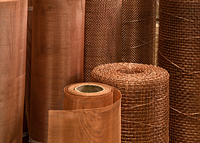
In the demanding world of industrial processing, separation efficiency is paramount. Diamond wire mesh stands as a superior engineered product, designed to deliver unmatched performance in screening, filtering, and sizing applications across a multitude of sectors. Unlike standard square mesh, its unique diagonal opening structure provides exceptional strength, stability, and open area, making it the preferred choice for handling heavy loads, abrasive materials, and high-volume throughput. This page details why our premium diamond wire mesh is the intelligent investment for operations prioritizing durability, precision, and long-term cost-effectiveness.
Diamond wire mesh, also known as double crimp or filter mesh, is manufactured by pre-crimping both warp (longitudinal) and weft (transverse) wires before weaving. This process creates a rigid, locked structure where the intersections are firmly secured, preventing movement under stress and vibration. The resulting openings are perfectly uniform diamond shapes, offering a larger percentage of open area compared to a square mesh of similar wire diameter. This design is not merely aesthetic; it is a fundamental engineering advantage that translates to higher flow rates, reduced blinding, and significantly extended service life. Our diamond wire mesh is produced under stringent quality controls using high-carbon steel, stainless steel (304, 316, etc.), and other alloys to meet specific environmental and operational challenges, from corrosive chemical processing to extreme-temperature mineral screening.
Our diamond wire mesh is customizable to your exact needs. The table below outlines our standard range for common materials. Custom sizes, metals (including exotic alloys), and edge preparations (hooked, flat, reinforced) are available upon request.
| Material Grade | Common Wire Diameter (mm) | Standard Aperture Size (mm) | Open Area (%) | Primary Applications |
|---|---|---|---|---|
| High-Carbon Steel | 1.0 - 8.0 | 5 - 100 | 45 - 75 | Mining, quarrying, aggregate screening |
| Stainless Steel 304 | 0.5 - 4.0 | 2 - 50 | 35 - 70 | Food processing, chemical filtration, architectural |
| Stainless Steel 316 | 0.5 - 3.0 | 1 - 25 | 30 - 65 | Marine environments, high-chloride processing, pharmaceuticals |
| Galvanized Steel | 1.2 - 5.0 | 6 - 60 | 50 - 70 | Agricultural sorting, ventilation, protective fencing |
Note: All specifications are subject to manufacturing tolerances. Mesh panels can be supplied in rolls, cut-to-size sheets, or pre-tensioned panels for specific vibrating screen decks.
The robustness and efficiency of diamond wire mesh make it indispensable in numerous industries. Its primary function is to separate, size, or filter materials based on particle size.
Used as screen decks on vibrating screens for scalping, sizing, and dewatering of ores, coal, and crushed stone. Its strength handles large, abrasive rocks, while its open area ensures high capacity.
Essential for classifying sand, gravel, and crushed aggregate into precise grades for construction. The anti-blinding feature is critical for wet or sticky materials.
Stainless steel diamond wire mesh is used for sorting, washing, and drying grains, nuts, and fruits. Its hygienic, easy-to-clean surface meets food safety standards.
Employed in filter presses and sieve systems for separating solids from liquids or grading powders. Corrosion-resistant alloys ensure purity and longevity.
Used in sludge dewatering, wastewater treatment screens, and as catalyst support grids. Its durability withstands harsh operational environments.
Provides a strong, aesthetically pleasing material for facades, balustrades, and interior design elements, offering both security and visual appeal.
Choosing the right screening media directly impacts your bottom line. Here’s how diamond wire mesh outperforms other options:
The result is a product that reduces total cost of ownership through fewer changeouts, less maintenance downtime, and consistently high operational efficiency.
As a specialist manufacturer and global supplier, we provide more than just a commodity. We deliver engineered screening solutions.
A: The selection depends on the particle size distribution of your material, the required throughput, and the abrasiveness. A general rule is that the wire diameter should be substantial enough to withstand the impact, and the aperture should be slightly larger than the desired cut point to account for near-size particles. Our technical team can provide detailed recommendations based on your specific data.
A: While diamond wire mesh is excellent for medium to coarse screening, for very fine screening (below 1mm), a finer weave like a Dutch weave or a synthetic cloth is often more appropriate. However, for robust applications in the 1-5mm range, a fine-wire diamond mesh in stainless steel is a very durable option.
A: Standard double crimp has crimps at every intersection, creating a slightly uneven surface. A "flat top" or "flattened crimp" version undergoes an additional process to flatten the top and bottom crimps, creating a smoother surface. This is highly beneficial for applications where material flow needs to be unimpeded or for easy cleaning, such as in food processing or for screen printing.
A: Proper tensioning is critical for performance and longevity. The mesh should be pulled evenly across the deck and secured with tension rails or hooks. It must be tight enough to prevent any "flapping" or secondary vibration, which causes premature fatigue. We provide detailed installation guidelines and can supply pre-tensioned panels for specific machine models.
A: For corrosive environments, the material choice is key. We offer stainless steel grades (304, 316, 316L), which are standard for chemical and marine use. For carbon steel meshes, additional protections like hot-dip galvanizing, powder coating, or PVC coating are available to significantly extend service life in moderately corrosive conditions.
Ready to optimize your screening process with a durable, high-performance solution? Contact our technical sales team today for a detailed quotation and expert advice on the ideal diamond wire mesh specification for your operation. We are committed to providing industrial solutions that enhance your productivity and profitability.
Understanding 20 mesh stainless steel screen Applications and Performance

Understanding 1mm Stainless Steel Wire Mesh for Filtration and Industrial Applications
Understanding 300 Mesh Stainless Steel Screen Applications and Performance
Detailed Analysis of 24 mesh stainless steel screen Applications and Performance

Understanding 12 mesh stainless steel screen Applications and Technical Details
Ready to move your project from technical blueprint to precision reality? Whether you require large-scale CNC machining, complex structural assembly, or specialized fabrication with rare alloys like Titanium and Nickel, our engineering team is prepared to assist. At metalfabricationcn.com, we solve the manufacturing challenges that others find too large or too complex. Reach out today to discuss your specific requirements, and let us help you optimize your supply chain with ISO 9001 certified reliability.