Strategic Custom Metal Fabrication Services

In the demanding world of industrial filtration, separation, and reinforcement, the integrity of your materials is paramount. Our high-performance metal woven wire mesh stands as a cornerstone of reliability and precision engineering. Manufactured to exacting international standards, our mesh is crafted from a variety of metals and alloys, woven into consistent, durable patterns to meet a vast spectrum of operational challenges. From safeguarding sensitive processes in the pharmaceutical industry to enduring the abrasive environments of mining and quarrying, our woven wire solutions provide the critical balance of strength, accuracy, and longevity that global B2B clients depend on.
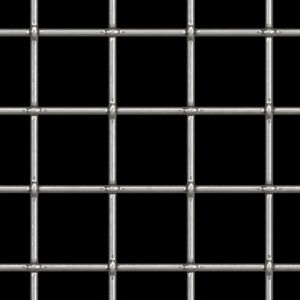
Our metal woven wire mesh is a versatile engineered product created by interlocking metallic wires in a precise, loom-woven pattern. This fundamental manufacturing process yields a sheet material characterized by uniform apertures (openings) and exceptional structural stability. We offer an extensive portfolio, encompassing meshes woven from stainless steel (304, 316, 316L), galvanized steel, brass, copper, and other specialty alloys. Available in rolls, sheets, or custom-cut components, our mesh can be tailored to micron-level accuracy for filtration or robust structural specifications for screening and guarding. As a critical component in systems worldwide, our metal woven wire mesh is the unseen yet indispensable element ensuring efficiency, safety, and product quality across countless industries.
The following table outlines the core specifications for our standard range of metal woven wire mesh. Custom configurations in material, weave type, and dimensions are available upon request to meet your precise engineering requirements.
| Parameter | Specifications & Range | Notes |
|---|---|---|
| Primary Materials | Stainless Steel 304/316/316L, Galvanized Low-Carbon Steel, Brass, Copper, Aluminum, Monel, Inconel | Material selection dictates corrosion resistance, temperature tolerance, and magnetic properties. |
| Weave Types | Plain Weave, Twilled Weave, Dutch Weave, Twilled Dutch Weave, Reverse Dutch Weave | Weave pattern affects strength, filtration fineness, and surface profile. |
| Mesh Count | From 1 mesh per inch to over 400 mesh per inch | Defines the number of openings per linear inch. Higher count equals finer filtration. |
| Wire Diameter | 0.025 mm to 5.0 mm (0.001" to 0.197") | Directly impacts the mesh's strength, durability, and open area percentage. |
| Aperture Size | From 5 microns to 100 mm | The precise opening size for particle retention or separation. |
| Standard Width | Up to 2.0 meters (78.7 inches) in roll or sheet form | Wider formats available for specific applications to minimize seams. |
| Thickness / Profile | Ultra-thin to heavy-duty, depending on wire diameter and weave. | Can be supplied in flat sheets or with a crimped profile for added rigidity. |
The adaptability of metal woven wire mesh makes it a critical component in a diverse array of sectors. Its primary function is to separate, filter, protect, or reinforce based on the specific weave and material chosen.
In industries where purity and particle control are non-negotiable, our mesh serves as the heart of filtration systems. This includes filtering chemicals and polymers in petrochemical plants, clarifying beverages in food & beverage production, and ensuring sterile air and liquid flows in pharmaceutical manufacturing. High-mesh-count Dutch weaves are particularly effective for fine micron-level filtration.
Mining, aggregate, and agriculture rely on robust metal woven wire mesh for grading and sizing bulk materials. Heavy-duty screens classify ores, stones, and grains by size, withstanding immense impact and abrasion. The consistent aperture ensures accurate product grading, directly impacting product value and process efficiency.
Used as machine guards, window barriers, and fencing, the mesh provides a secure barrier that allows for ventilation, light, and visibility. It protects personnel from moving parts, contains debris, and secures perimeters in industrial facilities, all while maintaining airflow.
Beyond pure industry, our mesh finds use in architectural facades, interior design elements, and functional components like speaker grilles and radiator guards. The combination of aesthetics, durability, and functionality is unmatched.
Choosing a high-quality metal woven wire mesh provides distinct benefits that polymer screens or perforated plates cannot match, offering a superior return on investment for critical applications.
In a global market, partnering with the right supplier is as crucial as the product itself. We differentiate ourselves through a commitment to quality, expertise, and client-centric service that supports your supply chain and project success.
A: Mesh count refers to the number of openings per linear inch (or centimeter) measured from the center of one wire to the center of the next. Aperture size is the actual clear opening distance between two adjacent wires. A higher mesh count generally means a smaller aperture, but the wire diameter also plays a critical role. For precise filtration requirements, always specify the required micron or millimeter aperture size.
A: The choice hinges on the operating environment. Type 304 stainless steel offers excellent general corrosion resistance and is cost-effective for most applications. Type 316 contains molybdenum, which significantly enhances its resistance to chlorides and acids, making it the superior choice for marine environments, chemical processing, or applications involving salt or bleach. Our technical team can advise based on your specific media and conditions.
A: Absolutely. We routinely provide value-added fabrication services. We can cut, roll, bend, stitch, and weld our metal woven wire mesh into filter baskets, screen panels, cylindrical filters, guard assemblies, and other complex shapes. Providing detailed drawings or samples allows us to manufacture a ready-to-install component, saving you time and production complexity.
A: Lead times vary based on the material, weave complexity, and quantity. Standard materials and weaves typically have shorter lead times, while exotic alloys or very fine, complex weaves may require more production time. We prioritize providing accurate and reliable lead time estimates upon quotation and maintain transparent communication throughout the manufacturing process.
A: Providing as much application detail as possible is key. Please be ready to share information on: the material being filtered/screened (including particle size, temperature, and chemical properties), the type of equipment the mesh will be used in, the required dimensions, and any pressure or flow rate considerations. Our experts will then guide you to the optimal specification, ensuring your metal woven wire mesh performs as intended.
Strategic Custom Metal Fabrication Services

Detailed Analysis of 24 mesh stainless steel screen Applications and Performance
Understanding the Versatility of 10 mesh stainless steel screen Applications

Understanding 30 Mesh Stainless Steel Screen Applications and Material Properties
Understanding 20 mesh stainless steel screen Applications and Performance
Ready to move your project from technical blueprint to precision reality? Whether you require large-scale CNC machining, complex structural assembly, or specialized fabrication with rare alloys like Titanium and Nickel, our engineering team is prepared to assist. At metalfabricationcn.com, we solve the manufacturing challenges that others find too large or too complex. Reach out today to discuss your specific requirements, and let us help you optimize your supply chain with ISO 9001 certified reliability.