Strategic Custom Metal Fabrication Services

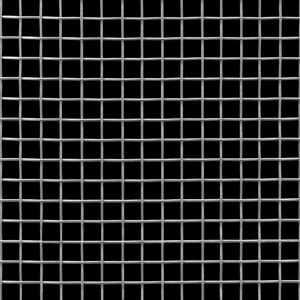
Perforated wire mesh represents a pinnacle of engineered metal fabrication, offering a versatile and robust solution for a vast array of industrial filtration, separation, and screening needs. Unlike woven wire cloth, this product is manufactured by punching a precise pattern of holes into a solid metal sheet or coil, resulting in a single, unified panel with exceptional strength and dimensional stability. This manufacturing process allows for unparalleled control over aperture size, shape, and arrangement, making perforated wire mesh a critical component in operations where accuracy, durability, and consistent performance are non-negotiable. From heavy-duty mining operations to precise food processing lines, its application is fundamental to modern industrial efficiency and product quality control.
The superior performance of perforated wire mesh stems from its distinct structural and functional characteristics. These features make it a preferred choice over alternative screening media in demanding environments.
Our perforated wire mesh is manufactured to meet international standards and can be customized across a comprehensive range of parameters. The table below outlines our standard production capabilities.
| Parameter | Specification Range & Details |
|---|---|
| Base Materials | Mild Steel (Carbon Steel), Stainless Steel (304, 316, 316L), Aluminum, Galvanized Steel, Other alloys (upon request). |
| Hole Shapes | Round, Square, Slotted (Long Slot), Hexagonal, Decorative patterns. |
| Hole Diameter / Size | From 0.5 mm (0.02") to 30 mm (1.18") and beyond for custom applications. |
| Sheet Thickness (Gauge) | 0.5 mm to 6.0 mm (approx. 24 gauge to 1/4 inch). |
| Standard Sheet Size | 1000mm x 2000mm, 1220mm x 2440mm (4'x8'), or custom cut-to-size panels. |
| Staggered or Straight Pattern | Available in 60° staggered (most common for strength), 45° staggered, or straight line patterns. |
| Open Area Percentage | Varies with hole size and pattern; typically ranges from 15% to 70%. Precisely calculated for each design. |
| Surface Finishes | Mill finish, electro-galvanized, hot-dip galvanized, powder coating, PVC coating, polished (stainless steel). |
The utility of perforated wire mesh spans across global industries, serving as a workhorse component in critical processes.
Choosing the right screening medium is crucial for operational cost and efficiency. Perforated wire mesh offers distinct benefits that provide a compelling return on investment.
As a leading supplier in the international industrial marketplace, we differentiate ourselves through a commitment to quality, precision, and partnership that extends far beyond a simple transaction.
A: The fundamental difference lies in the manufacturing process. Perforated wire mesh is made by punching holes into a solid metal sheet, creating a single, rigid panel. Woven wire mesh is created by interweaving individual wires. Perforated mesh offers greater rigidity and stability, while woven mesh is generally more flexible. The choice depends on the application's need for precision, strength, and flexibility.
A: To request a quote for a custom design, please provide the following key parameters: 1) Material Type and Grade (e.g., SS 304), 2) Sheet Thickness, 3) Hole Shape and Dimensions (e.g., 5mm round holes), 4) Hole Pattern and Center (e.g., 60° staggered, 7mm centers), 5) Finished Panel Dimensions, and 6) Required Surface Finish. Our engineering team can also assist you in determining the optimal specifications.
A: While technically possible, traditional punching has limitations for very fine holes (below ~1mm) in thicker sheets, as it can cause material deformation. For micron-level filtration, woven wire mesh or etched foil are typically more suitable. However, for fine but dry powders or granules in the 0.5mm-2mm range, precision perforated wire mesh made from thinner gauges is an excellent, durable choice.
A: Ensure the supporting frame is flat and level. Use appropriate clamping systems (wedge bolts, tension rails) to secure the panel evenly across its entire perimeter to prevent stress fractures. For maintenance, regular inspection for wear or damage at high-impact points is recommended. Cleaning can be done with brushes, air blasts, or ultrasonic cleaners, depending on the material and clogging agent. Avoid using sharp tools that could dent or deform the holes.
A: Yes, we strongly encourage and facilitate sample testing. We can provide small, representative samples of the specified perforated wire mesh for you to evaluate material quality, hole accuracy, finish, and performance in your specific application. This step ensures complete confidence before proceeding with full-scale production and delivery.
A: The open area is a critical performance metric. A higher open area generally allows for greater throughput or flow rate but may reduce the panel's structural strength. Our engineers balance these factors. For screening, a lower open area with stronger bridges (the metal between holes) may be needed for heavy loads. For filtration or ventilation, maximizing open area is often the priority. We calculate this precisely for each custom design.
PREV:wire mesh price
Strategic Custom Metal Fabrication Services

Understanding the Versatility of 10 mesh stainless steel screen Applications

Comprehensive Guide to Durable 316 Stainless Steel Security Screens
Detailed Analysis of 24 mesh stainless steel screen Applications and Performance
Understanding 16 Mesh Stainless Steel Screen Applications and Performance
Ready to move your project from technical blueprint to precision reality? Whether you require large-scale CNC machining, complex structural assembly, or specialized fabrication with rare alloys like Titanium and Nickel, our engineering team is prepared to assist. At metalfabricationcn.com, we solve the manufacturing challenges that others find too large or too complex. Reach out today to discuss your specific requirements, and let us help you optimize your supply chain with ISO 9001 certified reliability.