
Understanding 30 Mesh Stainless Steel Screen Applications and Material Properties

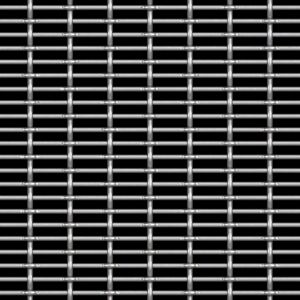
In the intricate world of industrial filtration, separation, and reinforcement, the precision and quality of your materials define the success of your operations. Our thin wire mesh represents the pinnacle of engineered wire cloth, offering unparalleled accuracy, durability, and versatility for a vast spectrum of professional applications. Manufactured using advanced weaving techniques and high-grade materials, this mesh is designed for professionals who require reliable performance in critical processes. From aerospace components to pharmaceutical filtration, our thin wire mesh provides the exacting standards necessary for modern industry, ensuring consistent results, enhanced product purity, and long-term operational efficiency.
Our thin wire mesh is a specialized form of woven wire cloth characterized by its fine wire diameters and high mesh counts. This product category is engineered for applications where maximum open area, precise particle retention, or minimal flow restriction is paramount. Unlike standard industrial screens, thin wire mesh is produced with exceptional attention to detail, ensuring uniform aperture sizes and a smooth, burr-free surface. Available in a comprehensive range of metals including stainless steel (304, 316, 316L), brass, copper, and nickel alloys, our meshes can be tailored to resist corrosion, withstand high temperatures, and maintain integrity under mechanical stress. Whether supplied in rolls, sheets, or custom-fabricated components, our thin wire mesh is the trusted solution for engineers and procurement specialists worldwide.
The following table outlines the standard specifications for our premier grade stainless steel thin wire mesh. Custom configurations outside these ranges are available upon request.
| Specification | Range / Detail | Standard / Test Method |
|---|---|---|
| Mesh Count | 20 to 500 Mesh | ASTM E11 / ISO 9044 |
| Wire Diameter | 0.025 mm to 0.50 mm | Micrometer Measurement |
| Standard Width | Up to 2000 mm (Rolls & Sheets) | Custom widths available |
| Primary Materials | SS 304, SS 316/L, Brass, Copper, Nickel | Material Certificates Provided |
| Weave Types | Plain Weave, Twill Weave, Dutch Weave | ASTM E2016 |
| Opening Accuracy | ±3% of nominal aperture | Calibrated Optical Measurement |
| Temperature Resistance | Up to 1150°C (dependent on alloy) | ASTM Standards |
The functional properties of thin wire mesh make it indispensable across diverse sectors. Its primary role is to provide a reliable barrier or support structure while allowing for the controlled passage of air, liquid, or light.
In critical filtration systems, our thin wire mesh acts as a precise sieve. It is used in fuel filters, hydraulic systems, polymer melt filtration, and high-precision laboratory sieves for particle size analysis. The pharmaceutical and food & beverage industries rely on it for sterile filtration processes where absolute cleanliness and non-reactivity are mandatory.
For electronic enclosures and aerospace components, a finely woven thin wire mesh provides effective electromagnetic and radio frequency interference shielding, protecting sensitive circuitry from external noise and preventing signal leakage.
Used in speaker grilles, ventilation covers, and instrument panels, the mesh allows for sound and airflow while protecting internal components from debris or unauthorized access. Its aesthetic appeal also makes it suitable for architectural facades and designer lighting.
Embedded within plastics, ceramics, or other matrix materials, thin wire mesh adds tensile strength and crack resistance, creating advanced composite materials used in automotive, aerospace, and industrial manufacturing.
Choosing the right screening medium is a critical technical decision. Our thin wire mesh offers distinct benefits compared to perforated plates, polymer screens, or etched foils.
In a global market, partnership with a reliable and expert manufacturer is crucial. We distinguish ourselves through an unwavering commitment to quality, service, and technical expertise.
A: Mesh count refers to the number of openings per linear inch. Micron rating indicates the size of particles the mesh will retain. While related, they are not directly interchangeable due to variations in wire diameter. We provide detailed specification sheets that correlate mesh count with nominal micron retention for accurate selection. For critical filtration, specifying the required absolute micron rating is always recommended.
A: Yes, with proper technique. Our technical team can advise on the best methods, which may include precision laser welding, ultrasonic welding, or specialized soldering for certain alloys. We also offer pre-fabricated components with professionally finished edges (hemmed, framed, or with a reinforced border) ready for integration into your assembly.
A: Type 304 SS is an excellent general-purpose, corrosion-resistant alloy. Type 316 SS contains molybdenum, which provides significantly enhanced resistance to chlorides and acidic environments, making it the preferred choice for marine applications, chemical processing, or exposure to salt. We can guide you based on your specific media and operating conditions.
A: For standard meshes from our inventory, lead times are typically very short. Custom weaves, specific widths, or fabricated parts require production scheduling. Lead times for these are communicated transparently upon order confirmation and are dependent on the complexity and quantity. We prioritize reliable delivery commitments and keep you informed throughout the process.
A: Absolutely. We strongly encourage and facilitate product testing. We offer free sample swatches of our standard thin wire mesh for initial evaluation. For custom specifications, sample production can be arranged to ensure the material meets all your performance criteria before proceeding with a full production order.
Understanding 30 Mesh Stainless Steel Screen Applications and Material Properties

Understanding 12 mesh stainless steel screen Applications and Technical Details
Detailed Analysis of 2mm Stainless Steel Mesh Properties and Applications

Understanding 300 Mesh Stainless Steel Screen Applications and Performance
Strategic Custom Metal Fabrication Services
Ready to move your project from technical blueprint to precision reality? Whether you require large-scale CNC machining, complex structural assembly, or specialized fabrication with rare alloys like Titanium and Nickel, our engineering team is prepared to assist. At metalfabricationcn.com, we solve the manufacturing challenges that others find too large or too complex. Reach out today to discuss your specific requirements, and let us help you optimize your supply chain with ISO 9001 certified reliability.