
Understanding 100 mesh stainless steel screen for Industrial Applications

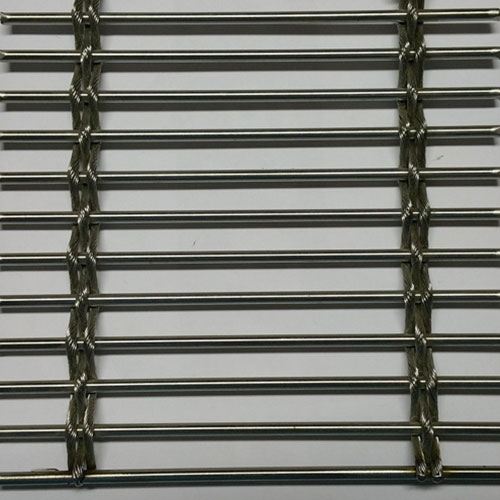
In the world of industrial automation and material handling, efficiency and reliability are paramount. Wire mesh conveyor belts stand as a cornerstone technology, engineered to meet the rigorous demands of diverse applications where strength, permeability, and thermal stability are non-negotiable. These belts are not merely a component; they are a critical system designed to optimize production flow, enhance product quality, and ensure operational continuity. Constructed from interlinked metal wires, wire mesh conveyor belts offer an unparalleled combination of durability, open mesh design, and resistance to extreme conditions, making them the preferred choice for industries ranging from food processing to heat treatment and automotive manufacturing. This page provides a comprehensive guide to our premium wire mesh conveyor belt solutions, detailing their specifications, advantages, and the expert support that sets our products apart in the global market.
Our wire mesh conveyor belts are precision-engineered from high-grade stainless steel, carbon steel, or specialized alloys to create a robust, flexible, and long-lasting conveying surface. Unlike solid belt alternatives, the open mesh structure allows for free air circulation, liquid drainage, and direct heat transfer, which is essential for processes like cooling, washing, drying, and baking. The belts are fabricated through advanced welding or weaving techniques, resulting in a seamless, stable, and low-maintenance conveying medium. Available in a vast array of mesh sizes, wire diameters, and edge configurations, our wire mesh conveyor belts can be fully customized to fit specific machine dimensions, load capacities, and process requirements, ensuring a perfect integration into your existing production line.
The following table outlines the standard specifications for our range of wire mesh conveyor belts. Custom parameters are available upon request to meet your exact operational needs.
| Parameter | Specification Range | Notes |
|---|---|---|
| Material | Stainless Steel (304, 316, 314), Carbon Steel, Galvanized Steel, Inconel, Titanium | Material selection depends on temperature, corrosion, and hygiene requirements. |
| Mesh Type | Balanced Weave, Compound Balanced Weave, Rod-Reinforced, Double Weave | Defines mesh stability, open area %, and load-bearing characteristics. |
| Wire Diameter | 0.8 mm (0.031") to 5.0 mm (0.197") | Larger diameters provide greater strength and durability for heavy loads. |
| Mesh Opening (Pitch) | 1.5 mm x 1.5 mm to 50 mm x 50 mm | Determines the size of particles that can pass through the belt. |
| Belt Width | 100 mm (4") to 3000 mm (118") | Custom widths available. Maximum width depends on mesh type and construction. |
| Maximum Operating Temperature | Up to 1150°C (2102°F) for specific alloys | Standard SS304 belts are rated for continuous use up to 870°C (1600°F). |
| Edge Configuration | Knuckled Edge, Reinforced Selvage, Chain Edge (Attachments: Nylon, SS, Carbon Steel) | Critical for drive engagement, tracking, and belt life. |
The versatility of wire mesh conveyor belts makes them indispensable across a broad spectrum of industrial sectors. Their unique properties solve specific material handling challenges that other belts cannot address.
In food production, our FDA-compliant stainless steel wire mesh conveyor belts are used in baking ovens for cookies and crackers, freezing tunnels for vegetables, cooling lines for canned goods, and washing systems for fruits. The open mesh allows for even heat distribution and efficient oil drainage in fryers.
For annealing, hardening, tempering, and sintering furnaces, our high-temperature alloy wire mesh belts provide the thermal resistance and dimensional stability needed to carry metal parts through intense heat cycles without failure.
These belts are utilized in paint curing ovens, powder coating lines, PCB soldering, and component washing. Their clean operation and resistance to chemicals ensure contaminant-free processing of sensitive parts.
Wire mesh conveyor belts are ideal for lehrs (annealing ovens) and decorating lines, handling hot glass bottles, tableware, and ceramic tiles with minimal marking and excellent heat tolerance.
The robust construction handles sharp, abrasive materials in sorting plants, MRFs (Material Recovery Facilities), and incineration systems, where durability and drainage are critical.
Choosing wire mesh conveyor belts over solid fabric, plastic modular, or rubber belts offers distinct operational and economic benefits that directly impact your bottom line.
In a global market, selecting the right partner is as crucial as selecting the right product. We distinguish ourselves through a commitment to quality, engineering expertise, and customer-centric service.
A: The selection depends on the size and nature of your product. The mesh opening must be small enough to support the product without sagging through, yet large enough to allow for desired drainage or airflow. Wire diameter is chosen based on the load weight and impact. Our technical team can guide you through this calculation based on your specific product dimensions and weight.
A: Yes, one of the significant advantages of wire mesh conveyor belts is their repairability. Localized damage, such as a broken wire or a bent section, can often be repaired on-site by a skilled technician, extending the belt's life and avoiding a full replacement. We provide repair kits and instructions for common maintenance issues.
A: Lead times vary based on complexity, material, and current order volume. Standard custom belts typically ship within 3-5 weeks. For urgent requirements, we offer expedited manufacturing services. We provide accurate timelines upon receipt of your detailed specifications.
A: Proper tracking starts with correct installation and tensioning. Wire mesh conveyor belts require precise alignment of the drive and tail shafts. Using belts with reinforced or knuckled edges and appropriate tracking guides is essential. Our installation manuals provide detailed steps, and we offer remote or on-site startup support to ensure optimal performance.
A: Absolutely. We offer a dedicated range of wire mesh conveyor belts manufactured from FDA-approved stainless steel (grades 304 and 316 are most common). These belts are finished to a specific surface smoothness, are easy to clean, and are ideal for baking, freezing, washing, and packaging applications in the food industry.
A: Maintenance is relatively minimal but crucial. Regular inspection for wear, proper tension, and lubrication of chain drives (if applicable) is recommended. Periodic cleaning to remove debris buildup in the mesh will prevent corrosion and maintain hygiene. A well-maintained belt from our premium range can last for many years even in demanding 24/7 operations.
PREV:wire mesh 16 gauge
NEXT:6 x 6 wire mesh
Understanding 100 mesh stainless steel screen for Industrial Applications

Understanding 12 mesh stainless steel screen Applications and Technical Details

Understanding the Versatility of 10 mesh stainless steel screen Applications
Understanding 30 Mesh Stainless Steel Screen Applications and Material Properties
Detailed Analysis of 24 mesh stainless steel screen Applications and Performance
Ready to move your project from technical blueprint to precision reality? Whether you require large-scale CNC machining, complex structural assembly, or specialized fabrication with rare alloys like Titanium and Nickel, our engineering team is prepared to assist. At metalfabricationcn.com, we solve the manufacturing challenges that others find too large or too complex. Reach out today to discuss your specific requirements, and let us help you optimize your supply chain with ISO 9001 certified reliability.