
Understanding 12 mesh stainless steel screen Applications and Technical Details

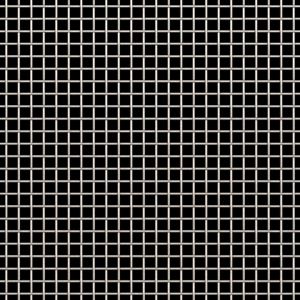
In the demanding world of industrial construction, mining, and infrastructure, standard fencing and reinforcement materials often fall short. For projects requiring maximum strength, durability, and security, 4 gauge wire mesh stands as the definitive solution. This heavy-duty welded wire fabric is engineered from thick, high-tensile steel wires, creating a rigid grid structure capable of withstanding immense pressure, impact, and environmental stress. Our 4 gauge wire mesh is manufactured to exacting international standards, providing a reliable and long-lasting material for critical applications where failure is not an option. This product page details the specifications, uses, and unparalleled benefits of integrating this robust mesh into your next major project.
4 gauge wire mesh refers to a welded wire reinforcement fabric constructed from steel wires with a nominal diameter of approximately 0.2253 inches (5.72 mm). The "4 gauge" designation signifies its substantial thickness, placing it among the heaviest and strongest commercially available welded mesh products. The wires are precision-welded at every intersection using advanced resistance welding techniques, creating a monolithic panel with exceptional structural integrity. This mesh is typically supplied in large, flat panels or rolls, offering versatility for both static and flexible installations. Primarily used in heavy civil engineering, industrial security, and mining, 4 gauge wire mesh serves as a foundational component for concrete reinforcement, rockfall protection, machine guarding, and high-security perimeter fencing. Its robust nature ensures it performs reliably under extreme loads and in harsh conditions for decades.
The following table outlines the standard technical specifications for our premium 4 gauge wire mesh. Custom configurations regarding sheet/roll dimensions, aperture size, and coating are available upon request to meet your specific project requirements.
| Specification | Standard Metric Value | Standard Imperial Value | Notes |
|---|---|---|---|
| Wire Diameter (Gauge) | 5.72 mm | 0.2253 in (4 AWG) | Primary structural wire thickness. |
| Common Mesh Sizes (Aperture) | 50x50 mm, 100x100 mm, 150x150 mm | 2"x2", 4"x4", 6"x6" | Other rectangular or square apertures available. |
| Standard Panel Dimensions | 2400 mm x 1200 mm, 3000 mm x 1200 mm | 8' x 4', 10' x 4' | Custom panel sizes up to 3000mm width. |
| Standard Roll Dimensions | 30 m x 2.4 m (varies) | 100 ft x 8 ft (approx.) | Roll length and width can be customized. |
| Steel Grade | Q195, Q235, A36, or equivalent | Grade 40, Grade 60 | High-tensile steel options available. |
| Surface Treatment | Electro-galvanized, Hot-dip galvanized, PVC-coated, Black (uncoated) | Electro-galvanized, Hot-dip galvanized, PVC-coated, Black (uncoated) | Hot-dip galvanizing offers the highest corrosion protection. |
| Tensile Strength | 500 - 550 N/mm² (for high-tensile) | 72,500 - 80,000 psi | Exceeds typical industrial requirements. |
| Weight (Approx.) | ~8.5 kg/m² (for 100x100mm mesh) | ~1.74 lb/ft² | Varies significantly with aperture size. |
The inherent strength and versatility of 4 gauge wire mesh make it indispensable across a wide spectrum of heavy-duty industries. Its primary function is to provide reinforcement, security, and containment where standard materials are inadequate.
In concrete construction, 4 gauge wire mesh is used as structural reinforcement in industrial floors, foundation slabs, retaining walls, and pre-cast concrete elements. Its high load-bearing capacity helps control thermal cracking and distribute weight evenly. It is also crucial in shotcrete (sprayed concrete) applications for tunnel linings and slope stabilization, where it acts as a reinforcing skeleton.
This mesh is a cornerstone of mine safety and infrastructure. It is used for screen decks in heavy-duty rock sorting and sizing, as reinforcement for mine tunnel walls and ceilings, and in the construction of gabion baskets for erosion control and retaining structures at mine sites. Its ability to withstand abrasion from rocks and ore is critical.
For high-security facilities such as prisons, military installations, power plants, and airports, 4 gauge wire mesh forms the core of impassable perimeter fencing systems. When combined with anti-climb features and appropriate foundations, it creates a formidable physical barrier that deters and delays intrusion attempts significantly more effectively than lighter meshes.
Heavy machinery, industrial presses, and automated systems require robust guarding to protect personnel. 4 gauge wire mesh cages and screens contain debris, prevent accidental contact with moving parts, and can withstand impacts from broken tooling or ejected materials, ensuring OSHA and other international safety compliance.
For containing large, powerful livestock such as bulls, bison, or horses, or for constructing extremely durable animal enclosures in zoos and wildlife parks, this heavy mesh provides a safe and secure barrier that animals cannot break or deform.
Choosing 4 gauge wire mesh over lighter meshes or other materials like expanded metal or bar gratings offers a distinct set of benefits that translate into long-term project value and reliability.
As a leading supplier in the international industrial marketplace, we differentiate ourselves through an unwavering commitment to quality, service, and customer-specific solutions. Our 4 gauge wire mesh is not a commodity; it is a precision-engineered component for your project's success.
A: The difference is substantial. 4 gauge wire mesh uses wires nearly three times thicker in diameter than 10 gauge mesh. This results in exponentially higher strength, rigidity, and impact resistance. While 10 gauge is suitable for general fencing or light reinforcement, 4 gauge is designed for structural, high-security, and heavy industrial applications where failure could be catastrophic.
A: Due to its extreme thickness and rigidity, 4 gauge wire mesh is very difficult to bend cold in the field without specialized equipment. We strongly recommend providing detailed fabrication drawings if the mesh requires bends or shapes. We can pre-fabricate panels to your specified angles and dimensions in our factory using industrial machinery, ensuring accuracy and preserving the material's structural properties.
A: For harsh coastal (salt-spray) environments, we recommend hot-dip galvanized (HDG) 4 gauge wire mesh. The hot-dip process coats the entire mesh, including the welds, in a thick layer of zinc, providing superior sacrificial protection against corrosion. For even longer life, a combination of HDG with a PVC coating offers dual-layer protection against both corrosion and physical abrasion.
A: The weight depends on the wire diameter, aperture size, and panel dimensions. We provide detailed weight tables for our standard products. For a precise quote, please provide us with your required mesh specification (wire gauge, aperture size, dimensions, and coating type), quantity, and destination port. Our sales team will promptly calculate the total weight and provide a comprehensive FOB or CIF quotation.
A: Yes, we understand the importance of verifying quality. We are happy to provide physical samples of our 4 gauge wire mesh in your specified finish. This allows you to inspect the weld quality, coating thickness, and overall craftsmanship. Sample policies and any associated costs can be discussed with your dedicated account manager.
A: Lead times vary based on order volume, customization requirements, and coating processes. For standard specification 4 gauge wire mesh in stock finishes, production can typically be completed within 15-20 working days. Custom fabrication or specialized coatings may add additional time. We provide clear production schedules with every order confirmation and keep you updated throughout the process until shipment.
Understanding 12 mesh stainless steel screen Applications and Technical Details

Detailed Analysis of 24 mesh stainless steel screen Applications and Performance

Understanding 1mm Stainless Steel Wire Mesh for Filtration and Industrial Applications
Comprehensive Guide to Durable 316 Stainless Steel Security Screens

Understanding 100 mesh stainless steel screen for Industrial Applications
Ready to move your project from technical blueprint to precision reality? Whether you require large-scale CNC machining, complex structural assembly, or specialized fabrication with rare alloys like Titanium and Nickel, our engineering team is prepared to assist. At metalfabricationcn.com, we solve the manufacturing challenges that others find too large or too complex. Reach out today to discuss your specific requirements, and let us help you optimize your supply chain with ISO 9001 certified reliability.