
Understanding 100 mesh stainless steel screen for Industrial Applications

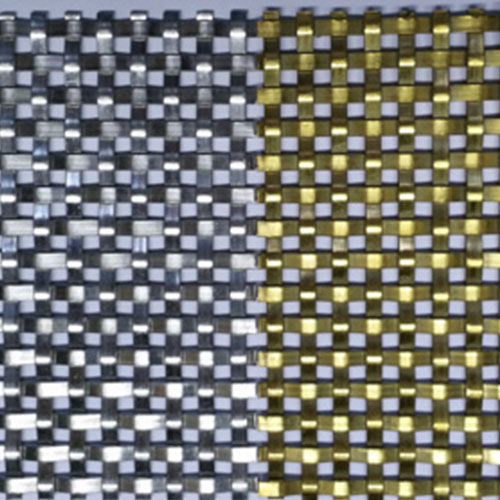
In the demanding world of industrial filtration, separation, and protection, the integrity of your materials is paramount. Our high-performance stainless steel woven wire mesh stands as a cornerstone of reliability and precision for engineers and procurement specialists worldwide. Engineered from premium-grade alloys and manufactured with exacting tolerances, this versatile mesh product delivers unmatched durability, corrosion resistance, and consistent performance across countless applications. From aggressive chemical processing to critical aerospace components, our woven wire mesh is the trusted solution for operations that cannot afford compromise.
Stainless steel woven wire mesh is a meticulously fabricated material created by interweaving stainless steel wires in a precise, regular pattern. This process yields a flat, flexible sheet with uniform square, rectangular, or other specialized openings, known as the mesh count or aperture size. As a fundamental industrial component, its primary function is to selectively separate particles, provide shielding, allow fluid flow, or offer reinforcement while withstanding harsh environmental conditions. The selection of specific stainless steel grades, such as 304, 316, or 316L, directly correlates to the mesh's performance in terms of corrosion resistance, temperature tolerance, and mechanical strength. This product is not a commodity but a critical engineered component, where precision in wire diameter, weave type, and opening consistency dictates the success of the entire system it supports.
Our stainless steel woven wire mesh is available in a comprehensive range of specifications to meet precise engineering needs. The table below outlines our standard offerings. Custom specifications regarding alloy, weave, mesh count, width, and finish are available upon request.
| Parameter | Specifications & Details |
|---|---|
| Primary Material Grades | AISI 304, 304L, 316, 316L, 321, 430 |
| Standard Weave Types | Plain Weave, Twill Weave, Dutch Weave (Plain & Twilled), Reverse Dutch Weave |
| Mesh Count (per linear inch) | From 2 mesh to 500 mesh, with finer specifications available |
| Wire Diameter Range | 0.025 mm to 3.0 mm (depending on mesh count) |
| Standard Width | Up to 2.0 meters (78.7 inches), custom widths available |
| Roll Length | Standard 30-meter rolls, custom lengths as required |
| Opening/Aperture Size | From 100 microns to 12.7 mm (1/2 inch) |
| Surface Finish | Mill finish, Electropolished, Heat Treated (Annealed) |
| Temperature Range (Continuous) | Up to 800°C (1472°F) for Grade 316; higher for specialized alloys |
The functional properties of stainless steel woven wire mesh make it indispensable across a vast spectrum of industries. Its primary role is to provide a reliable barrier that controls the passage of solids, liquids, or gases.
This is the most prevalent use. The mesh acts as a screen or filter element in oil and gas, chemical processing, water treatment, and pharmaceutical manufacturing. It removes contaminants from fluids, separates catalysts, and classifies particles by size.
Heavy-duty welded or woven panels are used for machine guards, safety screens, window barriers, and RFI/EMI shielding in electronic enclosures, providing protection without completely obstructing light or airflow.
Architects utilize decorative weaves for building facades, sunscreens, balustrades, and interior design elements, where aesthetics meet functionality for ventilation and light diffusion.
In sorting, grading, drying, and conveying systems, the hygienic and easy-clean properties of the mesh are critical for maintaining food safety standards.
For sizing, sorting, and dewatering minerals, coal, and aggregates, robust stainless steel woven wire mesh provides long-lasting service in highly abrasive environments.
Used in fuel filters, hydraulic systems, and ventilation components where failure is not an option, requiring the highest standards of material consistency and performance.
Choosing the correct mesh material is a critical engineering decision. Our stainless steel woven wire mesh offers distinct benefits compared to polymer screens or other metal meshes.
In a global market, partnership matters. We are more than a vendor; we are a technical solutions provider dedicated to your project's success.
A: The core difference lies in alloy composition and corrosion resistance. Type 304 is a versatile, general-purpose grade excellent for most environments. Type 316 contains molybdenum, which significantly enhances its resistance to chlorides and acids, making it the preferred choice for marine applications, chemical processing, and coastal environments. For maximum corrosion resistance in welded applications, 316L (low carbon) is recommended.
A: Key specification parameters are: 1) Material Grade (e.g., 316L), 2) Mesh Count (openings per inch), 3) Wire Diameter, 4) Weave Type, and 5) Dimensions (width x length). Providing details about your application—such as fluid type, particle size to be filtered, operating pressure, and temperature—allows our engineers to recommend the most effective and economical specification.
A: Absolutely. We offer comprehensive fabrication services. Our facility can precision-cut your stainless steel woven wire mesh to any shape or size, and we provide edge preparation (hemmed, framed, welded), cylinder rolling, and cone fabrication for filter elements. Send us your drawings for a prompt quotation.
A: Standard specification rolls from our inventory typically ship within 3-5 business days. Custom weaves, special alloys, or large fabricated components require production scheduling, with lead times communicated transparently upon order confirmation. We prioritize urgent requirements for existing partners.
A: Proper material selection is the first and most critical step. Beyond choosing the correct alloy (e.g., 316 for chlorides), consider factors like avoiding stagnant conditions, ensuring proper support to prevent fatigue, and specifying a surface finish like electropolishing to reduce the potential for particle adhesion and pitting. Our technical team can conduct an application review to provide tailored recommendations.
Understanding 100 mesh stainless steel screen for Industrial Applications

Understanding 1mm Stainless Steel Wire Mesh for Filtration and Industrial Applications

Understanding 300 Mesh Stainless Steel Screen Applications and Performance
Understanding 16 Mesh Stainless Steel Screen Applications and Performance

Understanding 304 Stainless Steel Mesh Screen for Industrial Applications
Ready to move your project from technical blueprint to precision reality? Whether you require large-scale CNC machining, complex structural assembly, or specialized fabrication with rare alloys like Titanium and Nickel, our engineering team is prepared to assist. At metalfabricationcn.com, we solve the manufacturing challenges that others find too large or too complex. Reach out today to discuss your specific requirements, and let us help you optimize your supply chain with ISO 9001 certified reliability.