
Comprehensive Guide to Durable 316 Stainless Steel Security Screens

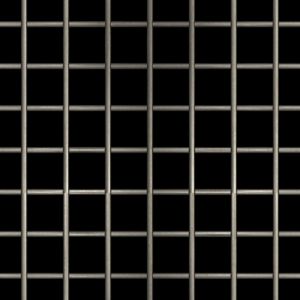
In today's complex industrial and commercial environments, efficient and reliable cable management is not a luxury—it's a necessity. Wire mesh cable trays have emerged as the premier choice for engineers, contractors, and facility managers worldwide, offering unparalleled flexibility, durability, and airflow. Unlike traditional solid-bottom trays or conduit systems, these open-design trays provide a robust, ventilated pathway for power, data, and communication cables. They are engineered to support dynamic installations where changes, upgrades, and inspections are frequent, making them ideal for data centers, manufacturing plants, and large-scale infrastructure projects. As a cornerstone of organized and safe electrical systems, wire mesh cable trays deliver a perfect balance of strength and accessibility.
Our wire mesh cable trays are manufactured to the highest international standards, incorporating design features that address the core challenges of cable management. We understand that your infrastructure demands solutions that are both resilient and adaptable.
Our wire mesh cable trays are produced in a range of standard sizes and configurations to meet diverse project requirements. The specifications below outline our core product line. Custom dimensions and load ratings are available upon request for specialized applications.
| Parameter | Specification | Details / Options |
|---|---|---|
| Material | Steel Wire | Low Carbon Steel, Stainless Steel 304/316 |
| Standard Width | 50mm - 600mm | Other widths available for customization |
| Standard Side Height | 30mm, 50mm, 80mm, 100mm | Determines cable containment capacity |
| Mesh Opening | 25mm x 50mm (Standard) | Other patterns (e.g., 50mm x 100mm) for specific needs |
| Wire Diameter | 4.0mm - 6.0mm | Varies based on load class and width |
| Standard Length | 3.0 meters | Easy to cut on-site for perfect fits |
| Surface Treatment | Hot-Dip Galvanized | Pre-galvanized, Powder Coated, Stainless Steel also available |
| Load Class (Based on IEC 61537) | C1, C2, C3, C4 | Corresponding to light, medium, heavy, and extra-heavy duty |
| Standards Compliance | IEC 61537, NEMA VE1, ASTM | Manufactured to meet global quality and safety benchmarks |
The versatility of wire mesh cable trays makes them suitable for a vast array of industries and settings. Their primary benefit is providing a secure, organized, and visible routing path for cables where adaptability is key.
Choosing wire mesh cable trays over other systems like solid-bottom trays, ladder trays, or conduit offers distinct operational and economic benefits that become evident over the lifecycle of an installation.
In a global market, selecting the right supplier is as critical as selecting the right product. We differentiate ourselves through a commitment to quality, service, and expertise that supports your project from specification to completion.
A: While both are open-design trays, ladder trays have two side rails connected by solid rungs, offering very high load strength for extremely heavy cables over very long spans. Wire mesh trays have a continuous welded mesh bottom and sides, providing better containment for smaller cables, superior flexibility for modifications, and easier cable access from the side. Wire mesh is often preferred for data/communication cables and in applications requiring frequent changes.
A: Yes, absolutely. When specified with the appropriate finish, such as hot-dip galvanization (with a minimum coating thickness) or stainless steel (AISI 316 for marine/coastal areas), wire mesh cable trays exhibit excellent corrosion resistance and are perfectly suited for outdoor installations, including those exposed to rain, sun, and salt spray.
A: The load class is determined by the total weight of the cables per meter, the support span distance, and any potential additional loads (like maintenance personnel). Our technical datasheets provide span/load tables. For complex projects, we strongly recommend consulting with our engineering team who can perform a detailed load calculation based on your specific cable schedule and layout to ensure safety and compliance.
A: Generally, yes. However, local electrical codes (like the NEC in the USA or IEC standards internationally) have specific requirements regarding the separation of power and data/communication cables to prevent electromagnetic interference (EMI). This often involves using internal dividers within the tray or maintaining a specified separation distance. It is crucial to design the installation in accordance with the applicable codes for your region.
A: A complete system includes straight sections, bends (horizontal and vertical), tees, crosses, reducers, and mounting hardware (straps, clamps, suspension rods). Couplers and splice plates are used to join straight sections. We supply a full ecosystem of compatible accessories to ensure a secure, continuous, and professional installation.
A: For standard products, our lead time is typically 15-30 days after order confirmation. We offer export-ready packaging, including sturdy wooden crates and pallets, designed to protect the products during long-distance ocean freight. All packages are clearly marked with product info and handling instructions to facilitate smooth customs clearance and on-site handling.
Comprehensive Guide to Durable 316 Stainless Steel Security Screens

Understanding 100 mesh stainless steel screen for Industrial Applications

Understanding 16 Mesh Stainless Steel Screen Applications and Performance
Understanding 20 mesh stainless steel screen Applications and Performance
Detailed Analysis of 2mm Stainless Steel Mesh Properties and Applications
Ready to move your project from technical blueprint to precision reality? Whether you require large-scale CNC machining, complex structural assembly, or specialized fabrication with rare alloys like Titanium and Nickel, our engineering team is prepared to assist. At metalfabricationcn.com, we solve the manufacturing challenges that others find too large or too complex. Reach out today to discuss your specific requirements, and let us help you optimize your supply chain with ISO 9001 certified reliability.