
Understanding 304 Stainless Steel Mesh Screen for Industrial Applications

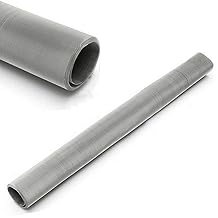
In demanding industrial and commercial environments, efficient solid-liquid separation is not just a convenience—it's a critical component of operational success, safety, and product quality. The large wire mesh strainer stands as a fundamental, robust solution for this essential task. Engineered for high-volume processing, this industrial-grade strainer is designed to handle substantial flow rates while providing reliable, durable filtration of particulates from liquids and gases. Unlike standard sieves, a large wire mesh strainer is built to withstand continuous use, harsh chemicals, and significant physical stress, making it indispensable in sectors ranging from food and beverage processing to chemical manufacturing, water treatment, and mining. This product page details our premium line of strainers, crafted to deliver unmatched performance, longevity, and value for your business.
Our large wire mesh strainer is a precision-engineered filtration device constructed from high-grade stainless steel or other specified alloys. Its primary function is to remove unwanted solids—such as debris, scale, sediment, or product clumps—from process streams, protecting downstream equipment like pumps, valves, and nozzles from damage and clogging. The defining characteristic is its expansive filtration area, achieved through a deep, cylindrical basket or a wide, flat mesh screen, which allows for high throughput with minimal pressure drop. The mesh, available in a vast range of micron-rated weaves, is securely welded or locked into a reinforced frame, ensuring structural integrity under load. Whether installed in a pipeline, used as a standalone sifting unit, or employed in dewatering processes, this large wire mesh strainer is the workhorse of industrial filtration, offering a simple yet profoundly effective mechanical separation method.
| Parameter | Specification Range / Standard Options |
|---|---|
| Primary Material | AISI 304 Stainless Steel, AISI 316/L Stainless Steel, Other Alloys (upon request) |
| Mesh Material | Stainless Steel Wire, Dutch Weave, Twilled Weave, Plain Square Weave |
| Filtration Rating (Mesh Size) | From 5 mesh (4,000 microns) to 325 mesh (45 microns) or finer |
| Basket/Diameter | From 6 inches (150mm) to 36 inches (900mm) and larger, custom diameters available |
| Connection Type | Flanged (ANSI, DIN, JIS standards), Tri-Clamp, NPT Threaded, Butt Weld |
| Pressure Rating | Standard: 150 PSI @ 100°F. Higher ratings (300 PSI, 600 PSI) available. |
| Temperature Rating | -20°F to 500°F (-29°C to 260°C) standard, higher for special designs |
| Surface Finish | Mill Finish, Electropolished, Passivated (for enhanced corrosion resistance) |
Note: All specifications are customizable to meet specific project requirements. Contact our engineering team for detailed design consultation.
The versatility of a large wire mesh strainer makes it a critical asset across a diverse spectrum of industries. Its primary role is protection and purification.
Choosing a dedicated large wire mesh strainer offers distinct operational and economic benefits compared to makeshift solutions or more complex filtration systems.
In a global market, sourcing reliable industrial equipment is crucial. We distinguish ourselves through a commitment to quality, service, and engineering excellence tailored for B2B clients.
A: The mesh size is determined by the size of the particles you need to remove. It's typically specified in microns or mesh count (e.g., 100 mesh). Consider the largest particle size allowable in your downstream process. Our technical team can help you analyze your process requirements and recommend the optimal mesh specification for your large wire mesh strainer to balance filtration efficiency with acceptable flow rate.
A: Absolutely. While 304 and 316 stainless steel are suitable for many applications, we fabricate strainers from a variety of alloys, including duplex stainless steels, Hastelloy, Monel, and Inconel, to withstand aggressive chemicals and extreme temperatures. Specify your fluid properties and operating conditions for a material recommendation.
A: A simplex strainer has a single basket. During cleaning, the flow must be stopped. A duplex (or twin) strainer features two baskets and a diverting valve, allowing flow to be switched to the clean basket while the dirty one is serviced, enabling continuous, uninterrupted operation—a critical feature for processes that cannot be shut down.
A: The frequency depends entirely on the particulate load in your process stream. A significant pressure drop across the strainer is a key indicator that cleaning is required. With proper maintenance, the stainless steel basket itself can last the lifetime of the installation. The mesh may eventually fatigue or clog irreversibly in some applications, but it is designed as a replaceable component.
A: Yes. We can provide standard Material Test Reports (MTRs) and Certificates of Conformance (CoC). For regulated industries, we can manufacture strainers to comply with specific standards and provide necessary documentation, such as those for ASME B31.3, PED, or 3-A Sanitary Standards, upon request.
A: Lead times vary based on complexity and customization. For an accurate quote and timeline, please provide: 1) Connection size and type, 2) Operating Pressure and Temperature, 3) Fluid Type and Characteristics, 4) Required Filtration Rating (mesh size), 5) Preferred Material of Construction, and 6) Any special standards or certifications required. Contact us today to begin the specification process for your ideal large wire mesh strainer solution.
Understanding 304 Stainless Steel Mesh Screen for Industrial Applications

Understanding 20 mesh stainless steel screen Applications and Performance
Understanding 16 Mesh Stainless Steel Screen Applications and Performance
Understanding the Versatility of 10 mesh stainless steel screen Applications

Detailed Analysis of 2mm Stainless Steel Mesh Properties and Applications
Ready to move your project from technical blueprint to precision reality? Whether you require large-scale CNC machining, complex structural assembly, or specialized fabrication with rare alloys like Titanium and Nickel, our engineering team is prepared to assist. At metalfabricationcn.com, we solve the manufacturing challenges that others find too large or too complex. Reach out today to discuss your specific requirements, and let us help you optimize your supply chain with ISO 9001 certified reliability.