
Understanding 20 mesh stainless steel screen Applications and Performance

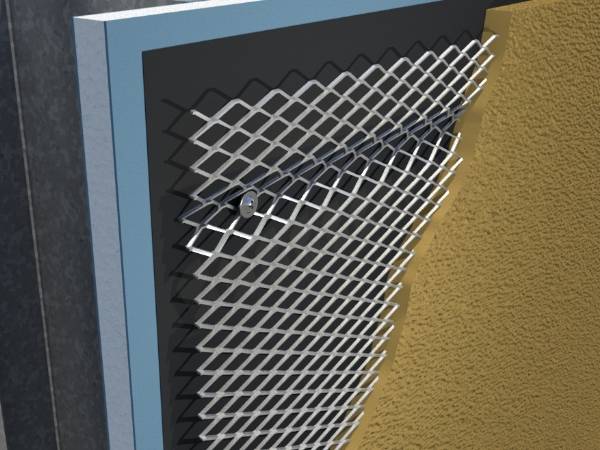
In the world of reinforced concrete construction, selecting the right reinforcement material is a critical decision that impacts structural integrity, cost, and project timelines. The debate of rebar versus wire mesh is central to this choice. Both are essential for providing tensile strength to concrete, which is inherently strong in compression but weak in tension. This comprehensive product page is designed to equip architects, engineers, and contractors with the detailed information needed to make an informed decision between rebar and welded wire mesh for their specific applications. We supply premium-grade materials for both solutions, ensuring you have access to the highest quality products for any structural requirement.
Rebar (reinforcing bar) and welded wire mesh (WWM) are two fundamental types of concrete reinforcement. Rebar consists of steel bars, typically with surface deformations for better bonding, that are placed in a grid pattern and tied together on-site. Wire mesh is a factory-welded grid of steel wires, delivered in sheets or rolls. The core distinction in the rebar versus wire mesh comparison lies in their application philosophy: rebar is used for heavy structural support in foundations, columns, and beams, where high tensile strength and the ability to handle significant loads and stresses are paramount. Wire mesh, conversely, is primarily employed to control cracking due to shrinkage and temperature changes in flatwork like slabs on grade, pavements, and some residential applications. Understanding this fundamental difference is the first step in optimizing your project's performance and budget.
The following table outlines the primary specifications for our standard rebar and welded wire mesh products. Custom sizes, grades, and finishes are available upon request to meet your exact project blueprints.
| Parameter | Rebar (ASTM A615) | Welded Wire Mesh (ASTM A1064) |
|---|---|---|
| Primary Material | Carbon Steel (Billet) | Carbon Steel (Wire) |
| Common Grades | Grade 60 (420 MPa), Grade 75 (520 MPa) | W1.1, W2.1, W4.1, W5.1, W6.1, W8.1, W11.1 |
| Standard Sizes / Designations | #3 (10mm) to #11 (36mm) | 6x6 W1.1xW1.1, 6x6 W2.0xW2.0, 4x4 W2.9xW2.9, etc. |
| Yield Strength (Min) | 60,000 psi (420 MPa) for Grade 60 | 65,000 psi (450 MPa) min for most styles |
| Form | Straight lengths (20ft, 40ft) or coils | Sheets (standard 5' x 10', 6' x 12') or Rolls |
| Primary Function | Carry tensile and shear loads in structural members | Control shrinkage & temperature cracking; light structural support |
| Typical Applications | Foundations, Beams, Columns, Retaining Walls, Bridges | Slabs-on-grade, Pavements, Residential Floors, Topping Slabs |
The correct application is the most critical factor in the rebar versus wire mesh decision. Misapplication can lead to structural failure or unnecessary cost.
Navigating the rebar versus wire mesh decision requires more than just a supplier; it requires a technical partner. We distinguish ourselves through an unwavering commitment to quality, service, and expertise.
This is the most common question in the rebar versus wire mesh discussion. The answer depends entirely on the slab's function. For a residential garage or patio slab on firm ground (a "slab-on-grade"), wire mesh is typically sufficient for its primary role of crack control. However, for a slab that is suspended (like a second-floor deck), supports heavy concentrated loads (industrial floor), or is on poor soil, rebar is required to provide the necessary structural tensile strength. Always consult structural drawings and engineering specifications.
The cost comparison is not straightforward. While wire mesh often has a lower initial material cost per unit area, the true cost includes labor and performance. For large, simple slabs, wire mesh's fast installation can lead to lower total in-place cost. For structural elements, rebar, though more labor-intensive to place, is non-negotiable for performance. The most cost-effective choice is the one that correctly and efficiently meets the structural requirements without over-engineering.
Yes, this is a common and sometimes optimal practice. For example, in a thick industrial floor slab, engineers may specify a grid of heavy rebar to handle load-bearing stresses, with a layer of light wire mesh placed in the upper portion of the slab specifically to control surface shrinkage cracking. This hybrid approach leverages the strengths of both products.
Welded wire mesh generally allows for faster construction. Sheets can be rolled out and overlapped quickly. Rebar placement involves more steps: cutting, bending, staging, and tying. For time-critical projects with large slab areas, the speed advantage of mesh can be significant. However, for vertical elements like walls and columns, prefabricated rebar cages can also be installed rapidly.
Absolutely. We offer extensive custom fabrication services, including precise rebar cutting and bending to your shop drawings, as well as the supply of prefabricated wire mesh sheets to non-standard dimensions. This service reduces on-site labor, improves accuracy, and accelerates your construction timeline.
In conclusion, the choice between rebar versus wire mesh is a fundamental engineering decision with significant implications for your project's success. By understanding their distinct roles and leveraging our expertise as your global supplier, you can ensure optimal structural performance, cost efficiency, and timely project completion. Contact our technical sales team today to discuss your specific requirements and receive a detailed quotation.
PREV:mesh wire bra
NEXT:w4x4 wire mesh
Understanding 20 mesh stainless steel screen Applications and Performance

Detailed Analysis of 2mm Stainless Steel Mesh Properties and Applications
Detailed Analysis of 24 mesh stainless steel screen Applications and Performance

Understanding 1mm Stainless Steel Wire Mesh for Filtration and Industrial Applications
Understanding 12 mesh stainless steel screen Applications and Technical Details
Ready to move your project from technical blueprint to precision reality? Whether you require large-scale CNC machining, complex structural assembly, or specialized fabrication with rare alloys like Titanium and Nickel, our engineering team is prepared to assist. At metalfabricationcn.com, we solve the manufacturing challenges that others find too large or too complex. Reach out today to discuss your specific requirements, and let us help you optimize your supply chain with ISO 9001 certified reliability.