
Understanding 100 mesh stainless steel screen for Industrial Applications

In the world of modern construction, the integrity of concrete structures is paramount. Concrete mesh wire, a fundamental reinforcement material, provides the tensile strength necessary to prevent cracking and ensure long-term durability. Selecting the correct concrete mesh wire sizes is not a matter of chance but a critical engineering decision that directly impacts the safety, performance, and cost-effectiveness of a project. This comprehensive guide is designed for architects, engineers, contractors, and procurement specialists seeking authoritative information on the specifications, applications, and sourcing of high-quality concrete reinforcement mesh.
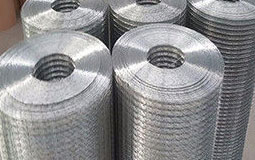
Concrete mesh wire, also known as welded wire mesh or fabric reinforcement, is a prefabricated grid of steel wires welded at all intersections. This manufacturing process creates a high-strength, uniformly spaced reinforcement sheet that is efficiently placed within concrete slabs, walls, and pavements. The primary function of concrete mesh wire is to absorb tensile stresses that the brittle concrete matrix cannot withstand on its own, thereby controlling shrinkage cracks and distributing loads evenly. Understanding the standard concrete mesh wire sizes—defined by wire diameter, grid spacing (aperture), and sheet dimensions—is the first step in specifying the right product for any structural or non-structural application, from domestic driveways to industrial flooring and civil engineering projects.
Our concrete mesh wire is produced to meet rigorous international standards. The specification is typically denoted by a style code (e.g., "6 x 6 - W2.9 x W2.9") where the first numbers refer to the grid spacing in inches, and the "W" number indicates the cross-sectional area of the wire in hundredths of a square inch. Below is a detailed table of our most common concrete mesh wire sizes and their corresponding metrics.
| Mesh Style (Imperial) | Wire Spacing (mm) | Longitudinal Wire Diameter (mm) | Transverse Wire Diameter (mm) | Cross-Sectional Area per m width (mm²/m) | Typical Sheet Size (m) | Primary Application |
|---|---|---|---|---|---|---|
| 6" x 6" - W1.4 x W1.4 | 150 x 150 | 4.0 | 4.0 | 84 | 2.4 x 6.0 | Light-duty slabs, patio slabs, walkways |
| 6" x 6" - W2.9 x W2.9 | 150 x 150 | 5.6 | 5.6 | 165 | 2.4 x 6.0 | Residential slabs, driveways, footings |
| 4" x 4" - W2.9 x W2.9 | 100 x 100 | 5.6 | 5.6 | 247 | 2.4 x 6.0 | Heavier-duty domestic slabs, warehouse floors |
| 4" x 8" - W2.9 x W2.9 | 100 x 200 | 5.6 (Transverse) | 5.6 (Longitudinal) | 247 (Transverse) / 124 (Longitudinal) | 2.4 x 6.0 | One-way slabs, road pavements, trench mesh |
| 6" x 6" - W4.0 x W4.0 | 150 x 150 | 6.5 | 6.5 | 221 | 2.4 x 6.0 | Industrial flooring, medium-span suspended slabs |
| 4" x 4" - W4.0 x W4.0 | 100 x 100 | 6.5 | 6.5 | 332 | 2.4 x 6.0 | Heavy industrial floors, bunkers, retaining walls |
| 3" x 3" - W5.0 x W5.0 | 75 x 75 | 7.3 | 7.3 | 558 | 2.4 x 6.0 | High-stress areas, blast-resistant structures, special applications |
Note: Custom concrete mesh wire sizes, sheet dimensions, and steel grades (e.g., 500D, 500E) are available upon request for specialized project requirements.
The correct selection of concrete mesh wire sizes is dictated by the structural demands of the application. Our product range serves a vast array of construction sectors.
For warehouse floors, factory slabs, and loading bays subject to dynamic and heavy point loads, larger wire diameters (e.g., W4.0 and above) with closer spacing (4"x4" or 3"x3") are essential. This configuration provides the high cross-sectional area of steel needed to prevent cracking under forklift traffic and heavy machinery.
Standard driveway, patio, and house slabs typically utilize 6"x6" grids with W2.9 or W4.0 wires. For road pavements, curb and gutter, and trench reinforcement, the 4"x8" mesh style is often specified, providing stronger reinforcement in the primary direction of stress. Bridge decks and parapets may require epoxy-coated mesh in specific sizes for corrosion protection.
Welded mesh is ideal for precast concrete panels, pipes, and architectural elements. The sheets provide uniform reinforcement that is easy to position within molds, ensuring consistent product quality and structural integrity. Lighter concrete mesh wire sizes are often used for crack control in non-structural cladding panels.
In demanding environments like animal pens, feedlots, and mining site pavements, galvanized concrete mesh wire in robust sizes provides the necessary strength while resisting corrosion from chemicals and moisture.
Choosing welded wire mesh over loose rebar or fiber reinforcement offers distinct benefits for B2B buyers focused on project efficiency and outcome.
In a global market, partnering with a reliable and expert manufacturer is critical. We distinguish ourselves through an unwavering commitment to quality, service, and technical partnership.
A: The specification should always be based on a structural engineer's design, which considers slab thickness, loading conditions, subgrade support, and concrete grade. The design will indicate the required cross-sectional area of steel per meter (mm²/m). You then select a mesh style from tables (like the one above) that meets or exceeds this area in both directions. When in doubt, consult our technical team with your project details.
A: The "W" number (e.g., W2.9) is a legacy imperial designation representing the cross-sectional area of the wire in hundredths of a square inch. W2.9 means 0.029 in². While useful for style naming, the actual wire diameter in millimeters is the critical metric for engineering and verification. Our specification tables provide both for clarity.
A: Absolutely. Welded mesh is commonly used in composite steel deck suspended slabs and one-way spanning slabs. For heavier loads and longer spans, it is often used in conjunction with secondary support rebar. The specific concrete mesh wire sizes and placement must be detailed in the structural drawings.
A: Yes. We supply standard black (mill finish) mesh for internal or protected applications. For exposed structures, coastal environments, or where specified, we provide hot-dip galvanized mesh (to ASTM A641) or epoxy-coated mesh (to ASTM A884), available in the full range of sizes.
A: Mesh sheets are securely bundled with steel strapping on wooden pallets for safe ocean or land transport. Standard lead times for container loads are 15-25 days after order confirmation, depending on the quantity and specifications. We provide professional packing lists, commercial invoices, and full certification for seamless international trade.
Selecting the right reinforcement is a foundational decision in construction. By understanding the nuances of concrete mesh wire sizes and partnering with a certified, experienced manufacturer, you secure not just a material, but the structural integrity and longevity of your build. Contact our team today for a detailed quotation and technical consultation tailored to your project's blueprint.
PREV:sheets of wire mesh
Understanding 100 mesh stainless steel screen for Industrial Applications
Strategic Custom Metal Fabrication Services

Comprehensive Guide to Durable 316 Stainless Steel Security Screens

Understanding 20 mesh stainless steel screen Applications and Performance
Detailed Analysis of 24 mesh stainless steel screen Applications and Performance
Ready to move your project from technical blueprint to precision reality? Whether you require large-scale CNC machining, complex structural assembly, or specialized fabrication with rare alloys like Titanium and Nickel, our engineering team is prepared to assist. At metalfabricationcn.com, we solve the manufacturing challenges that others find too large or too complex. Reach out today to discuss your specific requirements, and let us help you optimize your supply chain with ISO 9001 certified reliability.