
Understanding 1mm Stainless Steel Wire Mesh for Filtration and Industrial Applications

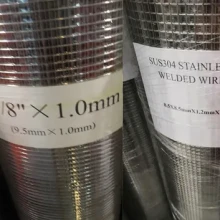
In the realm of durable and reliable construction, the integrity of concrete structures is paramount. Concrete steel wire mesh stands as a fundamental reinforcement material, engineered to provide tensile strength and crack resistance to concrete slabs, walls, and pavements. As a prefabricated grid of welded steel wires, it offers a consistent, high-performance solution that streamlines construction processes and ensures long-term structural stability. This product page delves into the specifications, benefits, and applications of professional-grade concrete steel wire mesh, designed for contractors, civil engineers, and procurement specialists in the global building materials market.
Concrete steel wire mesh, often referred to as welded wire fabric (WWF) or reinforcement mesh, is a manufactured steel grid consisting of a series of longitudinal and transverse wires resistance-welded at all intersections. This creates a rigid, unified sheet that is strategically placed within concrete pours to absorb tensile, shear, and torsional stresses that plain concrete cannot withstand. Our mesh is produced from high-quality, low-carbon steel wire, meticulously welded under controlled conditions to guarantee uniform spacing and exceptional bond strength with concrete. It is an indispensable component for a wide array of projects, from residential foundations and industrial flooring to infrastructure and precast elements, ensuring compliance with international building codes and standards.
Our concrete steel wire mesh is produced in a range of standard sizes and configurations to meet diverse project requirements. The specification is typically denoted by a mesh style (e.g., 6x6-W1.4xW1.4), where the first numbers indicate the spacing in inches (or mm), and the "W" number refers to the cross-sectional area of the wire in hundredths of a square inch. Below is a detailed table of our most commonly stocked specifications.
| Mesh Designation | Wire Spacing (mm) | Wire Diameter (mm) | Cross-Sectional Area (mm²/m) | Standard Sheet Size (m) | Typical Application |
|---|---|---|---|---|---|
| A142 | 200 x 200 | 6.0 | 142 | 2.4 x 6.0 | Light duty paving, patio slabs |
| A193 | 200 x 200 | 7.0 | 193 | 2.4 x 6.0 | Domestic floor slabs, paths |
| A252 | 200 x 200 | 8.0 | 252 | 2.4 x 6.0 | Heavy duty floors, foundations |
| A393 | 100 x 200 | 10.0 / 6.0 | 393 (Long.) / 283 (Trans.) | 2.4 x 6.0 | Heavy load industrial floors, raft foundations |
| D49 / 100x100 | 100 x 100 | 5.0 | 49 | Rolls: 2.4m wide x 50m+ | Thin screeds, wall rendering, crack prevention |
Note: Custom sizes, wire gauges, sheet dimensions, and galvanized coatings (e.g., to BS EN ISO 1461) are available upon request to meet specific project drawings and engineering specifications.
The versatility of concrete steel wire mesh makes it suitable for a vast spectrum of construction applications. Its primary role is to reinforce concrete against cracking and failure.
Choosing the right reinforcement material directly impacts project cost, timeline, and structural integrity. Our concrete reinforcement mesh delivers distinct competitive advantages.
In a global market, partnership with a reliable and expert supplier is crucial. We distinguish ourselves through a commitment to excellence that extends beyond the product itself.
A: While both are used to reinforce concrete, rebar consists of individual steel bars that must be cut, bent, and tied together on-site. Concrete steel wire mesh is a prefabricated grid of welded wires delivered in sheets or rolls. Mesh is typically used for slab-on-grade applications, pavements, and walls where it offers faster installation and better crack control for thinner sections. Rebar is more common in columns, beams, and heavy foundations where higher strength and custom bending are required. They are often used together in complex structures.
A: The correct specification is determined by structural engineering calculations based on the intended load, slab thickness, subgrade conditions, and local building codes. Common specifications like A142, A193, or A252 are used for progressively heavier loads. We strongly recommend consulting your project engineer. Our technical team is also available to provide guidance based on your application details and regional standards.
A: Yes. We offer hot-dip galvanized concrete steel wire mesh as a standard option. This provides a thick, durable zinc coating that offers superior corrosion protection for applications in coastal areas, chemical plants, wastewater treatment facilities, or where de-icing salts are used. The galvanizing process complies with relevant international standards to ensure long-term performance.
A: We primarily supply mesh in flat sheets (standard 2.4m x 6m, but customizable) which are bundled for shipping. For lighter gauges (e.g., 100x100 mesh), we can supply in rolls for easier handling in large-area pours like screeds. On-site, sheets are lifted into place using spreader bars to prevent bending, laid with specified lap lengths (typically one full grid spacing), and tied at overlaps and supports using soft wire.
A: Absolutely. Our production line is capable of custom fabrications. We can produce mesh to non-standard sheet sizes, with tailored wire spacings and diameters, and even cut-to-shape mesh for specific precast elements or complex formwork. Simply provide us with detailed drawings or specifications, and we will furnish a competitive quotation for your custom concrete reinforcement mesh requirements.
A: For standard specification mesh from stock, lead times are very short. For large or custom orders, lead time depends on the volume and specification but we work efficiently to meet project timelines. We cater to both large-scale infrastructure projects and smaller commercial orders. Please contact our sales team with your specific needs for an accurate lead time and MOQ details, as we strive to be flexible to support our clients' diverse projects.
NEXT:galvanized mesh wire
Understanding 1mm Stainless Steel Wire Mesh for Filtration and Industrial Applications

Understanding 300 Mesh Stainless Steel Screen Applications and Performance
Strategic Custom Metal Fabrication Services

Comprehensive Guide to Durable 316 Stainless Steel Security Screens
Understanding 12 mesh stainless steel screen Applications and Technical Details
Ready to move your project from technical blueprint to precision reality? Whether you require large-scale CNC machining, complex structural assembly, or specialized fabrication with rare alloys like Titanium and Nickel, our engineering team is prepared to assist. At metalfabricationcn.com, we solve the manufacturing challenges that others find too large or too complex. Reach out today to discuss your specific requirements, and let us help you optimize your supply chain with ISO 9001 certified reliability.