
Understanding 20 mesh stainless steel screen Applications and Performance

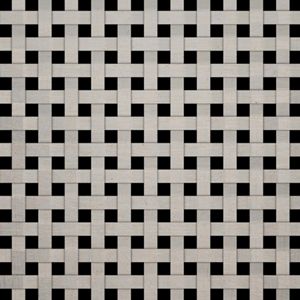
In the demanding world of industrial processing, separation and filtration are not just steps in a procedure—they are critical determinants of product quality, equipment longevity, and operational efficiency. At the heart of these vital processes lies a fundamental component: the strainer wire mesh. Engineered for precision and durability, our strainer wire mesh is a versatile and robust screening medium designed to withstand the rigors of countless applications, from food and beverage production to chemical processing and oil and gas exploration. This product page serves as your comprehensive guide to understanding how our high-performance strainer wire mesh can optimize your filtration systems, reduce downtime, and protect your valuable assets.
Our strainer wire mesh is a meticulously manufactured filtration fabric constructed from interwoven metal wires. Available in a vast array of materials, weaves, and micron ratings, it acts as a selective barrier, allowing fluids or gases to pass while capturing and retaining solid particulates of a specified size. Unlike standard screens, a true industrial strainer wire mesh is characterized by its exceptional strength-to-weight ratio, precise aperture control, and resistance to deformation under pressure, temperature, and corrosive environments. We produce our meshes using advanced weaving and welding technologies, ensuring consistent pore geometry and structural integrity across every square meter. Whether you require a simple replacement filter element or a custom-designed strainer wire mesh basket for a complex system, our products are built to deliver reliable, long-lasting performance in the most challenging conditions.
The following table outlines the standard specifications for our most commonly requested stainless steel strainer wire mesh products. Custom configurations beyond these ranges are available upon request.
| Parameter | Specification Range | Notes |
|---|---|---|
| Primary Material | AISI 304, 316, 316L Stainless Steel | Other alloys (Monel, Inconel, Brass) available. |
| Mesh Count | 2 to 635 Mesh | Defines openings per linear inch. Lower for coarse straining, higher for fine filtration. |
| Wire Diameter | 0.025 mm to 3.0 mm | Directly impacts strength, flow rate, and particle retention. |
| Micron Rating (Nominal) | 5 Microns to 25,000 Microns | Indicates approximate size of smallest particle retained. Consult our engineers for precise ratings. |
| Weave Type | Plain Dutch, Twill Dutch, Plain Square, Twilled Square | Selection affects strength, surface smoothness, and filtration characteristics. |
| Standard Width | Up to 2.0 Meters | Wider rolls minimize seams in large fabricated parts. |
| Temperature Resistance | Up to 1150°C (dependent on alloy) | Ideal for high-temperature processes in energy and metallurgy. |
| Surface Finish | Mill, Electropolished, Passivated | Electropolishing enhances cleanability and corrosion resistance for sanitary applications. |
The versatility of a well-engineered strainer wire mesh makes it indispensable across a broad spectrum of industries. Its primary function is to protect equipment and ensure purity by removing unwanted solids from liquids, gases, and vapors.
Used in pipeline strainer wire mesh baskets to protect pumps, valves, and meters from sand, scale, and other debris. Also critical in refinery process streams and catalyst recovery.
Sanitary-grade strainer wire mesh is essential for filtering juices, syrups, brewing wort, and edible oils, as well as sieving powders and granules. Its cleanability is paramount for meeting health standards.
High-precision meshes are used in the filtration of active pharmaceutical ingredients (APIs), process water, and fermentation air, where absolute consistency and material traceability are required.
Employed in intake screens, filter press liners, and membrane protection systems to remove solids and protect downstream components from damage and fouling.
Corrosion-resistant strainer wire mesh filters aggressive acids, alkalis, and solvents, ensuring product purity and preventing contamination in reaction vessels and transfer lines.
Heavy-duty meshes are used for dewatering, sizing, and classifying ores and minerals on vibrating screens and in static sieve bends.
Choosing the right filtration medium is a critical capital decision. Our strainer wire mesh offers distinct benefits that make it the superior choice for demanding industrial applications.
In a global market, selecting a supplier is about more than just product specifications; it's about partnership, expertise, and reliability. Here is what sets our company apart as your premier source for strainer wire mesh.
A: The correct micron rating depends on the size of the particle you need to remove to protect downstream equipment or ensure product purity. Consider the largest particle that can be tolerated in your process. It's often advisable to select a strainer wire mesh with a nominal rating slightly smaller than this target size. Our technical team can assist you in analyzing your process media to make a precise recommendation.
A: A nominal rating indicates the mesh will retain a majority (often 85-95%) of particles of that size. An absolute rating means it will retain 100% of particles at that size. Plain square weaves typically have a nominal rating, while finer Dutch weaves or multi-layered sintered meshes can achieve absolute ratings. The required rating is a critical safety and performance factor in your system design.
A: Absolutely. The temperature resistance is determined by the alloy. Standard stainless steels (304, 316) are suitable for most industrial temperatures. For extreme heat applications (e.g., exhaust gas filtration, molten metal), we supply strainer wire mesh made from high-temperature alloys like Inconel or specialized stainless steels, ensuring structural integrity and oxidation resistance.
A: Yes, custom fabrication is one of our core competencies. We can fabricate your strainer wire mesh into virtually any shape—cylinders, cones, baskets, flat panels—and fit them with flanges, handles, or other attachments per your technical drawings. We work with you from design to finished product.
A: Standard mesh in common materials and weaves is typically available for shipment within 5-10 working days. Custom weaves, special alloys, and fabricated components require additional time based on complexity. We provide firm lead times upon order confirmation and are committed to meeting the delivery schedules critical to your project timeline.
For a detailed quotation or to consult with our engineering team about your specific strainer wire mesh requirements, please contact us today. Let us provide you with a filtration solution that enhances your operational efficiency and protects your capital investment.
PREV:wire mesh gauze
Understanding 20 mesh stainless steel screen Applications and Performance

Understanding 12 mesh stainless steel screen Applications and Technical Details
Comprehensive Guide to Durable 316 Stainless Steel Security Screens
Strategic Custom Metal Fabrication Services

Understanding 30 Mesh Stainless Steel Screen Applications and Material Properties
Ready to move your project from technical blueprint to precision reality? Whether you require large-scale CNC machining, complex structural assembly, or specialized fabrication with rare alloys like Titanium and Nickel, our engineering team is prepared to assist. At metalfabricationcn.com, we solve the manufacturing challenges that others find too large or too complex. Reach out today to discuss your specific requirements, and let us help you optimize your supply chain with ISO 9001 certified reliability.