
Understanding 30 Mesh Stainless Steel Screen Applications and Material Properties

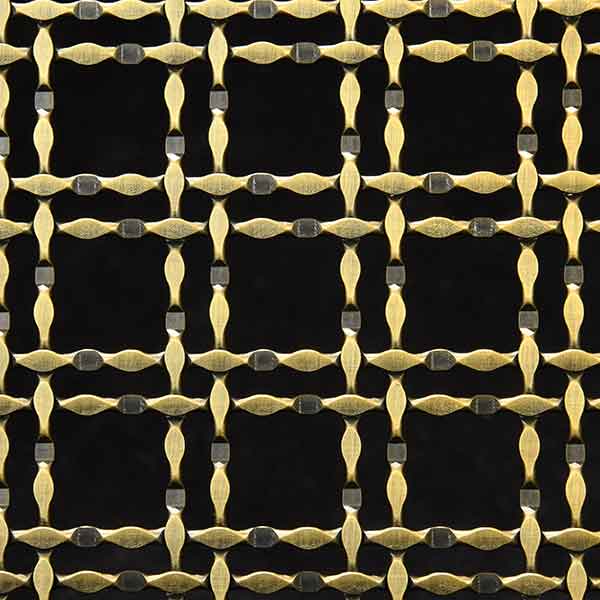
In the demanding world of industrial automation and bulk material handling, efficiency and reliability are non-negotiable. At the heart of countless production lines lies a critical component: the conveyor belt wire mesh. More than just a moving surface, a high-quality wire mesh conveyor belt is a precision-engineered system designed for strength, airflow, drainage, and high-temperature resilience. Our conveyor belt wire mesh is manufactured to the highest international standards, offering unparalleled durability for applications ranging from food processing to heavy metallurgy. Engineered from robust stainless steel, carbon steel, or specialized alloys, each belt is a testament to advanced weaving technology and rigorous quality control, ensuring your operations run smoothly, reduce downtime, and maximize productivity.
Our conveyor belt wire mesh is a versatile, open-mesh fabric constructed from interlocking spirals or crimped wires, forming a continuous, flexible belt. Unlike solid conveyor belts, the open structure allows for free air circulation, liquid drainage, and easy cleaning, making it ideal for processes involving heating, cooling, washing, or coating. This product category encompasses various weave types—including balanced weave, compound balanced weave, and double-loop spiral designs—each tailored to specific load capacities, product sizes, and environmental conditions. As a cornerstone of modern material handling, a well-chosen wire mesh conveyor belt directly impacts line efficiency, product quality, and total cost of ownership. We provide comprehensive solutions, from standard catalog belts to fully custom-engineered systems designed to meet your exact operational parameters.
Selecting the correct conveyor belt wire mesh requires careful consideration of technical parameters. The table below outlines the standard specifications for our most popular series. Custom configurations in wire diameter, mesh size, width, and alloy are available upon request.
| Parameter | Series 100 (Light-Duty) | Series 300 (Medium-Duty) | Series 500 (Heavy-Duty) | Series 700 (High-Temp) |
|---|---|---|---|---|
| Primary Material | Stainless Steel 304 | Stainless Steel 304/316 | Carbon Steel / Stainless Steel 310 | Stainless Steel 314 / Inconel |
| Wire Diameter (mm) | 1.0 - 1.6 | 1.6 - 2.5 | 2.5 - 4.0 | 2.0 - 3.5 |
| Mesh Opening (mm) | 6.4 x 6.4 to 12.7 x 12.7 | 12.7 x 12.7 to 25.4 x 25.4 | 25.4 x 25.4 to 50.8 x 50.8 | 12.7 x 12.7 to 25.4 x 25.4 |
| Max Operating Temp. | 400°C | 500°C | 600°C | 1150°C |
| Typical Belt Width (m) | 0.5 - 2.0 | 1.0 - 3.0 | 1.5 - 4.0 | 1.0 - 2.5 |
| Key Weave Type | Balanced Weave | Compound Balanced Weave | Double Loop (Rod Reinforced) | Compound Balanced Weave |
| Primary Application | Food Cooling, Packaging | Washing, Drying, Sorting | Aggregate, Mining, Foundry | Heat Treating, Sintering, Annealing |
The adaptability of conveyor belt wire mesh makes it indispensable across a broad spectrum of industries. Its functionality solves core material handling challenges in diverse environments.
In food production, hygiene and product integrity are paramount. Our stainless steel conveyor belt wire mesh is used in blanching, washing, steaming, frying, freezing, and cooling tunnels. The open mesh ensures even heating/cooling and allows for oil drainage or glaze runoff, while its easy-clean design supports strict sanitary protocols.
For processes such as sintering, annealing, quenching, and tempering, our high-temperature conveyor belt wire mesh provides the necessary thermal stability and strength to carry heavy loads through furnace zones exceeding 1000°C, ensuring consistent product treatment without belt failure.
From annealing lehrs to ceramic kilns, wire mesh belts offer a stable, flat surface that minimizes marking on glass sheets or ceramic tiles. Their resistance to thermal cycling is critical in these continuous, high-heat applications.
In finishing systems, the belt transports parts through spray booths and curing ovens. The mesh allows overspray to fall through and permits hot air to circulate uniformly around the parts, ensuring a consistent, high-quality finish.
Heavy-duty conveyor belt wire mesh acts as a dewatering screen or sorting conveyor in recycling plants and wastewater treatment facilities, separating solids from liquids and sorting materials by size under wet and abrasive conditions.
Choosing a wire mesh conveyor belt over solid fabric, rubber, or plastic belts offers distinct operational benefits that translate to a stronger bottom line.
In a global market, not all wire mesh belts are created equal. We distinguish ourselves through a commitment to engineering excellence, quality, and customer partnership that ensures your success.
A: The selection depends on the product's size/weight, the required open area for airflow or drainage, and the belt's total load capacity. As a rule, smaller products require smaller mesh openings to prevent fall-through, while heavier loads demand larger wire diameters. Our technical team can perform a detailed application analysis to recommend the optimal specification for your conveyor belt wire mesh.
A: Absolutely. While we stock standard sizes for quick delivery, a significant portion of our business is custom fabrication. We can produce belts in virtually any width (subject to mechanical limits) and endless lengths through our advanced spiral linking technology, creating a seamless belt for your specific conveyor frame.
A: A balanced weave has straight weft wires and crimped warp wires, offering good flexibility and a flat surface. A compound balanced weave features crimps in both the warp and weft wires, creating a tighter "lock" at each intersection. This provides greater dimensional stability, heavier load capacity, and superior resistance to diagonal distortion, making it ideal for wider, heavily loaded conveyors.
A: Regular maintenance is simple but crucial. Implement routine brushing or air blowing to remove debris. For deeper cleaning, use appropriate detergents and pressure washers, ensuring complete rinsing. Regularly inspect and lubricate sprockets (as recommended) and check belt tracking and tension. Avoid mechanical impacts or over-tightening. We provide detailed, application-specific maintenance protocols with every belt.
A: Standard catalog belts are typically available for shipment within 10-15 working days. For custom-engineered belts, lead times depend on the complexity, size, and material, generally ranging from 4 to 8 weeks. We prioritize clear communication and provide accurate production schedules from the outset to help you plan your project timeline effectively.
Ready to optimize your material handling line? Contact our engineering specialists today for a free consultation. Share your application details, and we will provide a tailored recommendation and quote for the conveyor belt wire mesh designed to enhance your productivity and durability.
PREV:cage mesh wire
NEXT:diamond mesh wire
Understanding 30 Mesh Stainless Steel Screen Applications and Material Properties

Detailed Analysis of 24 mesh stainless steel screen Applications and Performance

Detailed Analysis of 2mm Stainless Steel Mesh Properties and Applications
Comprehensive Guide to Durable 316 Stainless Steel Security Screens

Understanding 304 Stainless Steel Mesh Screen for Industrial Applications
Ready to move your project from technical blueprint to precision reality? Whether you require large-scale CNC machining, complex structural assembly, or specialized fabrication with rare alloys like Titanium and Nickel, our engineering team is prepared to assist. At metalfabricationcn.com, we solve the manufacturing challenges that others find too large or too complex. Reach out today to discuss your specific requirements, and let us help you optimize your supply chain with ISO 9001 certified reliability.