
Comprehensive Guide to Durable 316 Stainless Steel Security Screens

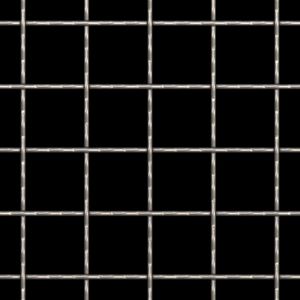
In the demanding world of industrial material handling, efficiency and reliability are non-negotiable. The wire mesh conveyor belt stands as a cornerstone technology, engineered to transport products through extreme conditions where traditional belts would fail. As a versatile and robust conveying solution, these belts are fabricated from interlinked metal wires, creating an open-mesh structure that offers superior strength, temperature resistance, and free air circulation. Ideal for industries ranging from food processing to heat treatment and automotive manufacturing, a high-quality wire mesh conveyor belt is not just a component—it is a critical investment in continuous, trouble-free production. This page details our premium range of belts, designed to meet the rigorous standards of global industrial operations.
Our wire mesh conveyor belt is a precision-engineered system constructed from high-grade stainless steel, carbon steel, or other specialty alloys. The belts are formed through a process of weaving, welding, or chain-driven linkage, resulting in a flat, balanced, and incredibly durable conveying surface. The defining characteristic of a wire mesh conveyor belt is its open grid pattern, which provides exceptional benefits for processes involving heating, cooling, washing, drying, or coating. This design allows for maximum exposure of the product to ambient conditions, whether it's hot air in an oven, coolant in a freezer, or drainage in a wash line. Unlike solid belts, mesh belts minimize product marking and are inherently easy to clean and maintain. We offer a comprehensive portfolio, including balanced weave, rod-reinforced, compound balanced, and chain-driven models, each tailored to specific load capacities, temperature ranges, and operational environments.
| Parameter | Specification Range | Details / Common Options |
|---|---|---|
| Material | Stainless Steel, Carbon Steel, Galvanized Steel | AISI 304 (Standard), 316 (High Corrosion), 314 (High Temp), 321, 310S; Carbon Steel (painted or plated). |
| Mesh Type | Balanced Weave, Rod-Reinforced, Compound Balanced, Chain Drive | Choice depends on required rigidity, load, and application (e.g., balanced for general use, rod-reinforced for heavy loads). |
| Wire Diameter | 0.8 mm - 5.0 mm (0.031" - 0.197") | Larger diameter increases strength and load capacity; finer wire allows for smaller product passage. |
| Mesh Opening (Pitch) | 1.5 mm x 1.5 mm to 50 mm x 50 mm | Customizable to support specific product sizes and allow for desired airflow/drainage rates. |
| Belt Width | 100 mm - 3000 mm (4" - 118") | Manufactured to your exact width requirement, with tolerances within ±2mm. |
| Maximum Operating Temperature | -50°C to 1150°C (-58°F to 2102°F) | Varies significantly by alloy. 314/310S grades are recommended for sustained high-temperature service. |
| Edge Design | Knuckled, Flattened, Beaded, Chain Edge | Knuckled for flexibility; flattened for smooth side transfer; beaded/chain for positive drive engagement. |
| Drive Options | Friction, Sprocket (Center or Side), Chain | Selected based on belt type, load, and required precision of movement. |
The adaptability of the wire mesh conveyor belt makes it indispensable across a vast spectrum of industries. Its ability to withstand harsh environments while providing a stable conveying platform is unmatched.
Choosing a wire mesh conveyor belt over solid rubber, plastic modular, or fabric belts delivers distinct operational and economic benefits that directly impact your bottom line.
In a global market, selecting the right partner is as crucial as selecting the right product. We distinguish ourselves through a commitment to quality, expertise, and customer-centric service.
A: The selection depends on your product size, weight, and process needs. A general rule is the mesh opening should be small enough to support your smallest product. Wire diameter is chosen based on load: heavier loads require thicker wires. Our technical team can analyze your specific product and process parameters to recommend the optimal configuration for your wire mesh conveyor belt.
A: Absolutely. We manufacture specialized spiral and turn conveyor belts designed with the flexibility to navigate tight radii while maintaining tracking stability. These often feature specific edge designs and drive configurations to ensure smooth operation in compact vertical or directional-change systems.
A: Lead times vary based on complexity, material availability, and current production schedule. Standard custom widths and lengths typically have a lead time of 4-6 weeks. For highly complex designs or large orders, we provide a firm timeline upon review of your specifications. We also offer expedited services for critical situations.
A: Regular maintenance is simple but crucial. We recommend periodic inspection for debris in the mesh and sprocket engagement. For cleaning, use appropriate brushes, non-abrasive cleaners, and pressure washers compatible with stainless steel. Avoid chloride-based cleaners which can cause pitting. Ensuring proper belt tension and alignment is the most effective way to prevent premature wear.
A: Yes, we provide a variety of enhancements. These include food-grade PTFE coatings for extreme non-stick requirements, abrasion-resistant coatings, and various attachments such as flights, crossbars, or side guards to contain product or facilitate elevation on inclined conveyors. Discuss your needs with our engineers for a tailored solution.
A: To provide an accurate quote and recommendation, please provide: 1) Application description and process temperature, 2) Product dimensions and weight, 3) Desired belt width and approximate length, 4) Preferred material (e.g., SS304), 5) Details of your existing conveyor (sprocket size, shaft diameter, center distance) if replacing a belt, and 6) Any special environmental conditions (chemical exposure, washdown frequency).
NEXT:wire mesh for moles
Comprehensive Guide to Durable 316 Stainless Steel Security Screens

Detailed Analysis of 24 mesh stainless steel screen Applications and Performance
Detailed Analysis of 2mm Stainless Steel Mesh Properties and Applications

Understanding 100 mesh stainless steel screen for Industrial Applications
Understanding 16 Mesh Stainless Steel Screen Applications and Performance
Ready to move your project from technical blueprint to precision reality? Whether you require large-scale CNC machining, complex structural assembly, or specialized fabrication with rare alloys like Titanium and Nickel, our engineering team is prepared to assist. At metalfabricationcn.com, we solve the manufacturing challenges that others find too large or too complex. Reach out today to discuss your specific requirements, and let us help you optimize your supply chain with ISO 9001 certified reliability.