
Understanding 16 Mesh Stainless Steel Screen Applications and Performance

In the intricate world of industrial fluid and gas processing, the integrity of your system hinges on the reliability of its filtration. The wire mesh filter element stands as a cornerstone of this critical process, offering a robust and versatile solution for separating contaminants from a vast array of media. Engineered from interwoven strands of metal wire, these elements provide exceptional strength, consistent pore size, and outstanding durability under high-pressure and high-temperature conditions. As a leading manufacturer for the global market, we provide premium-grade wire mesh filter elements designed to enhance operational efficiency, protect valuable downstream equipment, and ensure product purity across countless industries. This page details the superior engineering, applications, and tangible benefits that define our filtration solutions.
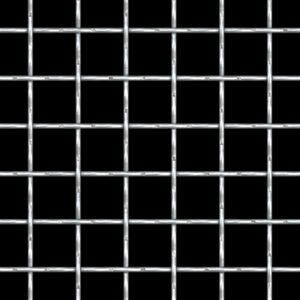
A wire mesh filter element is a meticulously manufactured filtration component constructed from layers of woven or sintered metal wires, typically stainless steel, but also available in other alloys like Monel, Inconel, or brass. The weaving process creates a precise, two-dimensional matrix of pores, allowing for accurate micron-rated filtration. These elements are renowned for their structural rigidity, ability to withstand extreme process conditions, and excellent flow characteristics. Unlike disposable media, a high-quality wire mesh filter element is often designed for cleanability and reuse, offering a cost-effective, sustainable filtration strategy over its long service life. They are commonly housed in filter vessels or housings as pleated cartridges, cylindrical sleeves, or flat discs, tailored to fit specific system requirements.
| Parameter | Specification Range | Details / Standard Options |
|---|---|---|
| Primary Material | Stainless Steel Series | 304, 304L, 316, 316L, 321, 347; Also available: Monel 400, Inconel 600/625, Hastelloy, Brass, Nickel. |
| Filtration Rating (Absolute) | 1 µm – 800 µm | Common ratings: 5µm, 10µm, 25µm, 50µm, 100µm, 150µm. Custom ratings available upon request. |
| Wire Diameter | 0.025 mm – 2.0 mm | Finer wires for finer mesh; thicker wires for added strength in coarse filtration. |
| Mesh Count | 2 – 635 Mesh | Defines openings per linear inch. Higher count = finer filtration. |
| Operating Temperature | -270°C to +540°C (-454°F to +1004°F) | Dependent on alloy selection. Specific grades suitable for extreme cryogenic or high-heat applications. |
| Maximum Operating Pressure | Up to 500 Bar (7250 PSI) | Contingent on element design, support core, and housing. Standard designs typically for 10-300 Bar. |
| Standard Construction | Single Layer, Multi-Layer, Sintered | Multi-layer (e.g., Dutch weave) for high strength and fine filtration. Sintered mesh for structural integrity and depth filtration. |
| Standard Shapes | Cylindrical, Pleated Cartridge, Disc, Cone, Custom | Pleated design maximizes surface area. End caps can be plain, threaded (NPT, BSP), flanged, or with sanitary fittings. |
| Surface Finish | Standard Mill, Electropolished, Passivated | Electropolishing reduces surface adhesion and improves cleanability, crucial for sanitary applications. |
The versatility of the wire mesh filter element makes it indispensable across a broad spectrum of industrial sectors. Its primary role is to protect equipment, ensure process stability, and guarantee product quality.
Used in fuel gas scrubbing, catalyst recovery, hydraulic and lube oil filtration, amine solutions, and protection of critical valves, compressors, and turbines from particulate damage.
Essential for filtering aggressive solvents, acids, and caustics; catalyst retention; and ensuring purity in intermediate and final products. Sanitary designs meet cGMP standards for pharmaceutical applications.
Filters demineralized water, turbine lube oil, seal oil, and cooling water to protect turbines, generators, and pumps, maximizing plant availability and efficiency.
Employed in the filtration of edible oils, syrups, brewing ingredients, and process water. Electropolished 316L stainless steel elements meet stringent hygienic requirements.
Critical for ensuring ultra-clean hydraulic fluid and fuel in aircraft and precision machinery, preventing valve clogging and system failure.
Acts as a robust pre-filter or strainer for seawater intake, protecting delicate reverse osmosis membranes from large particulates and debris.
Selecting a supplier for a critical component like a wire mesh filter element requires confidence in quality, expertise, and support. We distinguish ourselves through unwavering commitment to excellence.
A: The correct rating depends on the size of contaminant you need to remove and the requirements of your downstream equipment. Consider conducting a particle size analysis of your fluid. As a rule, the wire mesh filter element rating should be smaller than the clearances of the components you are protecting (e.g., pump seals, control valves). Our engineers can assist in this critical selection.
A: Yes. For viscous fluids, we often recommend a design with a larger surface area (such as a pleated cartridge) or a coarser pre-filter layer to reduce the initial pressure drop and extend service cycles. Material selection is also key to prevent clogging.
A: A plain Dutch weave uses a specific weaving pattern with a coarse warp and a fine weft wire, creating a strong, stable sheet good for fine filtration. A sintered wire mesh filter element involves fusing multiple layers of mesh together at their contact points under heat and pressure. This creates a monolithic, porous metal structure with depth filtration properties, higher dirt-holding capacity, and even greater mechanical strength.
A: Cleaning methods vary. Common techniques include ultrasonic cleaning (effective for oily particulates), backwashing with clean fluid or air, chemical soaking/cleaning for scale or polymers, and even thermal baking for carbonaceous deposits. We provide specific cleaning guidelines based on your element's construction and the contaminant type.
A: Absolutely. Customization is a core strength. We regularly manufacture wire mesh filter elements with non-standard diameters, lengths, end connections (including tri-clamp, DIN, SMS), and integrate support cores, gaskets, or by-pass valves to meet exact OEM or replacement specifications.
A: Our standard products are manufactured under an ISO 9001 quality system. We can provide elements with 3.1 Material Certificates per EN 10204. For specific industries, we can manufacture to ASME, PED, FDA, or other relevant standards upon request.
For a detailed consultation, technical drawings, or a quotation on a standard or custom wire mesh filter element, please contact our engineering sales team. We are committed to providing the precise filtration solution that your industrial process demands.
Understanding 16 Mesh Stainless Steel Screen Applications and Performance

Understanding 1mm Stainless Steel Wire Mesh for Filtration and Industrial Applications

Understanding 304 Stainless Steel Mesh Screen for Industrial Applications
Understanding 300 Mesh Stainless Steel Screen Applications and Performance
Understanding the Versatility of 10 mesh stainless steel screen Applications
Ready to move your project from technical blueprint to precision reality? Whether you require large-scale CNC machining, complex structural assembly, or specialized fabrication with rare alloys like Titanium and Nickel, our engineering team is prepared to assist. At metalfabricationcn.com, we solve the manufacturing challenges that others find too large or too complex. Reach out today to discuss your specific requirements, and let us help you optimize your supply chain with ISO 9001 certified reliability.