
Understanding 20 mesh stainless steel screen Applications and Performance

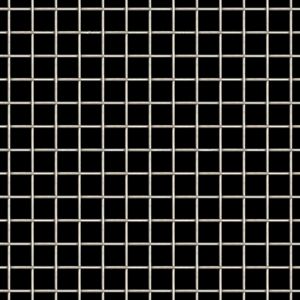
In the world of industrial filtration, separation, and reinforcement, precision is not just a preference—it's a requirement. Selecting the correct mesh specification is critical to the success and efficiency of your application. This comprehensive wire mesh sizing chart page serves as an essential technical resource for engineers, procurement specialists, and project managers across global industries. We provide not just a product, but a foundational tool for making informed decisions, ensuring that the wire cloth you specify delivers optimal performance, durability, and value. Understanding the parameters detailed in a professional wire mesh sizing chart is the first step toward achieving project integrity and operational excellence.
A wire mesh sizing chart is far more than a simple list of numbers; it is a systematic representation of the fundamental characteristics that define woven wire cloth. It translates physical properties into a standardized language understood worldwide in sectors such as mining, chemical processing, aerospace, agriculture, and construction. Our meticulously crafted charts provide clear, at-a-glance data on mesh count, wire diameter, aperture size, and open area percentage. This allows for precise calculation of flow rates, particle retention, strength, and weight. By offering charts for various materials—including stainless steel, brass, aluminum, and galvanized steel—we empower you to select a mesh that meets both your functional needs and environmental resistance requirements. Investing time in the correct wire mesh sizing chart mitigates risk, prevents costly specification errors, and ensures seamless integration into your larger system.
The table below is an excerpt from our standard stainless steel 304/304L wire mesh sizing chart, illustrating the precise relationship between mesh, wire, and opening. Please contact us for complete charts including other materials and weave types (Plain Weave, Twill Dutch Weave).
| Mesh (per inch) | Wire Diameter (mm) | Wire Diameter (inch) | Aperture (mm) | Aperture (inch) | Open Area % (approx.) | Common Application Range |
|---|---|---|---|---|---|---|
| 2 x 2 | 2.00 | 0.079 | 10.70 | 0.421 | 71 | Heavy screening, partitions |
| 10 x 10 | 0.71 | 0.028 | 1.83 | 0.072 | 54 | Coarse filtration, grating |
| 30 x 30 | 0.315 | 0.0124 | 0.531 | 0.0209 | 40 | General purpose sifting, sizing |
| 60 x 60 | 0.190 | 0.0075 | 0.233 | 0.0092 | 31 | Fine particle separation |
| 100 x 100 | 0.114 | 0.0045 | 0.140 | 0.0055 | 31 | Precision filtration, sieving |
| 200 x 200 | 0.061 | 0.0024 | 0.066 | 0.0026 | 27 | Ultra-fine filtering, laboratory use |
Accurate interpretation of a wire mesh sizing chart directly translates to successful deployment in the field. Here are key industrial scenarios where our charts are indispensable:
Relying on our professionally developed wire mesh sizing chart delivers tangible benefits to your procurement and engineering processes.
In a market flooded with inconsistent data, our commitment to accuracy and service sets us apart as your trusted industrial partner.
A: The key metric is the aperture (the clear opening between wires). As a general rule, to filter out a spherical particle, the aperture should be slightly smaller than the particle's diameter. For example, to retain 500-micron particles, you would look for a mesh with an aperture under 0.5mm. Our charts provide this data directly. For irregularly shaped particles, consulting with our technical team is recommended.
A: This indicates different "mesh specifications" or "weave styles." A standard plain weave offers a balance of strength and open area. A "heavy wire" version of the same mesh count uses a thicker wire for greater strength and durability, but with a smaller aperture and lower open area. Our charts clearly label these variations to prevent selection errors.
A: Open Area Percentage is the ratio of the total area of the openings to the total area of the mesh sheet. It is crucial for flow-based applications. A higher open area generally allows for greater flow rates with lower pressure drop. Our wire mesh sizing chart includes this calculated value to help you optimize for throughput versus filtration fineness.
A: Absolutely. While we provide comprehensive standard charts, we specialize in custom-woven solutions. Our engineering department can generate project-specific sizing and performance data for unique materials (like special high-temp alloys or polymers) or complex weaves (like multi-layer or composite cloths).
A: Material primarily affects wire diameter tolerance and strength. While aperture size remains consistent for a given mesh specification, the tensile strength of the wire (and thus the mesh's overall stability and load capacity) varies significantly between, say, aluminum and stainless steel. We provide separate charts for major material groups to account for these practical differences in performance and specification.
Understanding 20 mesh stainless steel screen Applications and Performance

Understanding 304 Stainless Steel Mesh Screen for Industrial Applications

Understanding 100 mesh stainless steel screen for Industrial Applications

Detailed Analysis of 2mm Stainless Steel Mesh Properties and Applications
Comprehensive Guide to Durable 316 Stainless Steel Security Screens
Ready to move your project from technical blueprint to precision reality? Whether you require large-scale CNC machining, complex structural assembly, or specialized fabrication with rare alloys like Titanium and Nickel, our engineering team is prepared to assist. At metalfabricationcn.com, we solve the manufacturing challenges that others find too large or too complex. Reach out today to discuss your specific requirements, and let us help you optimize your supply chain with ISO 9001 certified reliability.