
Comprehensive Guide to Durable 316 Stainless Steel Security Screens

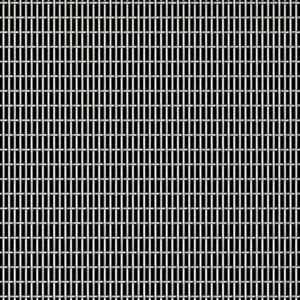
Welcome to our comprehensive range of precision-engineered wire mesh weaving products. As a cornerstone of modern industrial infrastructure, our woven wire mesh is manufactured to exacting standards, offering unparalleled versatility, durability, and performance. Our core competency lies in the advanced art and science of wire mesh weaving, a process where metallic wires are interlocked in a systematic, consistent pattern to form a robust, flexible, and permeable sheet material. We cater to a global B2B clientele across sectors such as filtration, construction, mining, agriculture, and chemical processing, providing tailored solutions that meet specific load, aperture, and environmental demands. Whether you require fine filtration meshes measured in microns or heavy-duty screening panels for quarry operations, our expertise in wire mesh weaving ensures you receive a product that integrates seamlessly into your operation, enhancing efficiency and longevity.
Our wire mesh weaving process yields products distinguished by a set of critical features designed for industrial rigor.
The following table outlines the standard specifications for our core wire mesh weaving product lines. Custom configurations beyond these ranges are actively encouraged and engineered to order.
| Parameter | Specification Range | Notes |
|---|---|---|
| Mesh Material | Stainless Steel, Galvanized Steel, Brass, Copper, Monel, Inconel | Material selection dictates corrosion resistance, strength, and temperature limits. |
| Weave Type | Plain Weave, Twill Weave, Dutch Weave, Reverse Dutch Weave, Crimped | Weave pattern affects strength, filtration precision, and surface profile. |
| Wire Diameter | 0.025 mm (Ultra-Fine) to 8.0 mm (Heavy-Duty) | Directly correlates to mesh strength and weight. |
| Mesh Count (Openings per Inch) | 2 to 635 | Defines the aperture size and open area percentage. |
| Aperture Size | 0.02 mm to 100 mm | The precise measurement of the clear opening between wires. |
| Sheet Dimensions | Standard: 1m x 30m, 1.2m x 30m. Custom widths & rolls available. | Optimized for minimal waste and ease of installation. |
| Surface Treatment | Mill, Electro-polished, Galvanized, PVC Coated, Nylon Coated | Enhances functionality for specific environments (e.g., food-grade, chemical). |
The application of our wire mesh weaving technology is vast, touching nearly every industrial sector. Our products are engineered to perform in critical roles.
Choosing our woven wire mesh translates into tangible operational benefits. Our focus on advanced wire mesh weaving techniques delivers distinct advantages over alternative materials like perforated plate or expanded metal.
In a global market, we distinguish ourselves as more than just a supplier; we are a technical partner dedicated to the mastery of wire mesh weaving.
A: In a plain weave, each warp wire passes alternately over and under each weft wire, creating a simple, symmetrical, and strong grid. It's the most common and economical weave. A twill weave involves each warp wire passing over two and under two weft wires in a staggered pattern. This allows for the use of heavier wire diameters at a given mesh count, resulting in a stronger, more durable mesh with a diagonal pattern, often used for heavier filtering and screening.
A: Material selection is critical. For general purposes or outdoor exposure, galvanized steel offers good protection. For moderate chlorides or acidic environments (e.g., food processing, marine atmospheres), Type 304 stainless steel is standard. For highly corrosive environments with strong acids, chlorides, or seawater, Type 316/L stainless steel with its molybdenum content is essential. Our technical team can advise based on your specific pH, chemical exposure, and temperature parameters.
A: Absolutely. For sub-micron and fine micron filtration, we specialize in Dutch weave and reverse Dutch weave patterns. These weaves use a system of thicker warp wires and much thinner weft wires (or vice-versa) to create a dense, tortuous path with exceptionally small, precise apertures that can filter particles down to 1 micron, suitable for hydraulic systems, fine chemicals, and high-purity applications.
A: Lead times vary based on the complexity, material availability, and quantity. Standard specifications from our catalog can often be shipped within 7-14 days. For fully custom engineered meshes involving non-standard wire, unique weaves, or special treatments, a typical lead time ranges from 4 to 6 weeks. We provide a firm timeline upon review of your detailed specifications and prioritize communication throughout the manufacturing process.
A: We offer comprehensive value-added services. We can supply raw mesh in sheets or rolls, or we can provide fully finished components. Our fabrication shop can precision-cut your mesh to shape, weld frames, add flanges or mounting brackets, and assemble complete filter elements, screen panels, or guard assemblies ready for bolt-in installation, saving you time and labor costs.
Comprehensive Guide to Durable 316 Stainless Steel Security Screens

Understanding 100 mesh stainless steel screen for Industrial Applications

Detailed Analysis of 24 mesh stainless steel screen Applications and Performance
Understanding 300 Mesh Stainless Steel Screen Applications and Performance
Detailed Analysis of 2mm Stainless Steel Mesh Properties and Applications
Ready to move your project from technical blueprint to precision reality? Whether you require large-scale CNC machining, complex structural assembly, or specialized fabrication with rare alloys like Titanium and Nickel, our engineering team is prepared to assist. At metalfabricationcn.com, we solve the manufacturing challenges that others find too large or too complex. Reach out today to discuss your specific requirements, and let us help you optimize your supply chain with ISO 9001 certified reliability.