
Understanding 304 Stainless Steel Mesh Screen for Industrial Applications

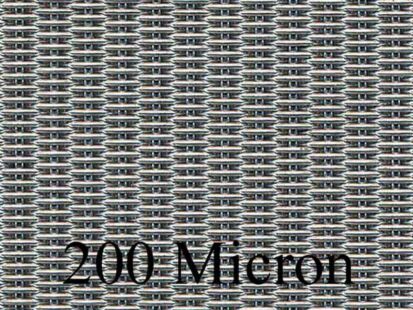
In the demanding world of industrial processing, separation, and filtration, precision and durability are non-negotiable. Our woven wire cloth mesh stands as a cornerstone material engineered to meet these rigorous challenges. Manufactured to exacting international standards, this versatile product is crafted by interweaving metal wires in a precise, consistent pattern to create a robust and reliable screening medium. From sifting fine powders to protecting heavy machinery, woven wire cloth mesh is an indispensable component across a vast spectrum of global industries, offering unmatched performance where accuracy and strength are paramount.
Our commitment to excellence is woven into every square meter of our product. We engineer our mesh to deliver consistent, reliable performance in the most challenging environments.
The performance of a woven wire cloth mesh is defined by its precise technical parameters. The table below outlines our standard specifications, all of which can be customized to meet unique project requirements.
| Parameter | Specification Range | Details / Standards |
|---|---|---|
| Mesh Count | 2 to 635 Mesh | From coarse screening to micron-level filtration. |
| Wire Diameter | 0.025 mm to 5.0 mm | Directly impacts strength, open area, and flow rate. |
| Aperture Size | 5 Microns to 100 mm | Precisely controlled for accurate particle separation. |
| Material Grades | SS304, SS316/L, Carbon Steel, Brass, etc. | ASTM, DIN, JIS, and GB standards compliant. |
| Weave Type | Plain, Twill, Dutch, Reverse Dutch | Selected for filtration precision, strength, and cake release. |
| Width & Length | Up to 2.2m wide, Custom Lengths | Supplied in rolls or cut-to-size sheets to minimize waste. |
| Surface Finish | Mill, Electro-polished, Heat-Treated | Enhances corrosion resistance, cleanability, and durability. |
The adaptability of woven wire cloth mesh makes it a critical component in countless industrial processes. Its primary function is to separate, filter, shield, or reinforce with unwavering reliability.
Choosing the right screening medium impacts operational efficiency, product quality, and total cost of ownership. Our woven wire cloth mesh offers distinct competitive advantages.
In a global market, partnership with a reliable, expert supplier is as important as the product itself. We are more than a manufacturer; we are your technical partner in filtration and separation.
A: The selection is primarily driven by the size of the particles you need to retain or separate. Mesh count (openings per inch) and wire diameter work inversely to determine the aperture size and percentage of open area. Our technical team can guide you through this calculation, balancing separation accuracy, flow rate, and screen life. Providing us with your particle size distribution data is the best starting point.
A: Plain Weave, the most common, has wires woven over and under each other in a simple crisscross pattern, offering good strength and uniform apertures. Dutch Weave uses a thicker warp wire and a much finer weft wire, woven tightly to create a tapered, non-blinding aperture ideal for fine micron filtration and high-pressure applications. Twill Weave offers a smoother surface and higher strength for heavier loads.
A: Absolutely. The temperature resistance is determined by the base metal. For instance, standard stainless steel (304) can continuously withstand temperatures up to approximately 870°C, while specialized alloys can go significantly higher. We will specify the appropriate material based on your operating temperature and atmosphere (oxidizing or reducing).
A: We provide comprehensive solutions. We can supply the woven wire cloth mesh in roll or sheet form for your own fabrication. More efficiently, we offer full in-house fabrication services—including cutting, rolling, welding, and assembling—to deliver ready-to-install filter elements, screen panels, baskets, or guards per your precise drawings, saving you time and production costs.
A: SS316 stainless steel contains molybdenum (2-3%), which SS304 does not. This addition significantly enhances SS316's resistance to chlorides and acidic environments, making it the superior choice for marine applications, chemical processing involving chlorides, and highly corrosive settings. For general industrial use without strong chlorides, SS304 offers excellent corrosion resistance at a more economical price point.
PREV:No more articles!
Understanding 304 Stainless Steel Mesh Screen for Industrial Applications

Understanding 30 Mesh Stainless Steel Screen Applications and Material Properties
Understanding 100 mesh stainless steel screen for Industrial Applications

Detailed Analysis of 2mm Stainless Steel Mesh Properties and Applications

Understanding 20 mesh stainless steel screen Applications and Performance
Ready to move your project from technical blueprint to precision reality? Whether you require large-scale CNC machining, complex structural assembly, or specialized fabrication with rare alloys like Titanium and Nickel, our engineering team is prepared to assist. At metalfabricationcn.com, we solve the manufacturing challenges that others find too large or too complex. Reach out today to discuss your specific requirements, and let us help you optimize your supply chain with ISO 9001 certified reliability.