
Comprehensive Guide to Durable 316 Stainless Steel Security Screens

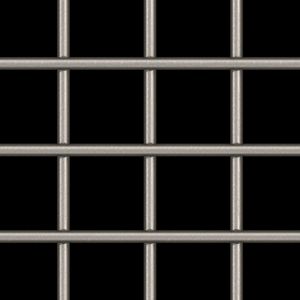
In the complex world of industrial materials, few components offer the versatility, durability, and precision of woven wire mesh fabric. As a foundational material across countless sectors, it is engineered to provide reliable performance under demanding conditions. Our high-quality woven wire mesh fabric is manufactured to exacting standards, utilizing superior metals and advanced weaving techniques to deliver consistent aperture size, exceptional strength, and long-term stability. This product page serves as your comprehensive guide to understanding its capabilities, specifications, and the significant advantages it brings to your projects and production lines.
Woven wire mesh fabric is a versatile industrial material created by interlacing metallic wires in a precise, regular pattern on specialized looms. This process yields a flat, flexible sheet with uniform openings, known as apertures, which can be tailored to meet specific performance criteria. The fundamental characteristics of the mesh—including mesh count, wire diameter, aperture size, and weave pattern—are meticulously controlled to determine its functional properties, such as flow rate, particle retention, mechanical strength, and surface characteristics. From rugged stainless steel for corrosive environments to economical galvanized steel for general-purpose use, the material selection is critical to the fabric's performance. As a cornerstone of modern industry, woven wire mesh fabric provides an optimal balance of open area and structural integrity, making it indispensable for applications ranging from fine filtration to heavy-duty screening and architectural facades.
The performance of woven wire mesh fabric is defined by its technical parameters. The table below outlines standard specifications for common types. Please contact our engineering team for custom requirements or detailed data sheets.
| Material | Mesh Count (per inch) | Wire Diameter (mm) | Aperture Size (mm) | Open Area (%) | Primary Weave Type | Typical Application |
|---|---|---|---|---|---|---|
| Stainless Steel 304 | 2 | 1.63 | 11.07 | 64 | Plain Square | Heavy Screening, Mining |
| Stainless Steel 316 | 10 | 0.71 | 1.83 | 54 | Plain Square | Food Processing, Chemical Filtration |
| Stainless Steel 304 | 30 | 0.315 | 0.532 | 40 | Plain Square | Fine Sieving, Safety Guards |
| Stainless Steel 316L | 60 | 0.152 | 0.271 | 33 | Plain Square | Precision Filtration, Laboratory |
| Galvanized Low-Carbon Steel | 4 | 0.91 | 5.44 | 70 | Plain Square | Construction Reinforcement, Fencing |
| Stainless Steel 304 | 24 x 110 | 0.315 x 0.223 | 0.745 x 0.208 | 30 | Dutch Twill | Absolute Micron Filtration |
Note: Specifications are nominal and may vary slightly. Mesh count can also be expressed per linear centimeter. Weave types include Plain, Twill, Dutch, and Twilled Dutch.
The utility of woven wire mesh fabric spans a remarkable breadth of industries, each leveraging its unique properties for critical functions.
This is one of the most significant applications. Our fabrics serve as filter media in oil and gas, chemical processing, water treatment, and pharmaceutical manufacturing. They separate solids from liquids and gases with high efficiency, from coarse straining to micron-level particle removal. The Dutch weave fabrics, in particular, are engineered for high-strength, fine-micron filtration.
In mining, aggregate, and food processing industries, robust woven wire mesh fabric is used in vibrating screens and trommels to classify and size materials by particle diameter. Its abrasion resistance is crucial for handling heavy, sharp-edged materials.
Beyond pure function, woven wire mesh fabric is a premier material for architectural facades, sunscreens, interior balustrades, and decorative panels. It offers a modern aesthetic, provides shading and ventilation, and is both durable and easy to maintain.
Used in machine guards, safety screens, and containment barriers, the fabric provides a clear view while protecting personnel from moving parts, sparks, or flying debris. Its strength ensures integrity under impact.
In construction and composites, the fabric is embedded in plaster, concrete, or polymers to provide tensile strength, prevent cracking, and act as a supportive matrix or catalyst bed in industrial reactors.
Choosing the right woven wire mesh fabric provides distinct competitive and operational benefits.
In a global market, partnership matters. We distinguish ourselves through a commitment to quality, expertise, and customer success that is woven into every meter of fabric we produce.
A: The key parameters are: 1) Material (based on corrosion/heat needs), 2) Mesh Count (openings per inch/cm), 3) Wire Diameter (which affects strength and aperture), and 4) Weave Type. The most critical factor is the size of the particle you need to retain or allow to pass. Our technical team can guide you through this selection based on your operating conditions and performance goals.
A: Mesh count refers to the number of openings per linear inch (or centimeter). Aperture size is the precise measurement of the clear opening between adjacent wires. A higher mesh count generally means smaller apertures, but the wire diameter also plays a role. Two meshes with the same count but different wire diameters will have different aperture sizes. We provide both metrics in our specifications for clarity.
A: Absolutely. We offer extensive fabrication services. We can precision-cut your woven wire mesh fabric to size, roll or flatten it, weld it into frames or baskets, add flanges or hooks, and create complex cylindrical or conical shapes. Providing a detailed drawing or sample is the best starting point for a fabrication quote.
A: Grades like 304 and 316 stainless steel offer excellent performance across a wide range. They maintain good strength and oxidation resistance up to approximately 870°C (1600°F) for intermittent service. For continuous high-temperature service above 500°C (932°F), special alloys may be recommended. We can advise on the best material for your specific temperature profile.
A: A Dutch weave uses thicker warp wires and thinner weft wires woven tightly together. This creates a tapered, non-blinding aperture and provides much greater strength and finer filtration capabilities than a plain square weave of equivalent mesh count. It is the preferred choice for high-pressure differential applications and filtering very fine particles.
Ready to integrate high-performance woven wire mesh fabric into your project? Contact our specialist team today for a detailed quotation, technical consultation, or to request material samples. Let us provide the engineered solution that ensures the reliability and efficiency of your industrial processes.
NEXT:cage mesh wire
Comprehensive Guide to Durable 316 Stainless Steel Security Screens

Understanding 1mm Stainless Steel Wire Mesh for Filtration and Industrial Applications

Detailed Analysis of 24 mesh stainless steel screen Applications and Performance
Understanding 300 Mesh Stainless Steel Screen Applications and Performance
Strategic Custom Metal Fabrication Services
Ready to move your project from technical blueprint to precision reality? Whether you require large-scale CNC machining, complex structural assembly, or specialized fabrication with rare alloys like Titanium and Nickel, our engineering team is prepared to assist. At metalfabricationcn.com, we solve the manufacturing challenges that others find too large or too complex. Reach out today to discuss your specific requirements, and let us help you optimize your supply chain with ISO 9001 certified reliability.