
Understanding 12 mesh stainless steel screen Applications and Technical Details

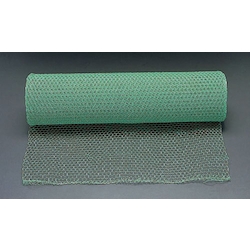
In the demanding world of industrial processing, separation, and purification, the integrity of your filtration system is paramount. Our precision-engineered wire mesh filter stands as a cornerstone component for countless applications, offering unmatched reliability and performance. Constructed from interwoven metal wires in a controlled, uniform pattern, this filter media provides a robust physical barrier to contaminants while ensuring optimal flow rates and minimal pressure drop. Unlike disposable or synthetic alternatives, a high-quality wire mesh filter is designed for durability, capable of withstanding extreme temperatures, high pressures, and corrosive environments. It serves as a critical safeguard for sensitive equipment, a guarantor of product purity, and a key contributor to operational efficiency and cost savings across a vast spectrum of industries.
Whether deployed as a standalone screen, integrated into a filter cartridge, or formed into complex shapes for specific assemblies, the versatility of the wire mesh filter is unparalleled. We specialize in manufacturing custom and standard filters that meet the exacting standards of international trade, ensuring every product delivers consistent, repeatable filtration performance. Investing in a superior wire mesh filter is not merely a purchase; it is a strategic decision to enhance system longevity, protect capital investments, and maintain the highest quality output.
Our standard wire mesh filter range is manufactured to ISO 9044 and other international standards. The table below outlines core specifications. Please note that custom configurations are our specialty.
| Parameter | Specification Range / Details | Standard Material Options |
|---|---|---|
| Mesh Count | 2 to 635 mesh (1 inch basis) | AISI 304, 304L, 316, 316L, 321, 347 Nickel 200, Monel 400 Inconel 600, 625 Hastelloy C276 Copper, Brass, Titanium |
| Wire Diameter | 0.025 mm to 2.5 mm | |
| Filtration Rating | 1 micron to 10,000 microns (nominal & absolute available) | |
| Weave Type | Plain Weave, Twill Weave, Dutch Weave (Plain & Twilled), Sintered Multi-Layer | |
| Standard Sheet Size | 1000mm x 1200mm, 1200mm x 1500mm (Custom sizes available) | |
| Operating Temperature | -270°C to +1100°C (dependent on material) | |
| Surface Finish | Electropolished, Passivated, Heat-treated (annealed) as required | |
| Connection Types | Plain end, flanged (ANSI, DIN, JIS), threaded (NPT, BSP), welded lip, clamp-type | |
The wire mesh filter is a ubiquitous and critical component across global industries. Its primary function is to protect, purify, and separate.
Used in wellhead filtration, fuel gas scrubbing, catalyst recovery, and protection of pumps, valves, and nozzles from pipeline scale and debris. High-pressure sintered mesh filters are essential for critical process streams.
Ideal for filtering aggressive solvents, acids, and caustic solutions. Used in catalyst retention, polymer filtration, and as a sieve in pharmaceutical granulation and API processing, where cleanliness and material compatibility are non-negotiable.
Employed in sugar refining, beer and wine filtration, edible oil processing, and powder conveying (e.g., milk powder, flour). 316L stainless steel filters meet FDA and food-grade hygiene requirements.
Acts as a intake screen, a component in disc filters, and a filter element for irrigation systems and industrial water reuse, effectively removing suspended solids.
Critical for ensuring ultra-clean fuel, lubrication, and hydraulic fluids. Protects sensitive servo-valves and actuators from particulate-induced failure.
Filters cooling water, turbine inlet air, and ion-exchange resin in nuclear and thermal power plants, contributing to system safety and efficiency.
Choosing a metal wire mesh filter provides distinct operational and economic benefits that synthetic felts, paper, or plastic screens cannot match.
In a global market, partnering with a reliable and expert manufacturer is critical. We differentiate ourselves through a commitment to quality, precision, and partnership.
Our production facilities utilize state-of-the-art weaving, welding, and sintering technology. Every batch of raw material is certified, and every step of the manufacturing process is controlled under a strict ISO 9001 quality management system, ensuring traceability and consistency for every wire mesh filter we produce.
We don't just sell products; we solve filtration challenges. Our technical team works directly with your engineers to analyze application parameters—flow rate, pressure, temperature, chemical compatibility, and particulate load—to recommend or design the optimal filter specification.
We are experienced in international trade, providing comprehensive documentation (Certs of Conformance, Material Test Reports), efficient global shipping, and support for customs clearance. Our products are built to meet ASME, PED, ATEX, and other regional standards as required.
Our filters are trusted components in refineries, chemical plants, food processing lines, and major OEM equipment around the world. This proven reliability is your assurance of performance.
Our relationship continues after delivery. We provide guidance on proper installation, cleaning procedures, and performance monitoring to ensure you achieve the maximum lifespan and value from your investment.
A: The correct rating depends on the size of the particle you need to remove to protect your process or equipment. We recommend conducting a particle size analysis of your upstream fluid. Our engineers can then advise on the appropriate wire mesh filter specification, considering whether a nominal (efficiency) or absolute (guaranteed retention) rating is required for your critical duty.
A: Yes, cleanability is a primary advantage. Methods include ultrasonic cleaning for intricate meshes, backflushing with clean fluid or air, chemical soaking for stubborn deposits, or simple mechanical brushing for larger meshes. We provide recommended cleaning protocols based on your filter's material and the contaminant.
A: Plain weave has a simple over-and-under pattern and is best for general filtration. Dutch weave uses a thicker warp wire and a thinner weft wire, woven tightly to create a strong, smooth surface with very fine filtration capabilities and high dirt-holding capacity, ideal for high-pressure liquid applications.
A: Absolutely. While 316L stainless steel is suitable for many applications, we specialize in exotic alloys like Hastelloy, Inconel, Monel, and Titanium for extreme corrosion resistance in chlorides, acids, and caustic environments. We help you select the most cost-effective material for your specific chemical exposure.
A: Lead times vary based on complexity and material availability. Standard items can often ship within 5-10 working days. For custom designs, we provide a firm quotation and timeline after reviewing your drawings or specifications. We prioritize communication to keep your project on schedule.
A: For the most accurate and timely quote, please provide the following: 1) Detailed drawings or sketches with dimensions, 2) Material specification, 3) Mesh count or micron rating, 4) Operating pressure and temperature, and 5) Connection type. Our sales engineering team is ready to assist you with any missing information.
Understanding 12 mesh stainless steel screen Applications and Technical Details

Understanding 300 Mesh Stainless Steel Screen Applications and Performance
Detailed Analysis of 24 mesh stainless steel screen Applications and Performance
Understanding 20 mesh stainless steel screen Applications and Performance

Understanding 304 Stainless Steel Mesh Screen for Industrial Applications
Ready to move your project from technical blueprint to precision reality? Whether you require large-scale CNC machining, complex structural assembly, or specialized fabrication with rare alloys like Titanium and Nickel, our engineering team is prepared to assist. At metalfabricationcn.com, we solve the manufacturing challenges that others find too large or too complex. Reach out today to discuss your specific requirements, and let us help you optimize your supply chain with ISO 9001 certified reliability.