
Understanding 20 mesh stainless steel screen Applications and Performance

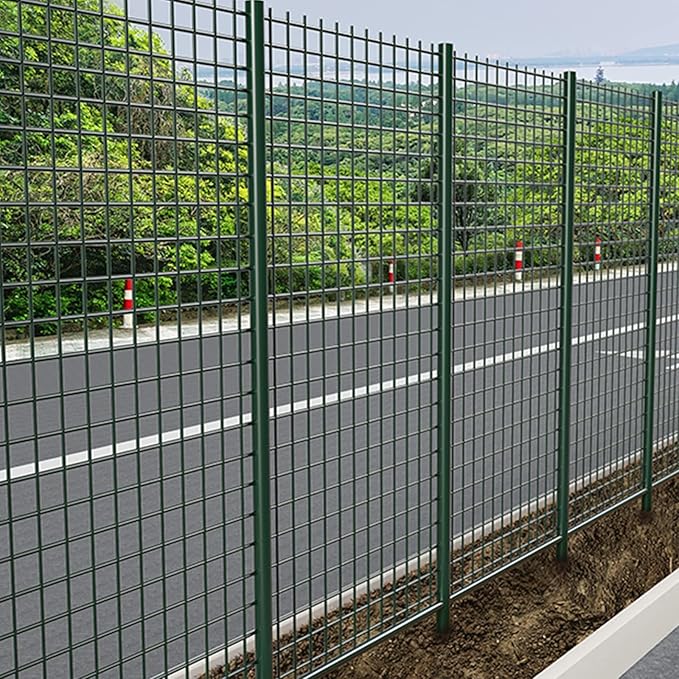
In the world of construction, structural integrity is paramount. Wire mesh for concrete stands as a fundamental reinforcement material, engineered to provide tensile strength and prevent cracking in concrete slabs, foundations, and a multitude of other applications. This welded grid of steel wires acts as a critical skeleton within the concrete matrix, distributing loads evenly and mitigating the effects of shrinkage and thermal expansion. For contractors, engineers, and procurement specialists sourcing materials for international projects, selecting the right wire mesh for concrete is a decision that directly impacts the durability, safety, and longevity of the finished structure. This product page details our high-quality welded wire mesh, manufactured to meet rigorous international standards, offering a reliable and cost-effective solution for your global construction needs.
Our welded wire mesh for concrete is a prefabricated reinforcement material produced through an automated, high-precision electric resistance welding process. This results in a series of uniformly spaced longitudinal and transverse wires fused securely at every intersection. The primary function of wire mesh for concrete is to counteract concrete's inherent weakness in tension. While concrete excels under compression, it is prone to cracking under tensile stresses caused by drying shrinkage, temperature changes, and live loads. By embedding our wire mesh within the concrete pour, we create a composite material that is significantly stronger and more resistant to cracking, ensuring a monolithic and durable finish. Available in a wide range of sheet sizes, wire diameters, and grid spacings, our product line is designed to meet the specific design requirements of everything from residential driveways to industrial flooring and heavy-duty pavements.
Our wire mesh for concrete is produced in accordance with international standards such as ASTM A185/A185M, BS 4483, and AS/NZS 4671. The table below outlines our core product range. Custom sizes, wire gauges, and spacings can be engineered to meet specific project requirements.
| Mesh Designation | Longitudinal Wire Spacing (mm) | Transverse Wire Spacing (mm) | Wire Diameter (mm) | Common Sheet Size (m) | Typical Application |
|---|---|---|---|---|---|
| A142 | 200 | 200 | 6.0 | 2.4 x 4.8 / 2.4 x 6.0 | Light-duty domestic slabs, paths |
| A193 | 200 | 100 | 7.0 | 2.4 x 4.8 / 2.4 x 6.0 | Residential floor slabs, driveways |
| A252 | 200 | 200 | 8.0 | 2.4 x 4.8 / 2.4 x 6.0 | Heavier domestic & commercial slabs |
| A393 | 200 | 100 | 10.0 | 2.4 x 4.8 / 2.4 x 6.0 | Industrial flooring, heavy-duty paving |
| B1131 | 100 | 100 | 7.0 | 2.4 x 4.8 / 2.4 x 6.0 | High-specification slabs, raft foundations |
Note: All wire diameters and spacings are nominal. Tensile strength typically exceeds 500 N/mm². Please consult our technical datasheets for full mechanical properties, tolerances, and packaging details.
The versatility of wire mesh for concrete makes it indispensable across the construction spectrum. Its primary role is to reinforce cast-in-place concrete elements where cracking control and tensile strength are critical.
In warehouses, factories, and retail complexes, our heavy-duty mesh (such as A393) is used in ground-supported slabs to withstand constant forklift traffic, heavy point loads, and dynamic stresses without failure.
For foundations, garage floors, basement slabs, and driveways, our standard mesh (A193, A252) provides essential reinforcement to prevent settlement cracks and ensure a smooth, long-lasting surface for homeowners.
Wire mesh for concrete is extensively used in road pavements, airport runways, bridge approach slabs, and median barriers. It enhances fatigue resistance and reduces reflective cracking in these high-traffic public works projects.
Manufacturers of precast panels, pipes, and architectural elements utilize our mesh for its consistent quality and ease of placement, ensuring each unit meets precise structural specifications.
For reinforced patios, pool decks, and pedestrian walkways, mesh provides the necessary reinforcement to handle soil movement and thermal cycling, maintaining aesthetic appeal over time.
Choosing our welded wire mesh for concrete offers distinct benefits compared to other reinforcement strategies like loose rebar or fiber reinforcement.
In a global market, partnering with a reliable and expert manufacturer is crucial. We distinguish ourselves through an unwavering commitment to quality, service, and international logistics.
A: Welded wire mesh for concrete is predominantly supplied in flat, rigid sheets (typically 2.4m wide by 4.8m or 6.0m long) as this format is easiest to handle and place for slab reinforcement. Rolled mesh is generally lighter gauge material used for non-structural applications like fencing or plaster backing. For concrete reinforcement, flat sheets are the standard and recommended form.
A: The required specification should always be determined by the project's structural engineer based on the design loads, slab thickness, and subgrade conditions. As a general rule, A142/A193 is common for light residential work, A252 for heavier domestic/commercial, and A393 for industrial floors. We strongly recommend consulting the structural drawings or an engineer for the correct specification.
A: In many ground-supported slabs (on grade), welded wire mesh is the primary and often sole reinforcement. For suspended slabs, beams, or columns, traditional rebar cages are usually required for their higher bending strength. Wire mesh for concrete and rebar can also be used together in some designs. The project's structural engineer will specify the appropriate reinforcement system.
A: Mesh should be positioned in the upper third of the slab thickness for crack control. Sheets must be lapped by a minimum distance, usually one full grid spacing plus 50mm, and tied together with tie wire at intervals. The laps should be staggered. Detailed placement guidelines are provided in our technical literature and conform to international building codes.
A: Yes. For projects in coastal environments, road applications where de-icing salts are used, or in chemically aggressive soils, we offer hot-dip galvanized (zinc-coated) wire mesh. This provides a robust, long-lasting barrier against corrosion, significantly extending the service life of the reinforced concrete structure.
A: Absolutely. While we stock a comprehensive range of standard products, our manufacturing lines can be configured to produce custom sheet dimensions, wire diameters, and grid spacings to meet unique architectural or engineering specifications. Please contact our technical sales team with your detailed requirements for a quotation.
Understanding 20 mesh stainless steel screen Applications and Performance

Understanding 12 mesh stainless steel screen Applications and Technical Details

Understanding 1mm Stainless Steel Wire Mesh for Filtration and Industrial Applications
Detailed Analysis of 2mm Stainless Steel Mesh Properties and Applications
Detailed Analysis of 24 mesh stainless steel screen Applications and Performance
Ready to move your project from technical blueprint to precision reality? Whether you require large-scale CNC machining, complex structural assembly, or specialized fabrication with rare alloys like Titanium and Nickel, our engineering team is prepared to assist. At metalfabricationcn.com, we solve the manufacturing challenges that others find too large or too complex. Reach out today to discuss your specific requirements, and let us help you optimize your supply chain with ISO 9001 certified reliability.