
Understanding 16 Mesh Stainless Steel Screen Applications and Performance

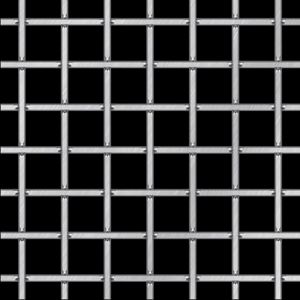
In the world of modern construction, structural integrity is non-negotiable. Wire mesh panels for concrete represent a fundamental and highly effective reinforcement technology, engineered to combat tensile stresses and prevent cracking in concrete slabs, walls, and foundations. As a premier supplier in the global industrial marketplace, we provide high-quality, precision-welded wire mesh panels designed to meet the rigorous demands of commercial, industrial, and civil engineering projects. Our panels are manufactured from robust steel wire, welded at every intersection to create a rigid, two-dimensional grid that becomes an integral part of the concrete matrix, significantly enhancing its load-bearing capacity and longevity. This product page details why our wire mesh panels are the superior choice for contractors, engineers, and procurement specialists worldwide.
Our wire mesh panels for concrete are fabricated through an automated, high-resistance welding process that ensures consistent, high-strength nodal connections. Unlike loose rebar, which requires extensive tying and placement time, these panels arrive on-site as ready-to-install sheets, dramatically streamlining the construction process. They are primarily used to reinforce concrete against shrinkage and temperature-induced cracks, distributing loads evenly across a wider area. The product range includes various wire gauges, mesh spacings, and panel sizes, all customizable to project specifications. Whether for a residential driveway, a massive industrial floor slab, or critical infrastructure, our panels provide reliable, code-compliant reinforcement that ensures project durability and safety.
Our standard range of wire mesh panels for concrete is detailed below. Custom sizes, wire diameters, and mesh configurations are available upon request to meet specific engineering design requirements.
| Specification | Standard Range | Description / Standard |
|---|---|---|
| Wire Diameter (Gauge) | 3mm (10G) to 8mm (2G) | Available in plain or deformed wire. Common sizes: W1.4 (4mm), W2.1 (5mm), W5 (6mm). |
| Mesh Spacing (Pitch) | 50mm x 50mm (2"x2") to 200mm x 200mm (8"x8") | Square mesh. 150x150mm (6"x6") and 100x100mm (4"x4") are most common for slabs. |
| Standard Panel Size | 2.4m x 6.0m (8' x 20') | Other sizes: 2.0m x 4.0m, 2.4m x 4.8m. Custom lengths up to 12m possible. |
| Steel Grade & Finish | ASTM A82, BS 4482, AS/NZS 4671 | Low-carbon steel. Finishes: Mill (black), Galvanized (Zinc-coated), PVC Coated. |
| Tensile Strength | Min. 550 N/mm² | Ensures high yield strength for effective crack control and load distribution. |
| Welding Standard | ISO 17660, AWS D1.4 | Welds are strong enough to withstand handling and concrete placement stresses. |
| Common Design Reference | A142, A193, A252 | BS 4482 designations indicating cross-sectional area per meter (e.g., A142 = 142mm²/m). |
The versatility of wire mesh panels for concrete makes them indispensable across a broad spectrum of construction applications. Their primary function is to provide secondary reinforcement, managing stresses that the primary rebar framework may not address.
Choosing our welded wire mesh panels for concrete offers distinct competitive and technical advantages for your project.
In a global market, partnering with a reliable and expert manufacturer is crucial for project success. We distinguish ourselves through an unwavering commitment to quality, service, and client partnership.
The primary purpose of wire mesh panels for concrete is to provide reinforcement against tensile stresses. Concrete is strong in compression but weak in tension. The embedded steel mesh absorbs these tensile forces, preventing the formation and propagation of cracks caused by shrinkage, temperature changes, and live loads, thereby increasing the slab's overall durability and structural capacity.
For ground-supported slabs (e.g., driveways, floors), the mesh should be positioned in the upper third of the slab thickness, typically raised 2-3 inches from the sub-base. This placement is optimal for resisting the tensile stresses that occur in the bottom of the slab under load. It is critical to use proper support chairs to maintain this position during the concrete pour.
Rebar is typically used as primary, structural reinforcement in foundations, columns, and beams, and is placed and tied on-site. Welded Wire Mesh (WWM) is often used as secondary, temperature/shrinkage reinforcement in slabs and walls. The key advantages of WWM are its prefabricated nature (saving labor), excellent dimensional stability, and effectiveness in crack control. For many slab applications, WWM is a more efficient and cost-effective solution than a tied rebar grid.
Yes, we offer hot-dip galvanized wire mesh panels for concrete as a standard option. Galvanization provides a thick, bonded zinc coating that offers superior corrosion protection, making it ideal for projects in coastal areas, industrial environments, or where de-icing salts are used. This significantly extends the service life of the reinforced concrete structure.
Absolutely. While we stock standard panel sizes, a core part of our service is customization. We can produce panels to your exact dimensions, with specific wire diameters and mesh spacings as dictated by your structural engineer's drawings. Please contact our technical sales team with your project specifications for a tailored quotation.
We expertly package panels in secure, weather-resistant bundles on wooden pallets for safe ocean or land transport. We handle all export documentation (Commercial Invoice, Packing List, Certificate of Origin, Mill Certificates) and can deliver CIF, FOB, or under other agreed Incoterms to major global ports. Our logistics team will provide the most efficient and cost-effective shipping solution for your order volume and destination.
Understanding 16 Mesh Stainless Steel Screen Applications and Performance
Understanding 20 mesh stainless steel screen Applications and Performance

Understanding 100 mesh stainless steel screen for Industrial Applications

Detailed Analysis of 2mm Stainless Steel Mesh Properties and Applications

Understanding 1mm Stainless Steel Wire Mesh for Filtration and Industrial Applications
Ready to move your project from technical blueprint to precision reality? Whether you require large-scale CNC machining, complex structural assembly, or specialized fabrication with rare alloys like Titanium and Nickel, our engineering team is prepared to assist. At metalfabricationcn.com, we solve the manufacturing challenges that others find too large or too complex. Reach out today to discuss your specific requirements, and let us help you optimize your supply chain with ISO 9001 certified reliability.