
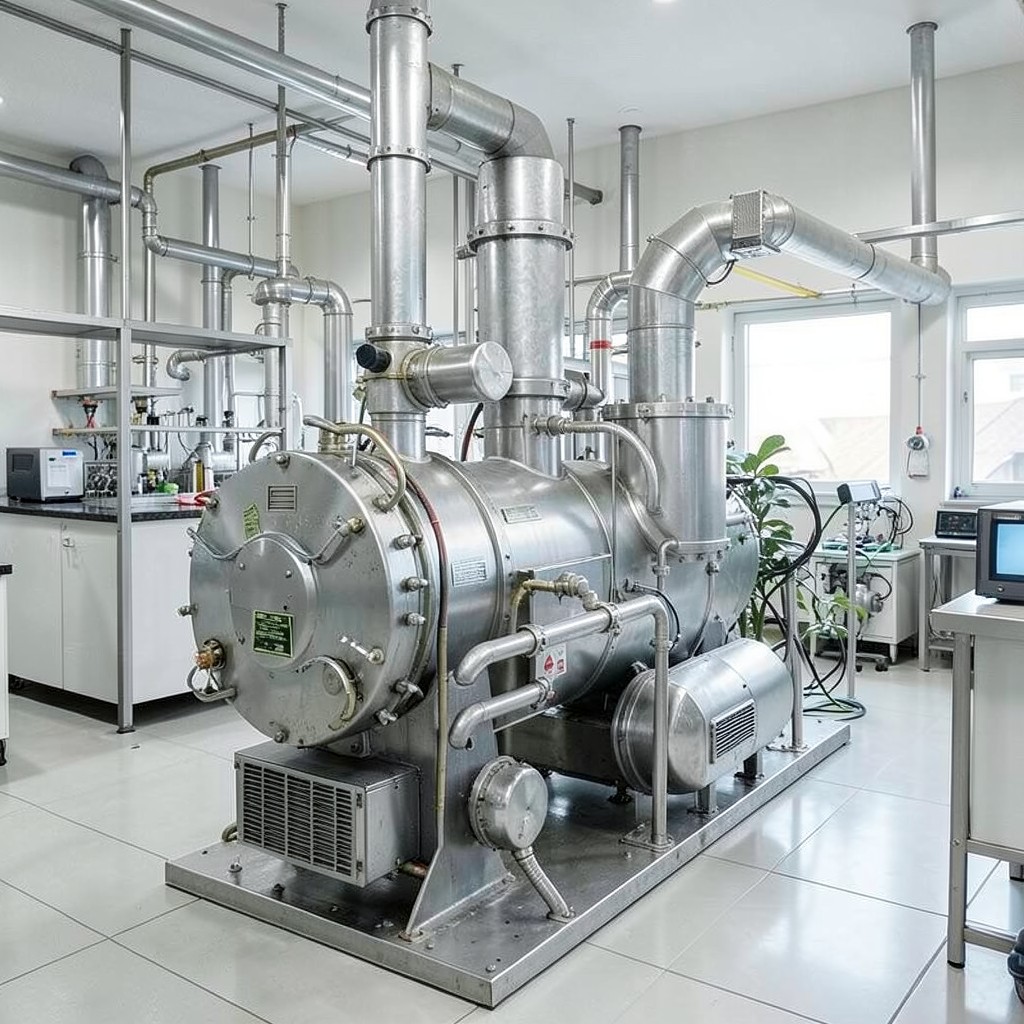

Liquid Waste Incinerator Boiler for Chemical Plant – High‑Performance Thermal Destruction
Our liquid waste incinerator boiler for chemical plant is engineered to turn hazardous effluents into harmless steam while recovering energy for your process. Designed for continuous duty cycles, the system integrates a sealed combustion chamber, high‑efficiency heat exchange, and robust emission controls to meet stringent environmental regulations. Whether you are upgrading an existing treatment line or building a new plant, this boiler delivers reliable, low‑maintenance operation that protects personnel, equipment, and the surrounding community.
Why Choose Our Solution – Competitive Edge
- **Integrated Energy Recovery** – Up to 85% of the incineration heat is reclaimed as usable steam, reducing fuel costs.
- **Continuous‑Duty Design** – Rated for 24/7 operation with minimal wear, ideal for high‑throughput chemical facilities.
- **Modular Construction** – Factory‑fabricated modules can be assembled on‑site in under 10 days, shortening commissioning time.
- **Compliance‑Ready** – Meets EU‑EIA, EPA 40 CFR Part 60, and ISO 14001 standards out‑of‑the‑box.
- **Tailored Controls** – PLC‑based interface supports remote monitoring, alarm management, and integration with existing DCS.
Application Scenarios
The boiler excels in environments where liquid hazardous waste streams demand thermal destruction. Typical installations include:
- **Organic solvent recovery** – Treating spent solvents from polymer synthesis.
- **Acid/base neutralization residues** – Incinerating neutralization by‑products from pH control loops.
- **Catalyst wash‑down effluents** – Safe disposal of metal‑laden wash liquids.
- **Process water containing trace organics** – Eliminating low‑level contaminants that exceed discharge limits.
In each case, the system maintains a stable flame temperature above 1200 °C, ensuring complete oxidation of complex organics while delivering steam at 10–15 bar for downstream heating or power generation.
Typical Specifications (customizable per order)
| Parameter | Standard Range | Units |
|---|---|---|
| Thermal Capacity | 500 – 3 500 | kW |
| Steam Pressure | 10 – 15 | bar |
| Waste Flow Rate | 0.5 – 8.0 | m³/h |
| Operating Temperature | 1200 – 1500 | °C |
| Emission Limit (NOx) | ≤ 150 | mg/Nm³ |
| Control System | PLC‑based with SCADA | – |
All dimensions, material grades, and control options can be adapted to match your plant layout, waste composition, and local code requirements.
Frequently Asked Questions
What is the minimum order quantity (MOQ) for a custom‑size boiler?
We can engineer units as small as 500 kW thermal capacity for niche applications. The MOQ is one fully built‑to‑spec system, which includes all accessories and on‑site commissioning support.
Can the boiler be integrated with an existing DCS?
Yes. Our PLC controller supports standard Modbus, Profibus, and OPC-UA protocols, enabling seamless integration with most Distributed Control Systems used in chemical plants.
What certifications does the liquid waste incinerator boiler for chemical plant hold?
The unit complies with EU‑EIA, EPA 40 CFR Part 60, ISO 9001 for manufacturing, and ISO 14001 for environmental management. We also provide CE and ATEX documentation upon request.
What warranty and after‑sales support are available?
Standard warranty is 24 months on the boiler shell and 12 months on control electronics, with optional extension packages. Our global service network offers 24/7 technical assistance, spare‑parts logistics, and on‑site maintenance contracts.