

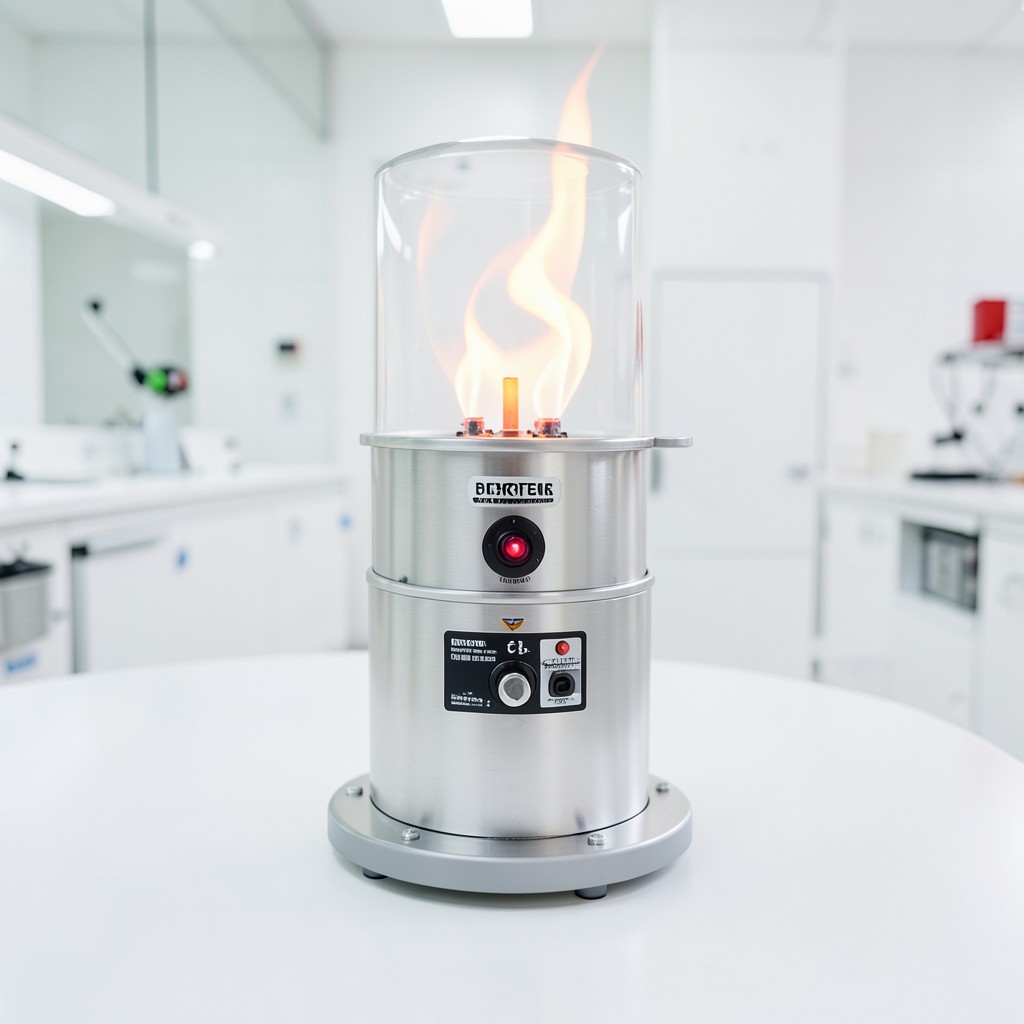

UV‑IR Flame Detector for Hydrogen Combustion
Detecting flame in a hydrogen‑rich environment requires a sensor that can see both ultraviolet and infrared signatures while tolerating the unique optical properties of hydrogen combustion. Our uv ir flame detector for hydrogen combustion delivers rapid, reliable detection across a wide temperature range, making it the preferred safety component for refueling stations, fuel‑cell production lines, and industrial hydrogen handling facilities.
Designed for integration into existing safety systems, the unit complies with ATEX, IECEx and ISO 9001 standards, and offers flexible I/O options for PLC, DCS or SCADA networks. Whether you are specifying a new plant or upgrading legacy equipment, this detector provides the confidence that a flame will be identified before it can cause damage or downtime.
How It Works – Dual‑Band Sensing Technology
The detector combines a high‑sensitivity UV photodiode with an IR sensor tuned to the 4.3 µm band where hydrogen flames emit strongly. The UV channel reacts within 10 ms to the early spark of a flame, while the IR channel confirms the presence of a hydrogen‑specific combustion pattern, dramatically reducing false alarms caused by sunlight or hot surfaces.
Signal processing firmware cross‑checks both channels and applies adaptive thresholding based on ambient light and temperature. When the criteria are met, a relay output, 4‑20 mA current loop, or Modbus/TCP message is triggered, allowing immediate shutdown of gas valves, activation of alarms, and logging for post‑event analysis.
Application Scenarios
- Hydrogen refueling stations – early flame detection in dispensers and storage bays.
- Fuel‑cell manufacturing – monitoring of test rigs and furnace chambers where hydrogen is used as a fuel or purge gas.
- Chemical processing plants – safeguarding reactors and pipelines handling hydrogen‑rich streams.
- Power generation – integration with turbine and boiler safety systems where hydrogen is blended with natural gas.
- Research laboratories – compact units for bench‑top experiments involving hydrogen combustion.
Typical Specifications (customizable per order)
| Parameter | Standard Range |
|---|---|
| Detection Wavelengths | UV: 180‑260 nm | IR: 4.3 µm |
| Response Time | ≤ 10 ms (UV) / ≤ 30 ms (IR) |
| Operating Temperature | ‑40 °C to +85 °C |
| Supply Voltage | 24 V DC (±10 %) |
| Outputs | Dry‑contact relay, 4‑20 mA, Modbus‑TCP, CAN‑bus |
| Ingress Protection | IP66 (dust‑tight, water‑jet) |
| Certification | ATEX Cat II II 2G, IECEx E Ex ib II T4 |
All parameters can be adapted to meet project‑specific requirements, such as extended temperature limits, additional communication protocols, or bespoke housing materials for corrosive environments.
Frequently Asked Questions
What is the minimum order quantity (MOQ) for a customized uv ir flame detector for hydrogen combustion?
Our standard models are available from a single unit, but for custom housing, firmware or special I/O configurations the MOQ is typically 10 units. This allows us to optimize production tooling while keeping lead times competitive.
Can the detector be integrated into existing safety PLCs?
Yes. The unit provides configurable outputs including dry‑contact relays, 4‑20 mA loops and standard fieldbus protocols (Modbus‑TCP, CAN‑bus). Wiring diagrams and communication settings are supplied with each shipment.
What is the typical lead time for a batch of 20 units?
Standard inventory items ship within 15 days. For a batch of 20 customized detectors, the lead time is 30‑45 days, depending on the extent of the modifications and current production schedule.
What warranty and support options are offered?
All detectors come with a 24‑month limited warranty covering manufacturing defects. Optional extended warranty and on‑site calibration services are available on a yearly contract basis.
Get a free quote, request a sample, or discuss integration options.