English
- Afrikaans
- Albanian
- Amharic
- Arabic
- Armenian
- Azerbaijani
- Basque
- Belarusian
- Bengali
- Bosnian
- Bulgarian
- Catalan
- Cebuano
- Corsican
- Croatian
- Czech
- Danish
- Dutch
- English
- Esperanto
- Estonian
- Finnish
- French
- Frisian
- Galician
- Georgian
- German
- Greek
- Gujarati
- Haitian Creole
- hausa
- hawaiian
- Hebrew
- Hindi
- Miao
- Hungarian
- Icelandic
- igbo
- Indonesian
- irish
- Italian
- Japanese
- Javanese
- Kannada
- kazakh
- Khmer
- Rwandese
- Korean
- Kurdish
- Kyrgyz
- Lao
- Latin
- Latvian
- Lithuanian
- Luxembourgish
- Macedonian
- Malgashi
- Malay
- Malayalam
- Maltese
- Maori
- Marathi
- Mongolian
- Myanmar
- Nepali
- Norwegian
- Norwegian
- Occitan
- Pashto
- Persian
- Polish
- Portuguese
- Punjabi
- Romanian
- Russian
- Samoan
- Scottish Gaelic
- Serbian
- Sesotho
- Shona
- Sindhi
- Sinhala
- Slovak
- Slovenian
- Somali
- Spanish
- Sundanese
- Swahili
- Swedish
- Tagalog
- Tajik
- Tamil
- Tatar
- Telugu
- Thai
- Turkish
- Turkmen
- Ukrainian
- Urdu
- Uighur
- Uzbek
- Vietnamese
- Welsh
- Bantu
- Yiddish
- Yoruba
- Zulu

Telephone: +86 13120555503
Email: frank@cypump.com


Apr . 01, 2024 17:55 Back to list
China Slurry Pump Selection Technical Specification and Performance Analysis
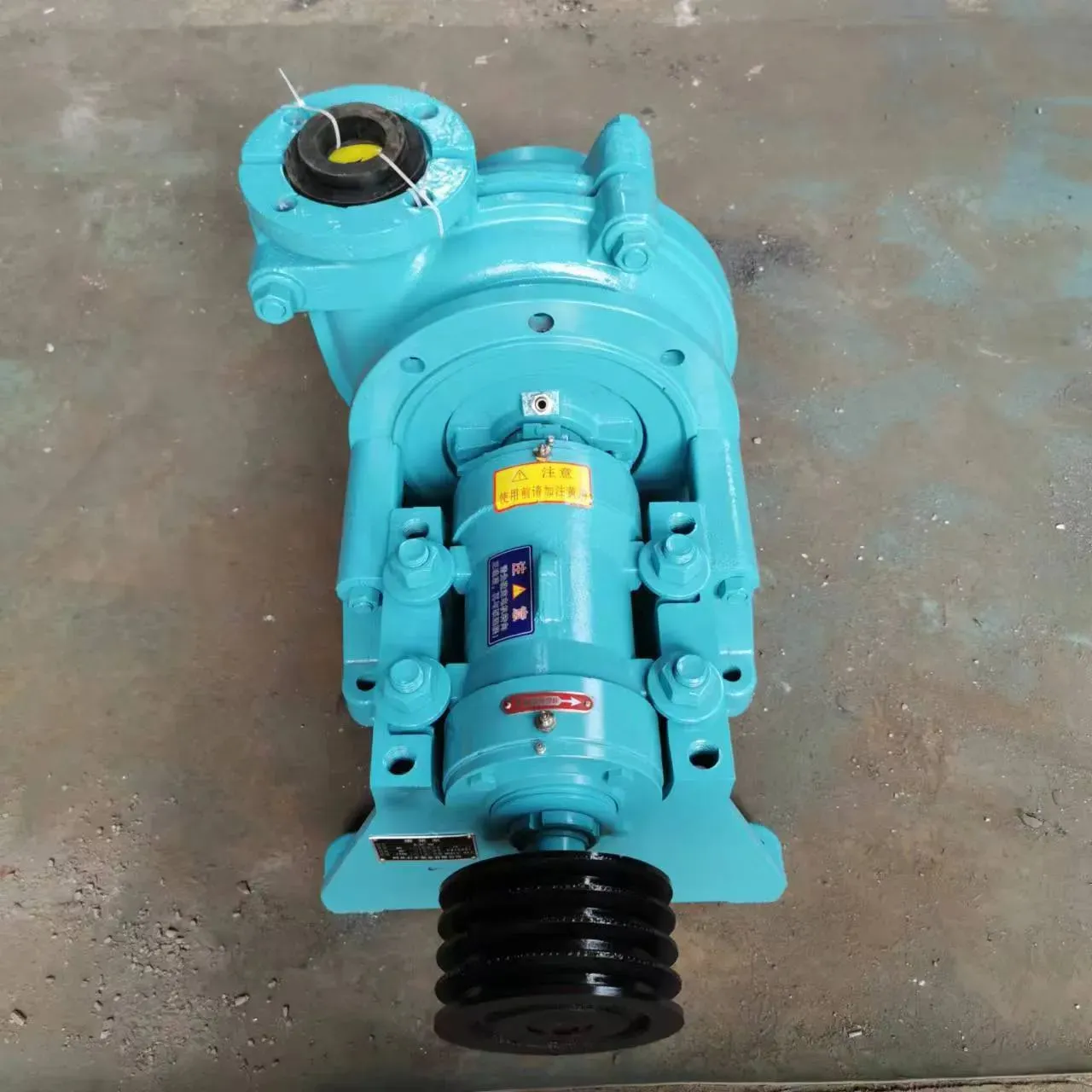
China Slurry Pump Selection: Technical Specification and Performance Analysis
The selection of a slurry pump within the Chinese industrial landscape requires a rigorous multidisciplinary approach, integrating fluid dynamics, metallurgy, and mechanical engineering. A slurry pump is not merely a fluid mover but a specialized machine designed to transport non-Newtonian fluids containing suspended solid particles, which impose extreme abrasive and corrosive stresses on the internal wetted parts. In the industrial chain, these pumps serve as critical nodes in mining, mineral processing, dredging, and chemical manufacturing. The primary technical challenge in selection lies in balancing the "Net Positive Suction Head Required" (NPSHr) against the "Net Positive Suction Head Available" (NPSHa) while ensuring that the material of construction can withstand the specific Mohs hardness of the transported solids. Failure to optimize these parameters leads to premature component failure, catastrophic loss of efficiency, and excessive operational expenditure (OPEX) due to frequent downtime for liner replacement.
Material Science & Manufacturing
The core of slurry pump durability resides in the metallurgical composition of the impeller and liner. Depending on the chemical nature of the slurry, materials are categorized into three primary technical domains: High-Chrome alloys, Natural Rubber, and Duplex Stainless Steels.
1. High-Chrome White Irons (ASTM A532): For highly abrasive applications (e.g., tailings or ore concentrate), 27% Cr high-chromium alloys are the industry standard. The manufacturing process involves precise heat treatment to form M7C3 carbides embedded in a martensitic matrix. This structure provides a hardness typically exceeding 60 HRC, preventing the "micro-plowing" effect caused by sharp silica particles. Control of the cooling rate during casting is critical to prevent internal shrinkage and porosity, which would otherwise serve as initiation sites for stress corrosion cracking.
2. Elastomeric Liners: In scenarios where particles are smaller and the impact energy is lower but the volume is high, natural rubber (NR) or polyurethane (PU) is utilized. The manufacturing involves vulcanization processes that optimize the polymer cross-linking density. These materials operate on the principle of "elastic deformation," where the liner absorbs the kinetic energy of the particle and rebounds, effectively resisting erosive wear that would otherwise carve into a rigid metal surface.
3. Manufacturing Precision: Modern Chinese slurry pump production utilizes CNC machining and dynamic balancing of the impeller to G2.5 standards. This reduces vibration-induced fatigue on the bearings and mechanical seals. The casting process often employs vacuum-assisted molds to ensure the structural integrity of the volute casing, reducing turbulence and cavitation zones.
Performance & Engineering
Engineering a slurry transport system requires a comprehensive analysis of the fluid's rheological properties. The selection process must prioritize the "Critical Settling Velocity" (CSV)—the minimum velocity required to keep solids suspended in the pipeline. If the pump operates below the CSV, solids will accumulate, leading to pipeline blockage and increased friction loss.
Force Analysis and Hydraulic Design: The impeller geometry (open, semi-open, or closed) is selected based on the particle size distribution (PSD). For large-diameter solids, open impellers are mandated to prevent clogging. The hydraulic efficiency is optimized by reducing the gap between the impeller and the suction liner, thereby minimizing internal recirculation and energy loss. Engineering calculations must account for the "Slurry Density Correction Factor," as the power requirement increases linearly with the specific gravity of the medium.
Environmental Resistance and Compliance: In chemical slurries, the synergy between erosion and corrosion (Erosion-Corrosion) accelerates material loss. The selection must include a "Corrosion Allowance" in the wall thickness of the casing. Compliance with international safety standards ensures that the pump can operate under high-pressure conditions without risk of casing rupture, utilizing pressure-testing protocols that simulate 1.5 times the maximum working pressure.
Technical Specifications
| Material Grade | Hardness (HRC/Shore A) | Max Particle Size (mm) | Wear Resistance Index | Application Environment | Expected Service Life |
|---|---|---|---|---|---|
| High-Chrome (A05) | 62-68 HRC | Up to 20mm | Extreme | Hard Rock / Mine Tailings | 8,000 - 12,000 Hrs |
| Natural Rubber (B01) | 65-75 Shore A | Up to 5mm | High (Fine) | Coal Wash / Sand Slurry | 6,000 - 10,000 Hrs |
| Duplex Steel (C02) | 25-35 HRC | Up to 10mm | Medium (Acidic) | Chemical Slurry / Brine | 15,000 - 20,000 Hrs |
| Ceramic Lining | > 90 HRC | Up to 2mm | Ultra-High | Precision Polishing Slurry | 20,000+ Hrs |
| Hardened Iron | 45-55 HRC | Up to 15mm | Moderate | General Waste Water | 4,000 - 7,000 Hrs |
| Polyurethane | 80-90 Shore A | Up to 8mm | High | Oil-Based Slurries | 5,000 - 9,000 Hrs |
Failure Mode & Maintenance
Failure analysis in slurry pumps typically reveals four dominant modes: Abrasive Wear, Cavitation, Corrosion, and Fatigue Cracking.
1. Abrasive Wear: This is characterized by the gradual thinning of the liner and impeller vanes. It occurs primarily at the high-velocity zones of the volute. Maintenance involves the installation of sacrificial wear plates and the use of "expellable liners" to ensure the outer casing remains intact.
2. Cavitation Erosion: Occurs when the local pressure drops below the vapor pressure of the liquid, forming bubbles that collapse violently. This manifests as "pitting" on the impeller eye. The solution is to increase the suction head or reduce the pump speed to ensure NPSHa > NPSHr by a safety margin of at least 0.5m.
3. Delamination: In rubber-lined pumps, the bond between the elastomer and the metal substrate may fail due to thermal expansion or chemical attack. This leads to the liner peeling away, exposing the metal shell to rapid erosion. Maintenance requires the use of high-strength industrial adhesives and strict adherence to curing temperatures.
4. Mechanical Seal Failure: Slurry infiltration into the seal face leads to rapid scoring and leakage. The professional solution is the implementation of a "Flush Plan" (e.g., API Plan 32 or 54), which injects clean water into the seal chamber to create a hydraulic barrier against the slurry.
Industry FAQ
Q: How do I determine the correct impeller diameter for a specific head requirement?
A: Impeller diameter is calculated using the Affinity Laws. If the required head is lower than the maximum design head of the pump, the impeller can be trimmed. However, excessive trimming may shift the Best Efficiency Point (BEP) and lead to instability. We recommend calculating the specific speed (Ns) to ensure the pump remains in a stable operating region.
Q: When should I choose a rubber liner over a high-chrome liner?
A: The choice depends on the particle size and impact energy. Rubber liners are superior for fine particles (typically < 0.5mm) and high volumes where abrasion is the primary wear mechanism. High-chrome liners are mandatory for coarse, sharp particles and high-impact scenarios where rubber would be sliced or torn.
Q: What is the impact of slurry viscosity on pump selection?
A: High viscosity increases the friction losses in the suction and discharge piping and shifts the pump curve downward. For highly viscous slurries, a pump with a larger impeller eye and a lower rotational speed is selected to prevent excessive shear and power consumption.
Q: Why is my pump vibrating excessively despite being new?
A: This is often caused by "uneven wear" or "slurry segregation." If the solids are not uniformly distributed, the impeller becomes unbalanced. Additionally, check for cavitation or misalignment between the pump and the motor. Dynamic balancing to ISO 1940 G2.5 is the standard requirement to prevent this.
Q: How does pH value affect the selection of the pump material?
A: pH value determines the corrosion rate. For pH < 4 (acidic), high-chrome alloys may suffer from pitting. In such cases, Duplex stainless steels or specialized polymer coatings are required. For highly alkaline environments, natural rubber provides excellent chemical resistance.
Conclusion
The technical selection of a slurry pump is a complex optimization problem that requires a precise alignment between the slurry's physical properties and the pump's metallurgical and hydraulic design. By focusing on the critical interaction between particle Mohs hardness and liner material hardness, and by strictly adhering to NPSH requirements and critical settling velocities, engineers can significantly extend the Mean Time Between Failures (MTBF) and optimize the Total Cost of Ownership (TCO).
Looking forward, the industry is moving toward "Smart Slurry Management," integrating vibration sensors and wear-monitoring probes to transition from scheduled maintenance to predictive maintenance. The integration of Computational Fluid Dynamics (CFD) in the selection phase allows for the prediction of wear patterns before the pump is even manufactured, ensuring that China's slurry pump technology continues to meet the rigorous demands of global heavy industry.
-
Comprehensive Guide to Waterproof ORings for Optimal Sealing Solutions
News2026-06-09
-
ejector pump parts Material Science Manufacturing
News2026-06-29
-
Drain Field Pump Technology and Performance Analysis
News2026-06-29
-
commercial submersible water pump Performance Analysis
News2026-06-29
-
commercial submersible pump Performance Engineering
News2026-06-29
-
cesspool pump Performance Analysis
News2026-06-29
-
best ejector pump for basement bathroom Material Science Manufacturing
News2026-06-28
-
bathroom ejector pump system Material Science Manufacturing
News2026-06-28
-
bathroom ejector pump Performance and Engineering
News2026-06-28
-
basement toilet ejector pump Performance Analysis
News2026-06-28
-
Septic Tank Pump Technology Analysis
News2026-06-28
-
Waste Tank Pump Performance Analysis
News2026-06-27
-
Sewer System Pump Out Material Science
News2026-06-27
-
Sewer Ejector Pit Performance Analysis
News2026-06-27
-
septic tank pumps for sale Performance Engineering
News2026-06-27




