
Apr . 01, 2024 17:55 Back to list
china rubber lpg hose factory Performance Analysis
Introduction
Liquefied Petroleum Gas (LPG) hoses manufactured in China are critical components in the safe and efficient transfer of LPG for various applications, including residential heating, industrial processes, and automotive fuel systems. These hoses differ significantly from general-purpose rubber hoses, requiring specialized construction and stringent quality control to withstand the unique challenges posed by LPG. This guide provides a comprehensive technical overview of these hoses, encompassing their material composition, manufacturing processes, performance characteristics, potential failure modes, and relevant industry standards. A key industry pain point centers around ensuring consistent material quality, particularly the rubber compound, to prevent permeation and maintain long-term pressure resistance. Another critical concern is adherence to international safety regulations, given the inherent risks associated with flammable gas transfer. Chinese manufacturers are increasingly focused on meeting these demands to compete in the global market, necessitating a deep understanding of material science and manufacturing controls.
Material Science & Manufacturing
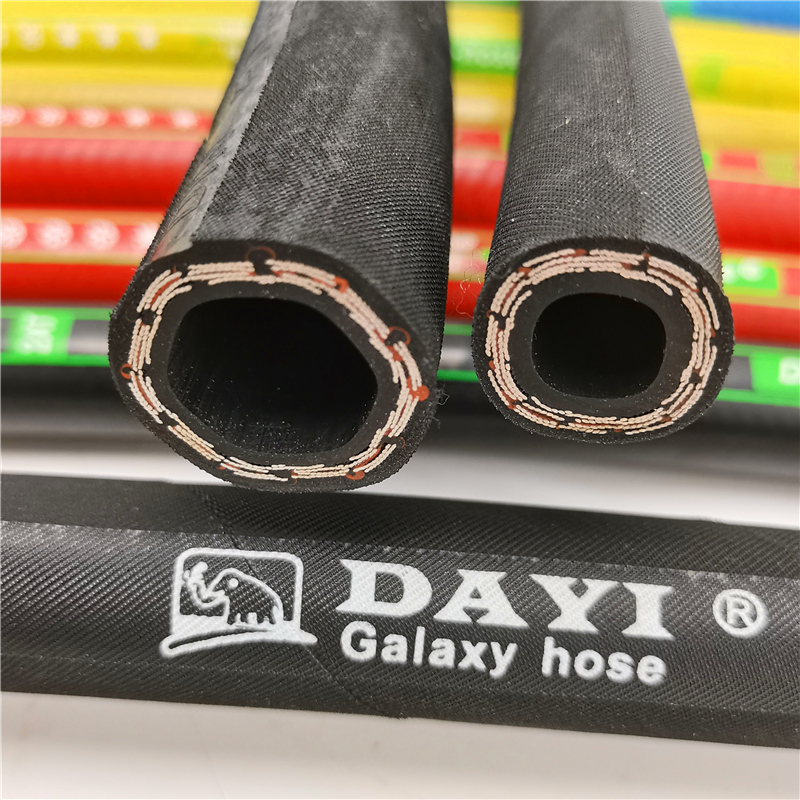
LPG hoses are typically constructed from multiple layers, each serving a specific function. The inner tube, in direct contact with LPG, is commonly made of a specialized nitrile rubber (NBR) compound, selected for its excellent resistance to LPG permeation and degradation. The NBR formulation requires precise control of acrylonitrile content, typically between 36-42%, to balance flexibility and chemical resistance. Higher acrylonitrile levels improve resistance but reduce low-temperature flexibility. The reinforcement layer is crucial for pressure resistance and is generally composed of high-tensile strength textile braids, typically polyester or aramid. These braids are spirally wound and embedded in a rubber matrix. The outer cover provides environmental protection and abrasion resistance and often utilizes a Chloroprene rubber (CR) compound for its superior resistance to ozone, weathering, and oil exposure. Manufacturing involves several key processes: mixing of rubber compounds using internal mixers (Banbury mixers) ensuring homogenous dispersion of fillers and curatives; extrusion of the inner tube and outer cover; braid application via automated machinery with precise tension control; and finally, vulcanization – a curing process using heat and pressure to crosslink the rubber polymers, imparting elasticity and strength. Critical parameters during vulcanization include temperature, pressure, and time, which directly impact the final hose properties. Quality control checks throughout the process, including tensile testing, elongation measurements, and leak testing, are vital.
Performance & Engineering
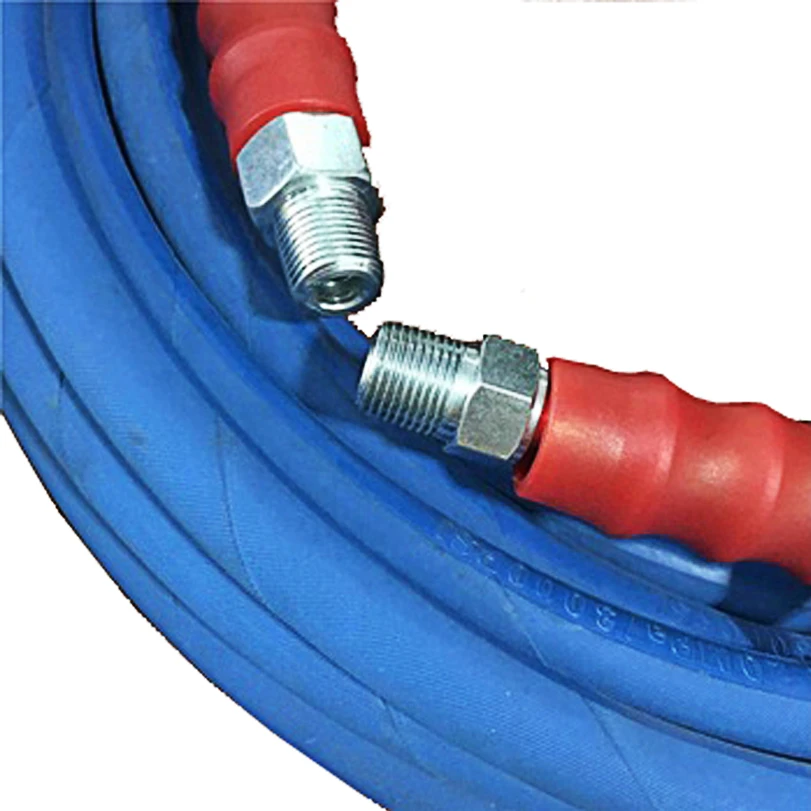
The performance of an LPG hose is dictated by several engineering factors. Burst pressure, a critical safety parameter, is determined by the tensile strength of the reinforcement layers and the adhesion between the layers. Hoses are typically tested to withstand pressures significantly exceeding their working pressure. Another key parameter is permeation rate – the amount of LPG that diffuses through the hose wall over time. High permeation rates pose a fire hazard and reduce LPG efficiency. Permeation is influenced by the rubber compound’s density, crosslink density, and the specific LPG composition. Flexibility, measured by bend radius, is important for ease of installation and operation. Excessive bending can lead to kinking and damage. Environmental resistance is also vital; hoses must withstand exposure to UV radiation, temperature extremes, and various chemicals. Static electricity buildup is a significant safety concern with LPG transfer, necessitating the use of conductive materials in the hose construction (e.g., carbon black loading in the rubber compound) to dissipate static charge and prevent ignition. Compliance with industry standards (see Section 7) dictates minimum performance requirements and testing protocols. Force analysis under pressure considers hoop stress in the hose wall and axial stress on the reinforcement layers, guiding material selection and construction techniques.
Technical Specifications
| Parameter | Unit | Typical Value (China Manufactured LPG Hose) | Test Standard |
|---|---|---|---|
| Working Pressure | MPa | 1.6 | GB/T 9849-2008 |
| Burst Pressure | MPa | 4.8 | GB/T 9849-2008 |
| Inner Diameter | mm | 6.3 – 19 | Customer Specification |
| Outer Diameter | mm | 11 – 25 | Customer Specification |
| Tensile Strength (Reinforcement) | N/mm² | > 1500 | ISO 2566-1 |
| Permeation Rate (LPG) | g/m²/day | < 10 | ISO 14877 |
Failure Mode & Maintenance
LPG hoses are susceptible to several failure modes. Fatigue cracking, often initiated at points of high stress concentration (e.g., hose ends, bends), is a common issue, especially with frequent flexing. This is often due to insufficient reinforcement or poor adhesion between layers. Permeation-induced degradation occurs when LPG permeates the hose wall, causing swelling and softening of the rubber compound, leading to reduced pressure resistance and eventual failure. Ozone cracking, particularly in the outer cover, is caused by exposure to ozone in the atmosphere and manifests as surface cracks. Abrasion damage can occur during handling and installation. Kinking and crushing can damage the reinforcement layer, compromising pressure resistance. Improper installation (e.g., excessive bending, tight turns) significantly increases the risk of failure. Maintenance involves regular visual inspection for cracks, abrasions, and swelling. Hoses should be replaced immediately if any damage is detected. Avoid exposing hoses to extreme temperatures or corrosive chemicals. Proper storage in a cool, dry place away from direct sunlight is crucial to prolong hose life. Periodic leak testing using a soap solution is recommended. A key failure analysis step involves examining the fracture surface to determine the root cause of failure – whether it's fatigue, permeation, or environmental degradation.
Industry FAQ
Q: What is the significance of the acrylonitrile content in the NBR inner tube?
A: Acrylonitrile content directly impacts LPG resistance and flexibility. Higher acrylonitrile provides better resistance to LPG permeation and chemical degradation, but reduces flexibility, especially at lower temperatures. A balanced formulation, typically between 36-42%, is crucial for optimal performance.
Q: How does the reinforcement layer contribute to hose safety?
A: The reinforcement layer, typically textile braids, provides the primary pressure resistance. The tensile strength and braid angle are critical parameters. Higher tensile strength and optimal braid angle translate to a higher burst pressure and improved safety margin.
Q: What are the key factors affecting hose permeation rate?
A: Permeation rate is influenced by the rubber compound’s density, crosslink density, the specific LPG composition (propane vs. butane blend), and the hose wall thickness. Higher density and crosslink density reduce permeation.
Q: What measures are taken to prevent static electricity buildup in LPG hoses?
A: Static dissipation is achieved by incorporating conductive fillers, such as carbon black, into the rubber compound. This provides a conductive path for static charges to dissipate, preventing potential ignition of LPG vapors.
Q: How often should LPG hoses be inspected and replaced?
A: Regular visual inspection (at least annually, or more frequently in harsh environments) is essential. Hoses should be replaced immediately if any cracks, abrasions, swelling, or other damage is detected. A conservative replacement schedule of 5-7 years is recommended, even without visible damage.
Conclusion
China-manufactured LPG hoses are critical safety components demanding meticulous material selection, rigorous manufacturing processes, and consistent quality control. The performance of these hoses hinges on the interplay of material properties – particularly the chemical resistance of the inner tube and the tensile strength of the reinforcement layers – and their ability to withstand the pressures and permeation challenges associated with LPG. Adherence to international standards like ISO and GB/T is paramount for ensuring product safety and market acceptance.
Future developments will likely focus on advanced rubber compounds with even lower permeation rates, reinforced with high-performance fibers like Dyneema for increased strength and reduced weight. Improved manufacturing techniques, incorporating automated inspection systems and real-time process control, will further enhance quality and reliability. The continued commitment to stringent quality assurance and compliance with evolving safety regulations is crucial for sustaining the competitiveness of Chinese LPG hose manufacturers in the global marketplace.