
Apr . 01, 2024 17:55 Back to list
thermoplastic hose sae100r8 Performance Analysis
Introduction
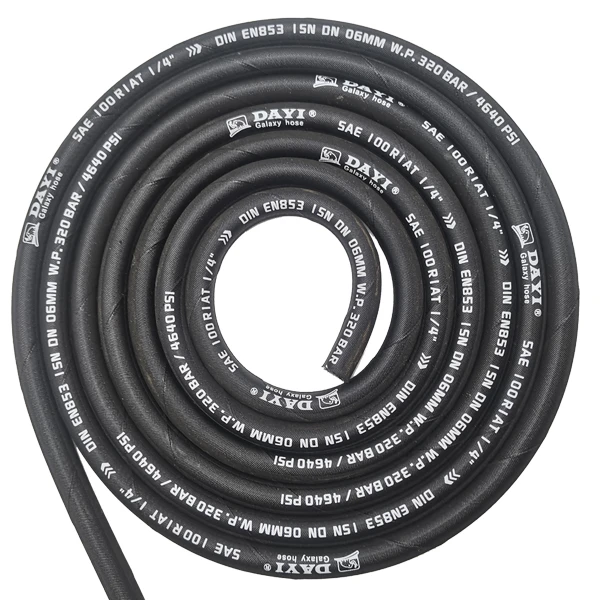
Thermoplastic hose SAE 100R8 represents a critical component in fluid power systems, specifically designed for the conveyance of hydraulic fluids under high-pressure conditions. Positioned within the industrial supply chain as a direct replacement for earlier rubber hose standards (R7 & R8), it offers significant advantages in weight reduction, enhanced chemical resistance, and improved dimensional stability. This hose construction utilizes a thermoplastic inner tube, multiple layers of high-tensile synthetic fiber reinforcement, and a polyurethane cover. Its core performance characteristics revolve around burst pressure, working pressure, and resistance to fluid degradation, impacting applications across mobile hydraulics (construction, agriculture), industrial machinery, and oil & gas sectors. The increasing demand for lighter, more durable, and chemically inert hydraulic solutions fuels its adoption as a standard in many industries. A major industry pain point is ensuring consistent quality and adherence to SAE standards across different manufacturers, as variations in reinforcement materials and thermoplastic compositions can lead to premature failure and costly downtime.
Material Science & Manufacturing
The SAE 100R8 hose construction begins with the inner tube, typically composed of thermoplastic materials like Polyamide (Nylon 11 or 12) or Polyester. Nylon 11 demonstrates superior resistance to hydrocarbons and aging, while Polyester offers cost-effectiveness. Its physical properties include a high tensile strength (typically 20-30 MPa) and low permeability to hydraulic fluids. The reinforcement layers consist of multiple braids or spirals of high-tensile synthetic fibers, most commonly steel wire or aramid fiber. Steel wire provides the highest pressure ratings but increases weight and reduces flexibility. Aramid fiber offers a lighter alternative with excellent strength-to-weight ratio but is susceptible to moisture absorption. The outer cover is generally constructed from Polyurethane, chosen for its abrasion resistance, oil resistance, and weatherability. Manufacturing processes involve extrusion of the inner tube and cover, followed by braiding or spiraling of the reinforcement layers. Precise control of extrusion temperature, fiber tension, and braid angle are paramount to ensure uniform wall thickness and structural integrity. Post-processing includes vulcanization (curing) to enhance the bond between the layers and improve overall performance. Parameter control focuses on maintaining consistent material viscosity during extrusion, verifying fiber count and braid density, and rigorously testing for dimensional accuracy and burst pressure.
Performance & Engineering
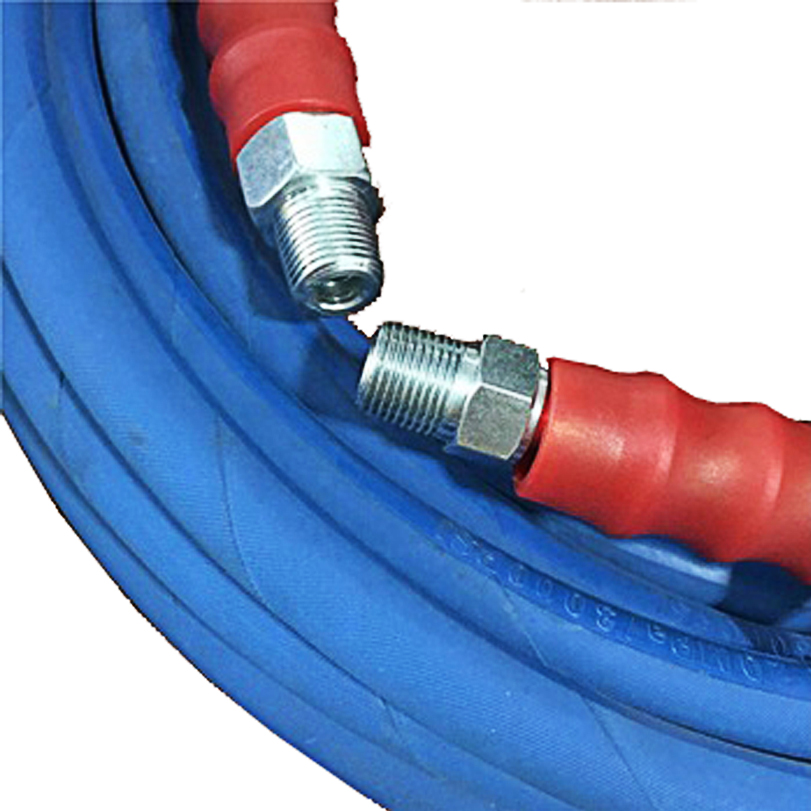
Performance of SAE 100R8 hose is fundamentally governed by force analysis under pressure. The hoop stress within the thermoplastic inner tube, coupled with the axial stress in the reinforcement layers, dictates the hose’s ability to withstand internal pressure without rupture. Finite Element Analysis (FEA) is routinely employed during design to optimize reinforcement configuration and minimize stress concentrations. Environmental resistance is crucial, particularly to hydraulic fluids containing water, which can cause corrosion in steel-reinforced hoses and hydrolysis in certain thermoplastic materials. Chemical compatibility with the conveyed fluid is also paramount; incompatible fluids can lead to swelling, softening, or degradation of the inner tube. Compliance requirements are stringent, mandating adherence to SAE J517 and ISO 18752 standards for pressure ratings, dimensional tolerances, and aging characteristics. Functional implementation requires consideration of bend radius, minimizing kinking, and properly securing hose ends with compatible fittings. A critical engineering challenge is mitigating fatigue failure due to cyclic pressure loading, particularly in mobile hydraulic applications where hoses are subjected to continuous flexing and vibration. Selection of appropriate fitting types and routing strategies are essential to extend service life and prevent premature failure.
Technical Specifications
| Parameter | Typical Value (SAE 100R8 – 1” ID) | Test Standard | Unit |
|---|---|---|---|
| Working Pressure | 3000 | SAE J517 | PSI |
| Burst Pressure | 9000 | SAE J517 | PSI |
| Inner Diameter | 1.0 | SAE J517 | Inch |
| Outer Diameter | 1.62 | SAE J517 | Inch |
| Minimum Bend Radius | 4 | SAE J517 | Inch |
| Temperature Range | -40 to +100 | SAE J517 | °C |
Failure Mode & Maintenance
Failure modes in SAE 100R8 hose are diverse. Fatigue cracking, initiated by repeated flexing and pressure cycling, is a common occurrence, often originating at the fitting interface or areas of localized stress. Delamination, or separation of reinforcement layers, can occur due to improper bonding during manufacturing or prolonged exposure to harsh environments. Degradation of the thermoplastic inner tube can result from chemical attack by incompatible fluids or prolonged exposure to high temperatures, leading to increased permeability and eventual rupture. Oxidation of the polyurethane cover, especially in UV-exposed applications, can cause cracking and loss of protective properties. Maintenance is crucial to extending hose life. Regular visual inspections should be conducted to identify signs of cracking, abrasion, or swelling. Proper routing and support are essential to prevent kinking and excessive flexing. Contamination of the hydraulic fluid should be minimized through filtration. When replacing hoses, it's vital to use compatible fittings and ensure proper crimping to maintain a secure connection. Furthermore, a preventative maintenance schedule, based on operating hours and environmental conditions, can significantly reduce the risk of unexpected failures and associated downtime. Failure analysis, involving microscopic examination of fractured surfaces, can reveal the root cause of failure and inform future material selection and manufacturing process improvements.
Industry FAQ
Q: What is the primary advantage of SAE 100R8 hose over traditional rubber hoses?
A: The key advantage is weight reduction. The thermoplastic construction significantly lowers the overall weight of the hose assembly, improving fuel efficiency and handling in mobile hydraulic applications. Additionally, it exhibits superior resistance to many chemicals and provides more consistent dimensions over varying temperatures.
Q: Can SAE 100R8 hose be used with all types of hydraulic fluids?
A: Not necessarily. While generally compatible with petroleum-based hydraulic fluids, compatibility with phosphate ester fluids and water-glycol fluids should be carefully verified. Chemical compatibility charts should be consulted to ensure the inner tube material is resistant to the specific fluid being used.
Q: What is the impact of using the incorrect fitting on the performance of SAE 100R8 hose?
A: Using an incompatible or improperly crimped fitting is a major cause of failure. An incorrect fitting can create a stress concentration point, leading to premature fatigue cracking. Improper crimping can compromise the seal, resulting in fluid leakage and potential hose rupture.
Q: How does temperature affect the working pressure rating of SAE 100R8 hose?
A: Working pressure ratings are typically specified at a reference temperature (e.g., 73°F / 23°C). Higher temperatures generally reduce the hose’s pressure capacity due to decreased material strength. Consult the manufacturer’s specifications for derating factors at elevated temperatures.
Q: What is the significance of the ‘braid angle’ in the reinforcement layers?
A: The braid angle directly impacts the hose's resistance to axial and hoop stress. A lower braid angle provides greater resistance to axial forces (stretching), while a higher braid angle offers better resistance to hoop stress (burst pressure). The optimal braid angle is determined by the application requirements.
Conclusion
SAE 100R8 thermoplastic hose represents a significant advancement in hydraulic fluid conveyance technology, offering superior performance characteristics compared to traditional rubber hoses in numerous applications. Its lightweight construction, enhanced chemical resistance, and improved dimensional stability address key industry pain points related to durability and efficiency. However, realizing its full potential requires meticulous attention to material selection, manufacturing process control, and proper installation practices.
Looking ahead, continued innovation in thermoplastic materials and reinforcement technologies will likely lead to even higher pressure ratings, wider temperature ranges, and improved resistance to aggressive fluids. Implementing robust quality control procedures and adhering to stringent industry standards (SAE, ISO) will remain paramount to ensuring the long-term reliability and safety of SAE 100R8 hose assemblies.