Introduction
Sunflower seeds in bag products represent a significant segment of the snack food industry, requiring a complex interplay of agricultural science, food processing technology, and packaging engineering. This guide provides an in-depth technical analysis of the product, covering material science of the seeds themselves, the manufacturing processes involved in preparation and packaging, performance considerations related to shelf life and safety, potential failure modes, and relevant industry standards. The core performance attributes center around maintaining seed viability (where applicable for sprouting seeds), preventing rancidity, ensuring product safety (absence of contaminants), and providing appropriate barrier properties to maintain freshness and flavor. The industry faces challenges related to maintaining consistent seed quality, optimizing packaging for cost-effectiveness and sustainability, and complying with stringent food safety regulations. This technical guide aims to address these pain points through a detailed examination of the underlying principles and technologies.
Material Science & Manufacturing
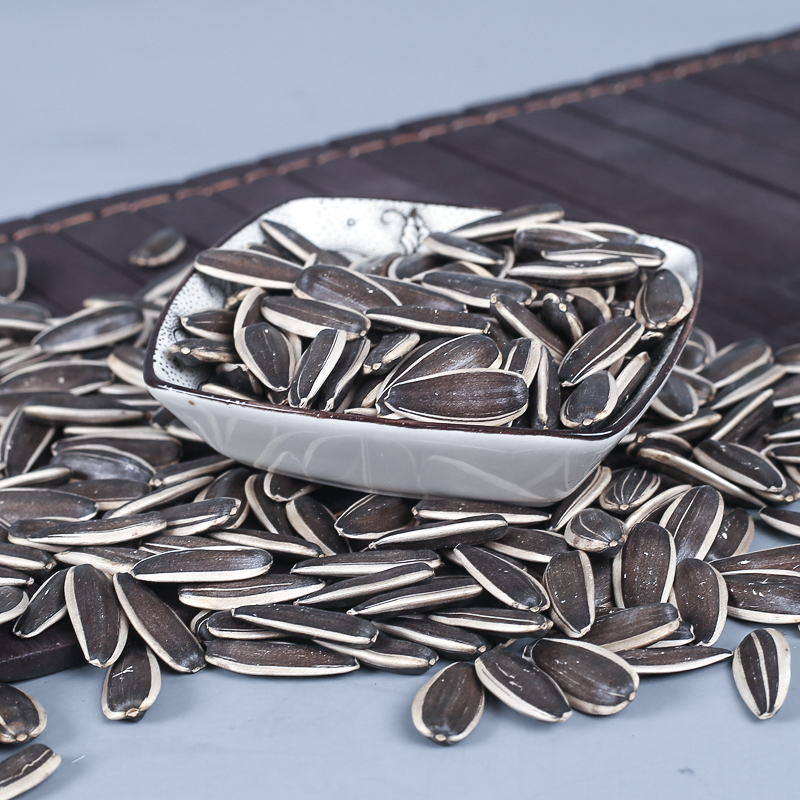
Sunflower seeds ( Helianthus annuus ) are composed primarily of lipids (40-50%), proteins (20-25%), carbohydrates (15-20%), and fiber (5-10%), with trace amounts of vitamins and minerals. The lipid content, particularly linoleic acid, is crucial to flavor but also susceptible to oxidation, leading to rancidity. Seed coat composition, a complex matrix of cellulose, lignin, and hemicellulose, provides a primary barrier to moisture and microbial ingress, though its effectiveness varies with cultivar and processing. Manufacturing begins with harvesting, followed by drying to a moisture content of approximately 8-10% to inhibit enzymatic activity and microbial growth. The seeds undergo cleaning, sorting (based on size and density), and potentially dehulling. Dehulling impacts the final product’s texture and oil content. For flavored seeds, seasoning application is a critical parameter control point. This is commonly achieved through tumbling with liquid or powdered seasonings, requiring precise control of seasoning concentration, coating uniformity, and drying time. Packaging materials typically include multi-layer films comprising polyethylene (PE), polypropylene (PP), polyester (PET), and aluminum foil, selected based on barrier requirements. Film thickness, resin grade, and layer adhesion are critical parameters. Heat sealing parameters (temperature, pressure, dwell time) are equally important for maintaining package integrity. Modified Atmosphere Packaging (MAP), utilizing nitrogen flushing, is frequently employed to reduce oxygen levels and extend shelf life.
Performance & Engineering
Performance analysis of sunflower seed packaging centers on barrier properties: Oxygen Transmission Rate (OTR) and Water Vapor Transmission Rate (WVTR). Low OTR is paramount to prevent lipid oxidation and maintain flavor. WVTR control is essential to prevent seed clumping and maintain textural integrity. Force analysis considers tensile strength and puncture resistance of the packaging film to withstand handling, transportation, and consumer use. Environmental resistance focuses on temperature stability – preventing seal failure or film embrittlement across a range of temperatures. Compliance requirements necessitate adherence to food contact regulations (FDA, EFSA), migration limits for packaging components, and labeling standards. The engineering design of the bag itself—shape, size, and features like resealable closures—impacts shelf appeal and consumer convenience, but also structural integrity. Finite Element Analysis (FEA) can be used to model stress distribution within the packaging during handling and transport. The permeability of the packaging material is affected by factors such as temperature, humidity, and the presence of defects. Packaging material selection directly influences the rate of volatile compound loss, affecting the aroma and flavor profile of the seeds over time. A crucial aspect is ensuring that packaging materials do not impart undesirable flavors or odors to the seeds.
Technical Specifications
| Parameter | Unit | Typical Value (Roasted & Salted) | Acceptable Range |
|---|---|---|---|
| Moisture Content (Seed) | % | 6-8 | 5-10 |
| Oil Content (Seed) | % | 45-55 | 40-60 |
| OTR (Packaging Film) | cc/m²/day | <10 | <20 |
| WVTR (Packaging Film) | g/m²/day | <5 | <10 |
| Tensile Strength (Packaging Film) | MPa | >20 | >15 |
| Salt Content (Finished Product) | % | 1.5-2.5 | 1.0-3.0 |
Failure Mode & Maintenance
Common failure modes include rancidity (lipid oxidation, evidenced by off-flavors and odors), package rupture (resulting in moisture ingress and seed spoilage), seal failure (allowing oxygen and moisture penetration), and seed clumping (due to moisture absorption). Rancidity is mitigated through low OTR packaging, MAP, and the addition of antioxidants (e.g., tocopherols). Package rupture is a consequence of handling damage, weak seam strength, or defects in the film material. Seal failure can occur due to inadequate heat sealing parameters, contamination of seal surfaces, or incompatible film layers. Seed clumping is addressed by maintaining low WVTR and controlling seed moisture content. Maintenance for packaged product focuses on proper storage conditions – cool, dry, and dark – to minimize degradation. For bulk storage of raw seeds (pre-packaging), temperature and humidity control are critical to prevent mold growth and insect infestation. Regular inspection of packaging for leaks or damage is essential. Failure analysis should involve sensory evaluation (taste and odor), chemical analysis (peroxide value to assess rancidity), and physical inspection of the packaging.
Industry FAQ
Q: What is the optimal oxygen barrier for extending the shelf life of roasted sunflower seeds?
A: The optimal OTR for roasted sunflower seeds is generally considered to be less than 10 cc/m²/day. Lower OTR values significantly reduce the rate of lipid oxidation, preserving flavor and extending shelf life. However, achieving extremely low OTR often necessitates the use of more expensive packaging materials, such as aluminum foil laminates. The economic trade-off between packaging cost and shelf life extension must be carefully considered.
Q: How does seed moisture content impact the performance of the packaging?
A: Seed moisture content is a critical factor. Higher moisture content accelerates enzymatic activity and microbial growth, even within a seemingly impermeable package. Furthermore, moisture migration within the package can lead to seed clumping and textural changes. The ideal moisture content for packaged sunflower seeds is typically 6-8%.
Q: What are the key considerations when selecting a packaging film for sunflower seeds?
A: Key considerations include OTR, WVTR, tensile strength, puncture resistance, sealability, cost, and compliance with food contact regulations. Multi-layer films combining the benefits of different materials (e.g., PE for sealability, PET for strength, aluminum foil for barrier) are often the most effective solution.
Q: What are the typical causes of seal failure in sunflower seed bags?
A: Common causes include insufficient heat seal temperature, inadequate pressure, incorrect dwell time, contamination on the seal surface (e.g., oil residue), and incompatibility between the film layers being sealed. Regular quality control checks of sealing parameters are essential.
Q: How can Modified Atmosphere Packaging (MAP) be used to improve shelf life?
A: MAP, typically utilizing nitrogen flushing, reduces the oxygen concentration within the package, thereby slowing down lipid oxidation and microbial growth. Nitrogen is an inert gas that does not react with the seeds or affect their flavor. Effective MAP requires proper gas mixture control and a hermetically sealed package.
Conclusion
Sunflower seed packaging demands a holistic understanding of material science, processing technology, and performance requirements. Maintaining seed quality, preventing rancidity, and ensuring product safety are paramount concerns. The selection of appropriate packaging materials, coupled with precise control of manufacturing parameters, is critical to achieving optimal shelf life and consumer satisfaction. Failure to address these technical aspects can lead to product spoilage, economic losses, and potential food safety issues.
Future advancements in sunflower seed packaging are likely to focus on sustainable materials, improved barrier technologies, and active packaging systems (e.g., oxygen scavengers, antimicrobial films). Furthermore, the adoption of predictive modeling and data analytics can optimize packaging design and manufacturing processes, resulting in enhanced product quality and reduced waste.
