Introduction
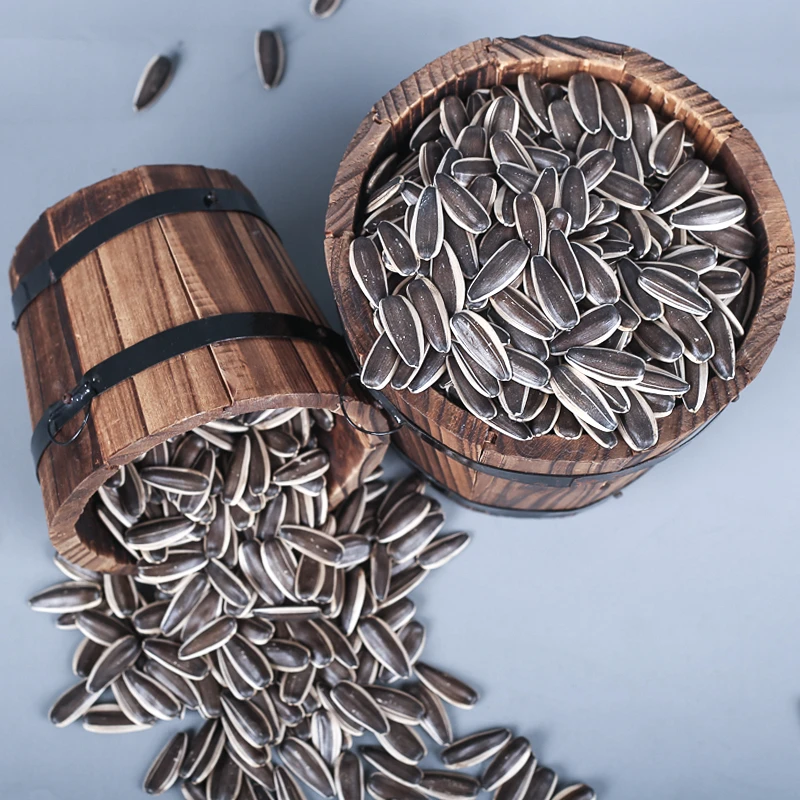
Roasted sunflower seeds with shell represent a significant segment within the snack food industry, positioned as a nutritious and readily available source of fats, proteins, and micronutrients. Their production involves a complex interplay of agronomic practices, processing techniques, and quality control measures. The seeds, derived from the Helianthus annuus plant, are subjected to cleaning, dehulling (though retained in this instance), roasting, and seasoning processes to achieve the desired flavor profiles and textures. Core performance characteristics center around seed maturity, oil content, shell integrity, and the development of desirable roasted flavors – achieved through controlled Maillard reactions and caramelization. The retention of the shell introduces complexities related to consumer acceptance, shell fracture during processing and consumption, and potential for foreign matter contamination. This technical guide provides a comprehensive overview of the material science, manufacturing, performance, failure modes, and industry standards governing roasted sunflower seeds with shell.
Material Science & Manufacturing
Sunflower seeds are composed primarily of oil (40-50% by weight), protein (18-25%), carbohydrates (15-20%), and fiber (5-10%). The oil is predominantly linoleic acid, an omega-6 fatty acid. The seed hull, or shell, is comprised largely of cellulose, hemicellulose, and lignin, providing a rigid protective layer. Manufacturing begins with seed selection, prioritizing varieties with high oil content and robust shell structures. Cleaning removes debris, dust, and immature or damaged seeds. Roasting is the critical process step, typically conducted in rotating drum roasters or fluidized bed roasters. Temperature control is paramount, ranging from 120-180°C, influencing flavor development and oil oxidation. Lower temperatures result in milder flavors but slower processing; higher temperatures accelerate reactions but increase the risk of rancidity. Moisture content plays a significant role, with initial moisture levels of 8-12% impacting heat transfer and texture. Seasoning, involving the application of salt, flavorings, or coatings, occurs post-roasting. Parameter control includes precise temperature monitoring, humidity control during seasoning, and adherence to strict hygienic standards to prevent microbial contamination. Shell fracture during roasting is a key concern, leading to increased processing losses and potentially affecting consumer acceptability. The manufacturing process must minimize shell breakage while maximizing flavor development.
Performance & Engineering
The performance of roasted sunflower seeds with shell is judged by several critical factors. Shell strength is crucial; it must withstand handling, transportation, and consumption without excessive fragmentation. Force analysis reveals that shell fracture occurs due to impact and compressive forces. Shell thickness and composition (cellulose content) directly correlate with fracture resistance. Oil stability is a key engineering consideration. The unsaturated fatty acids are susceptible to oxidation, leading to rancidity and off-flavors. Packaging plays a vital role in mitigating oxidation by providing a barrier against oxygen and light. Environmental resistance focuses on maintaining product quality under varying temperature and humidity conditions. High humidity can lead to moisture absorption, promoting microbial growth and affecting texture. Compliance requirements, governed by food safety regulations (see footer), necessitate strict control of contaminants, such as heavy metals and aflatoxins. Functional implementation focuses on achieving consistent roasting profiles to deliver uniform flavor and texture. Even heat distribution within the roaster is essential to prevent localized burning or under-roasting. Furthermore, maintaining the structural integrity of the shell throughout the entire process is vital to avoid producing excessive shell fragments, which can pose a choking hazard.
Technical Specifications
| Parameter | Unit | Specification | Test Method |
|---|---|---|---|
| Moisture Content | % | ≤ 8.0 | AOAC 925.10 |
| Oil Content | % | 42 - 52 | NMR Spectroscopy (AOCS Cd 14-91) |
| Shell Fracture Rate | % | ≤ 5.0 | Visual Inspection & Sieve Analysis |
| Peroxide Value (PV) | meq O2/kg | ≤ 10.0 | AOCS Cd 8-53 |
| Acid Value (AV) | mg KOH/g | ≤ 2.0 | AOCS Cd 3-25 |
| Aflatoxin B1 | ppb | ≤ 2.0 | ELISA Method (FDA) |
Failure Mode & Maintenance
Roasted sunflower seeds with shell are susceptible to several failure modes. Rancidity, caused by lipid oxidation, is a primary concern, manifesting as off-flavors and reduced shelf life. This is accelerated by exposure to oxygen, light, and high temperatures. Shell cracking during processing or handling leads to seed loss and potential contamination. Moisture absorption can promote microbial growth (molds and bacteria), rendering the product unsafe for consumption. Aflatoxin contamination, originating from Aspergillus molds, poses a significant health risk. De-shelling, either occurring during processing or consumption, reduces consumer acceptability and can create a mess. Maintenance strategies involve optimizing roasting parameters to minimize oil oxidation, implementing airtight packaging with oxygen absorbers, controlling storage temperature and humidity, and adhering to rigorous sanitation protocols. Regularly monitoring peroxide values and aflatoxin levels is crucial. Shell strength can be improved through seed variety selection and careful handling practices. Quality control procedures should include visual inspection for shell defects and microbial testing.
Industry FAQ
Q: What is the impact of roasting temperature on the acrylamide formation in sunflower seeds?
A: Acrylamide formation is a concern during high-temperature roasting of starchy foods. While sunflower seeds have relatively low starch content, acrylamide can still form. Higher roasting temperatures and longer roasting times correlate with increased acrylamide levels. Controlling roasting temperature below 150°C and optimizing roasting time are key mitigation strategies. Furthermore, reducing free asparagine levels in the seeds (through variety selection) can help minimize acrylamide formation.
Q: How does the shell contribute to the overall sensory experience and what are the acceptable limits for shell fragments?
A: The shell provides a textural element—a slight resistance during chewing—contributing to the sensory experience. However, excessive shell fragmentation is undesirable, creating an unpleasant mouthfeel and potential choking hazard. Acceptable limits for shell fragments typically range from 2-5% by weight, as determined through sieve analysis. Optimizing roasting parameters and gentle handling practices are crucial for minimizing shell breakage.
Q: What packaging materials are most effective in preventing rancidity and maintaining product freshness?
A: Multi-layer films providing a barrier against oxygen, moisture, and light are most effective. Materials like metalized polyester (PET) or aluminum foil laminates, combined with polyethylene (PE) for sealing, offer superior protection. Incorporating oxygen absorbers within the package further extends shelf life by reducing oxygen levels. Vacuum packaging is another effective method for minimizing oxidation.
Q: What are the key differences between oil-type and confectionary-type sunflower seeds, and how do these differences affect roasting?
A: Oil-type seeds have a high linoleic acid content, making them ideal for oil extraction. They typically require lower roasting temperatures to prevent excessive oil oxidation. Confectionary-type seeds have a higher oleic acid content, offering greater oxidative stability. They can withstand higher roasting temperatures, resulting in more pronounced roasted flavors. Roasting profiles must be tailored to the specific seed type.
Q: What regulatory standards govern the permissible levels of heavy metals (e.g., lead, cadmium) in roasted sunflower seeds?
A: Regulations vary by country. The US FDA and European Union have established maximum permissible levels for heavy metals in food products, including sunflower seeds. These limits are designed to protect consumer health. Regular testing for heavy metal contamination is essential to ensure compliance. Contamination can occur through soil uptake during growth or from processing equipment.
Conclusion
Roasted sunflower seeds with shell represent a complex food product where material science, manufacturing processes, and quality control converge. Achieving optimal product quality necessitates precise control over roasting parameters, meticulous attention to packaging, and stringent adherence to food safety regulations. The shell itself presents both challenges and opportunities, impacting sensory perception and requiring careful handling to minimize breakage. Understanding the fundamental chemical and physical properties of sunflower seeds is paramount for preventing degradation and ensuring a safe, palatable, and nutritious product.
Future research should focus on optimizing roasting techniques to minimize acrylamide formation and enhance flavor development, exploring novel packaging materials with improved barrier properties, and developing more efficient methods for detecting and mitigating aflatoxin contamination. Continuous improvement in quality control procedures and a commitment to sustainability will be essential for maintaining the competitiveness of the roasted sunflower seed industry.
