Introduction
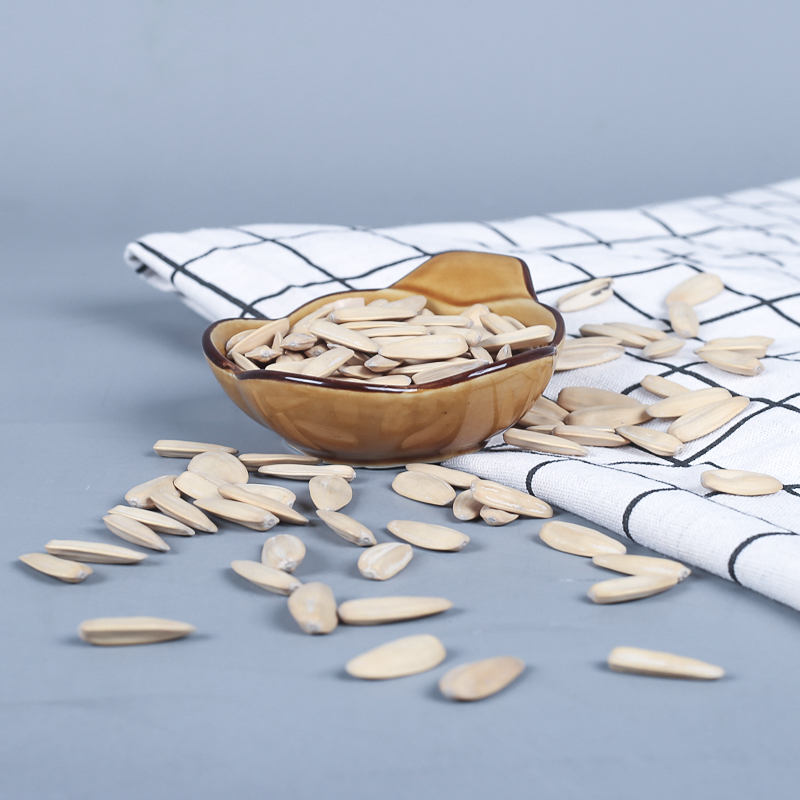
Toasted sunflower seeds represent a significant processed food product within the broader seed and snack food industry. Derived from the Helianthus annuus plant, these seeds undergo a controlled heating process to enhance flavor, texture, and shelf life. Technically, the process constitutes a thermal treatment intended to initiate Maillard reactions and caramelization, impacting the seed's biochemical composition. The production chain positions toasted sunflower seeds as a direct consumer product, an ingredient in confectionery, bakery goods, and as a component in birdseed and animal feed formulations. Core performance characteristics encompass moisture content, oil content, degree of roasting (colorimetric assessment), and the absence of rancidity, all of which dictate product quality and consumer acceptability. A critical industry pain point revolves around maintaining consistent roasting profiles to prevent under-toasting (resulting in bland flavor) or over-toasting (leading to burnt flavors and acrylamide formation) and ensuring minimal lipid oxidation during storage.
Material Science & Manufacturing
Sunflower seeds themselves are primarily composed of an outer hull (pericarp), the kernel (cotyledon), and an embryo. The pericarp comprises cellulose and lignin, providing structural integrity. The kernel is rich in lipids (40-50% by weight), primarily linoleic acid (omega-6) and oleic acid (omega-9), alongside proteins (20-25%), carbohydrates (10-15%), and fiber. Manufacturing begins with seed selection, cleaning to remove debris, and often dehulling. The critical stage is roasting, typically conducted using either batch or continuous roasting systems. Batch roasting, employing rotating drum roasters, allows for precise control over time and temperature (typically 120-180°C). Continuous roasters utilize fluidized bed or multi-layer belt technology for higher throughput. Key parameters include roasting temperature, roasting time, airflow rate, and seed bed depth. Temperature control is paramount; exceeding optimal temperatures results in acrylamide formation and lipid degradation. Airflow facilitates moisture removal and uniform heating. Post-roasting, seeds may undergo seasoning (salt, flavors) and are then cooled and packaged. Seed quality (initial moisture content, oil profile, and presence of contaminants) directly influences the roasting process and final product characteristics. Moisture content, typically around 8-10% prior to roasting, impacts heat transfer efficiency and texture.
Performance & Engineering
The engineering aspects of toasted sunflower seed production center on heat transfer, mass transfer (moisture removal), and ensuring uniform processing. Force analysis is relevant to dehulling operations, quantifying the force required to separate the kernel from the pericarp without damaging the kernel. Environmental resistance focuses on maintaining product quality during storage. Lipid oxidation, driven by exposure to oxygen, light, and heat, is a primary degradation pathway. Packaging materials with low oxygen transmission rates (OTR) are critical. The Maillard reaction, responsible for the toasted flavor, is a non-enzymatic browning reaction between reducing sugars and amino acids, heavily influenced by temperature and moisture content. Compliance requirements include adherence to food safety regulations (HACCP, GMP), limits on acrylamide levels (established by regulatory bodies like the FDA and EFSA), and labeling requirements (nutritional information, allergen declarations). The degree of roasting is typically assessed using colorimetric methods (measuring L, a, and b values) and sensory evaluation. The oil stability index (OSI) is used to predict the shelf life based on oxidation rates. Particle size distribution after dehulling impacts roasting uniformity and final product appearance.
Technical Specifications
| Parameter | Unit | Typical Value (Range) | Test Method |
|---|---|---|---|
| Moisture Content | % | 2-5% | AOAC 925.10 |
| Oil Content | % | 40-55% | Soxhlet Extraction (AOAC 920.39) |
| Free Fatty Acids (FFA) | % oleic acid | <0.2% | Titration (AOCS Cd 3-63) |
| Peroxide Value (PV) | meq O2/kg | <5.0 | Titration (AOCS Cd 8-53) |
| Acrylamide Content | µg/kg | <100 | GC-MS (various methods) |
| Color (L, a, b) | - | L: 40-60, a: 5-15, b: 10-20 (varies with roast level) | Colorimeter (CIE Lab) |
Failure Mode & Maintenance
Sunflower seeds toasted are susceptible to several failure modes. Rancidity, caused by lipid oxidation, results in off-flavors and odors. This is accelerated by exposure to oxygen, light, and elevated temperatures. Cracking or breakage during roasting or handling indicates excessive temperature gradients or mechanical stress. Incomplete roasting leads to bland flavor and potentially higher susceptibility to microbial growth. Acrylamide formation is a chemical failure, indicating over-processing. Hulling damage results in a lower-quality product with increased bitterness. Maintenance of roasting equipment includes regular cleaning to prevent buildup of seed residue, calibration of temperature sensors, and inspection of airflow systems. Proper storage conditions are critical: cool, dry, and dark environments, ideally in airtight packaging with a nitrogen flush to minimize oxygen exposure. Regular quality control checks, including moisture content, oil content, and peroxide value monitoring, are essential for proactive failure prevention. Seed storage prior to roasting should also be carefully controlled to minimize initial lipid oxidation.
Industry FAQ
Q: What is the optimal roasting temperature for maximizing flavor development while minimizing acrylamide formation?
A: The optimal temperature range is typically 140-160°C (284-320°F). Lower temperatures may result in incomplete roasting, while exceeding 160°C significantly increases acrylamide formation. The exact temperature and time depend on seed moisture content and desired roast level. Precise control and monitoring are essential.
Q: How does the initial moisture content of the sunflower seeds affect the roasting process?
A: Higher initial moisture content requires longer roasting times and lower temperatures to achieve the desired roast level. This can lead to a softer texture and potentially increased lipid oxidation. Lower initial moisture content results in faster roasting but increases the risk of burning. An optimal range is 8-10%.
Q: What packaging materials are most effective at preventing rancidity in toasted sunflower seeds?
A: Packaging materials with low oxygen transmission rates (OTR) and moisture vapor transmission rates (MVTR) are crucial. Multi-layer films incorporating aluminum foil or metallized polymers, combined with a nitrogen flush, are highly effective. Vacuum packaging can also be used, but may lead to slight compression of the seeds.
Q: How can acrylamide levels be monitored and controlled in the production process?
A: Regular testing using Gas Chromatography-Mass Spectrometry (GC-MS) is essential. Control measures include optimizing roasting temperatures and times, minimizing reducing sugar content in the seeds (through variety selection), and using inhibitors (although these are often limited by regulatory constraints).
Q: What are the key indicators of seed quality that should be assessed before roasting?
A: Key indicators include moisture content, oil content, free fatty acid (FFA) levels, peroxide value (PV), and the presence of foreign material. Seeds with high FFA or PV values are prone to rancidity and should be rejected. Assessing the seed's physical condition (absence of cracks or damage) is also important.
Conclusion
The production of high-quality toasted sunflower seeds requires a thorough understanding of the underlying material science, careful control of the manufacturing process, and diligent quality control. Optimizing roasting parameters to balance flavor development with minimizing undesirable compounds like acrylamide is a critical engineering challenge. Effective packaging strategies are paramount for preserving product freshness and preventing rancidity.
Future advancements may focus on implementing real-time monitoring systems for roasting parameters, utilizing advanced oxidation inhibitors, and developing novel packaging materials with enhanced barrier properties. Continuous monitoring of international standards and regulatory requirements will also be crucial for ensuring product safety and compliance. Ultimately, a holistic approach encompassing seed selection, process control, and packaging is essential for delivering a consistently high-quality product to consumers.
