

Feb . 11, 2026 00:01 Back to list
hdpe pipe suppliers manufacturers Performance and Engineering

Introduction
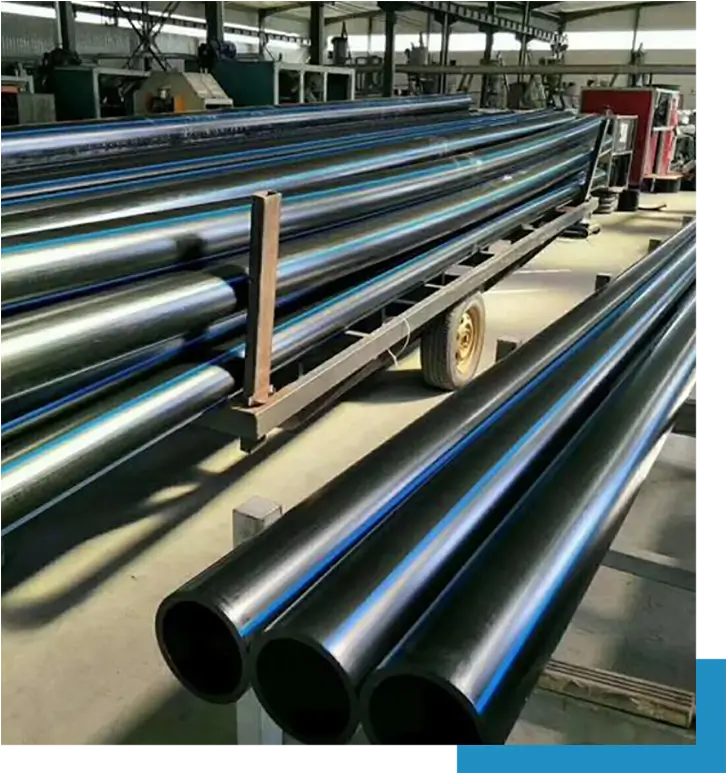
High-Density Polyethylene (HDPE) pipe represents a significant advancement in fluid transfer technology, serving diverse sectors including water distribution, gas transmission, industrial mining, and drainage systems. HDPE pipes, manufactured by numerous suppliers, are characterized by their exceptional durability, chemical resistance, and cost-effectiveness. Positioned within the broader piping industry – encompassing materials like PVC, steel, and concrete – HDPE distinguishes itself through its lightweight nature, flexibility, and ease of installation, particularly via fusion welding. Its core performance metrics revolve around pressure rating (PN), outside diameter (OD), wall thickness, and compliance with relevant industry standards. A crucial consideration for end-users is understanding the specific HDPE grade (e.g., PE32, PE40, PE63, PE80, PE100) as this directly influences the pipe’s mechanical properties and suitability for particular applications. The industry is currently facing pressure to optimize production costs while maintaining quality and expanding the use of recycled HDPE content.
Material Science & Manufacturing
HDPE pipe production begins with polyethylene resin, derived from the polymerization of ethylene. The resin’s density, typically ranging from 0.93 to 0.97 g/cm³, determines the pipe's mechanical strength and resistance to environmental stress cracking. Different HDPE grades are produced by varying the polymerization process and incorporating different comonomers. Manufacturing commonly employs extrusion processes. The resin is melted and forced through a die, creating a continuous pipe profile. Critical parameters during extrusion include melt temperature (typically 180-210°C), die pressure, and cooling rate. Proper control of these parameters is crucial to achieving consistent wall thickness and eliminating defects. Fusion welding – specifically butt fusion, socket fusion, and electrofusion – is the predominant joining method, creating leak-proof, structurally sound connections. Welding parameters such as temperature, pressure, and dwell time must be precisely controlled according to the pipe material grade and dimension to ensure a strong, homogenous weld. The presence of carbon black is common for UV resistance, and its dispersion uniformity significantly affects long-term performance. Post-extrusion quality control includes hydrostatic testing to verify pressure integrity and dimensional accuracy.
Performance & Engineering
HDPE pipe’s performance is governed by its mechanical properties and environmental resistance. Force analysis, particularly hoop stress analysis, is critical in designing pipelines to withstand internal pressure. The Barlow’s formula (S = PT/2t, where S = hoop stress, P = internal pressure, T = wall thickness, and t = radial stress) is fundamental in determining the required wall thickness for a given pressure rating. Environmental resistance is a key advantage, with HDPE exhibiting excellent chemical resistance to acids, bases, and solvents. However, long-term exposure to UV radiation can lead to degradation, necessitating the use of carbon black or UV stabilizers. Creep resistance – the tendency to deform under sustained load – is also crucial, particularly in applications involving long-term internal pressure. HDPE’s relatively low modulus of elasticity allows for flexibility, making it suitable for earthquake-prone areas or unstable ground conditions. Compliance with standards like AWWA C906 (for potable water distribution) and ASTM D3350 (for polyethylene pipes) dictates minimum performance requirements and testing procedures. Ground settlement and thermal expansion/contraction require specific engineering considerations, often necessitating expansion joints or flexible connections.
Technical Specifications
| Parameter | PE80 | PE100 | PE100 RC | Unit |
|---|---|---|---|---|
| Minimum Required Strength (MRS) | 8.0 | 10.0 | 12.5 | MPa |
| Hydrostatic Design Stress (HDS) | 6.3 | 7.5 | 9.4 | MPa |
| Density | 0.952 - 0.965 | 0.965 - 0.980 | 0.965 - 0.980 | g/cm³ |
| Rock Impact Resistance | Not Specified | Not Specified | >200 J | Joules |
| Slow Crack Growth Resistance (SCGR) | Standard | Enhanced | Superior | - |
| Operating Temperature Range | -40 to +60 | -40 to +60 | -40 to +60 | °C |
Failure Mode & Maintenance
HDPE pipe failures can stem from several mechanisms. Slow Crack Growth (SCG), induced by sustained tensile stress and aggressive environments, is a primary concern, especially in older pipelines. Environmental Stress Cracking (ESC) occurs when the pipe is exposed to certain chemicals. Fatigue cracking can arise from repeated pressure fluctuations or external loads. Third-party damage during excavation is a frequent cause of catastrophic failure. Joint failures, specifically at fusion welds, can occur due to improper welding parameters or insufficient fusion. Oxidation, particularly at elevated temperatures, can degrade the material over time. Maintenance involves regular visual inspections for cracks, deformation, or leaks. Leak detection surveys, employing acoustic or pressure transient methods, can identify hidden failures. For minor cracks, heat welding or mechanical clamps can provide temporary repairs. For significant failures, section replacement is typically required. Preventative maintenance includes corrosion protection (if exposed to corrosive soils), UV protection, and proper bedding to minimize stress. Careful installation practices, adhering to fusion welding guidelines, are paramount in preventing long-term failures.
Industry FAQ
Q: What is the difference between PE80 and PE100 HDPE pipe, and when would I choose one over the other?
A: PE100 offers significantly higher Minimum Required Strength (MRS) and Hydrostatic Design Stress (HDS) compared to PE80. This translates to greater durability and the ability to withstand higher pressures. PE80 is typically suitable for lower-pressure applications like irrigation or drainage, where cost is a primary concern. PE100 is preferred for higher-pressure applications such as potable water distribution, gas transmission, and industrial pipelines where long-term reliability and safety are critical.
Q: How does temperature affect the performance of HDPE pipe?
A: While HDPE is generally stable over a wide temperature range (-40°C to +60°C), extreme temperatures can impact its performance. Low temperatures can increase brittleness, making the pipe more susceptible to cracking during installation or impact. High temperatures can reduce the pipe’s strength and creep resistance. Thermal expansion and contraction also need to be accounted for in pipeline design to prevent stress on joints.
Q: What are the key factors to consider when performing butt fusion welding of HDPE pipe?
A: Proper surface preparation (cleaning and deburring), correct welding parameters (temperature, pressure, dwell time), and alignment of the pipe ends are crucial. Maintaining consistent welding parameters based on the pipe grade and dimension is essential. Post-weld cooling must be controlled to prevent stress buildup. Qualified welding operators and regular equipment calibration are also vital for producing reliable welds.
Q: How does HDPE pipe compare to PVC pipe in terms of long-term cost-effectiveness?
A: While PVC pipe is often initially cheaper, HDPE generally offers superior long-term cost-effectiveness due to its greater durability, longer lifespan, and reduced maintenance requirements. HDPE's resistance to corrosion and cracking reduces the risk of leaks and failures, lowering repair costs. The ability to fusion weld HDPE creates a completely leak-proof system, unlike solvent-welded PVC joints, and its flexibility allows for installation in challenging terrains minimizing jointing and excavation costs.
Q: What environmental considerations are important when sourcing HDPE pipe?
A: The use of recycled HDPE content is increasingly important. Look for suppliers that utilize post-consumer or post-industrial recycled material. HDPE is a recyclable material, reducing landfill waste. Manufacturing processes should be energy-efficient and minimize waste generation. Also, consider the supplier's commitment to responsible sourcing of raw materials and adherence to environmental regulations.
Conclusion
HDPE pipe stands as a robust and versatile solution for a wide spectrum of fluid conveyance applications. Its superior mechanical properties, chemical resistance, and ease of installation contribute to its growing prominence in modern infrastructure projects. Selecting the appropriate HDPE grade and adhering to stringent manufacturing and installation standards are paramount to ensuring long-term performance and reliability. Understanding potential failure modes and implementing proactive maintenance strategies are crucial for maximizing the lifespan and minimizing the total cost of ownership.
Looking ahead, advancements in HDPE resin technology, coupled with increased emphasis on sustainable practices—such as incorporating higher percentages of recycled content—will further enhance the material’s environmental profile and cost-competitiveness. Continued refinement of fusion welding techniques and the development of sophisticated leak detection systems will also contribute to the continued success of HDPE pipe in demanding industrial applications.
-
DN25 HDPE Compression Fitting-HORON INTERNATIONAL|Reliable Irrigation Solutions
NewsFeb.11,2026
-
discount hdpe pipe size chart pdf Performance Analysis
News2026-06-18
-
discount water supply line under sink Performance Analysis
News2026-06-18
-
discount ppr pipe 1 2 price Performance Analysis
News2026-06-18
-
discount ppr pipe 3 4 price Performance Analysis
News2026-06-18
-
discount grey pvc pipe Material Performance
News2026-06-18
-
discount ppr 3 4 price Performance Analysis
News2026-06-17
-
discount hdpe pipe connectors Material Performance
News2026-06-17
-
discount submersible column pipe Performance Analysis
News2026-06-17
-
discount ppr flexible pipe Performance Analysis
News2026-06-17
-
discount column pipe for submersible pump Performance Analysis
News2026-06-17
-
china flexible pvc tubing Performance Analysis
News2026-06-16
-
china water pipe kitchen sink Material Performance
News2026-06-16
-
china upvc column pipes for submersible pumps Performance Analysis
News2026-06-16
-
china 36 hdpe corrugated pipe Manufacturing Analysis
News2026-06-16
-
china kitchen sink water pipe Performance Analysis
News2026-06-16