

Feb . 11, 2026 00:01 Back to list
pvc to hdpe connection manufacturers Performance Analysis

Introduction
PVC to HDPE connections represent a critical junction in fluid and gas conveyance systems across diverse industries including water distribution, irrigation, industrial effluent management, and chemical processing. These connections address the incompatibility of Polyvinyl Chloride (PVC) and High-Density Polyethylene (HDPE) – materials possessing differing thermal expansion coefficients, chemical compositions, and joining methodologies. The primary technical challenge lies in creating a leak-proof, structurally sound, and long-lasting interface between these two polymers. This guide details the materials science, manufacturing processes, performance considerations, failure modes, and maintenance protocols essential for producing and utilizing reliable PVC to HDPE connections. The increasing demand for robust and corrosion-resistant piping systems necessitates a comprehensive understanding of the engineering principles governing these interfaces, particularly concerning pressure ratings, chemical resistance, and long-term durability. Industry pain points center around ensuring consistent seal integrity under varying operating conditions and preventing galvanic corrosion when dissimilar metals are used in conjunction with the connection.
Material Science & Manufacturing
PVC and HDPE possess fundamentally different material properties. PVC, a thermoplastic polymer, exhibits rigidity and good chemical resistance, manufactured via suspension or emulsion polymerization of vinyl chloride monomer. Key properties include a glass transition temperature (Tg) around 80°C and a tensile strength ranging from 55-70 MPa. HDPE, also a thermoplastic, is known for its flexibility, high strength-to-density ratio, and excellent impact resistance, produced through the catalytic polymerization of ethylene. HDPE's properties include a lower Tg (-120°C) and tensile strength between 30-40 MPa.
Manufacturing PVC to HDPE connections typically employs one of three primary methods: mechanical couplings, solvent welding with specialized adhesives, or electrofusion welding using transition fittings. Mechanical couplings utilize rubber gaskets (EPDM, Nitrile) and clamping rings to create a seal. These couplings require precise dimensions and tolerances to ensure consistent compression. Solvent welding, while possible with specific adhesive formulations designed for dissimilar polymers, is less common due to potential compatibility issues and lower long-term reliability. Electrofusion welding, employing transition fittings (typically HDPE with a PVC socket), is the most robust method. This process involves heating the fitting and PVC pipe simultaneously, melting and fusing the materials together, creating a homogenous joint. Critical parameters in electrofusion include welding temperature, pressure, and cooling rate, all meticulously controlled to optimize bond strength and prevent material degradation. The quality of HDPE used in transition fittings is critical; it must be formulated to provide adequate fusion with both the HDPE and PVC materials. Raw material purity and consistent batch-to-batch properties are paramount to ensuring weld integrity. Furthermore, the molding process for these fittings requires precise control of injection pressure, mold temperature, and cooling time to avoid internal stresses and dimensional inaccuracies.
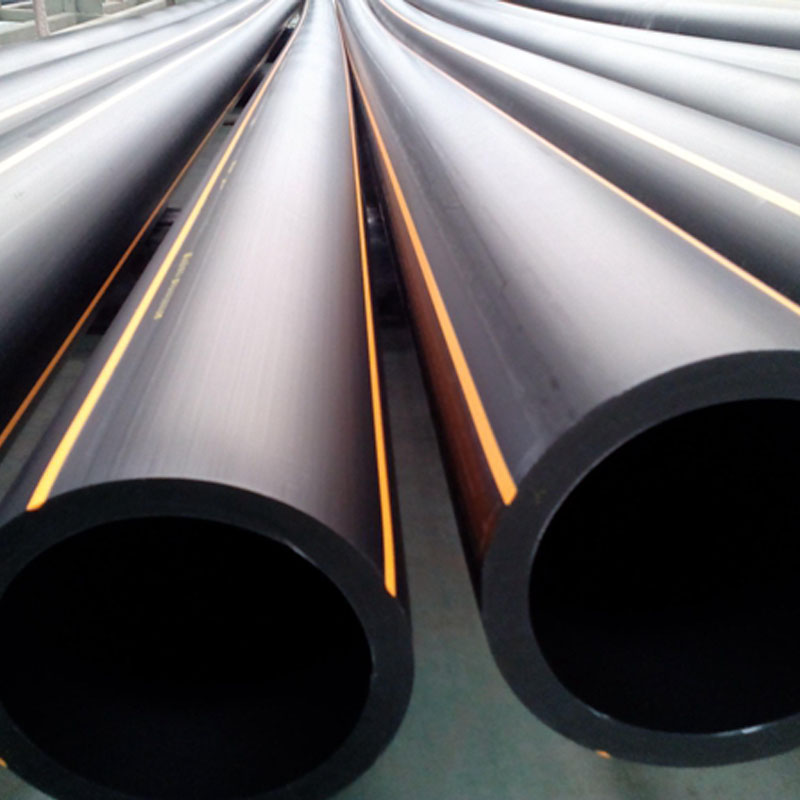
Performance & Engineering
The performance of PVC to HDPE connections is dictated by several key engineering considerations. Thermal expansion differential between PVC and HDPE presents a significant challenge. PVC expands and contracts approximately twice as much as HDPE for the same temperature change. Connection designs must accommodate this difference to prevent stress concentration and potential joint failure. This is frequently addressed through flexible couplings or incorporating expansion joints within the pipeline. Force analysis under internal pressure requires careful evaluation of hoop stress in the PVC and HDPE sections, as well as the stress distribution at the interface. Finite Element Analysis (FEA) is commonly used to model the behavior of these connections under various loading conditions. Chemical resistance is another critical factor. While both PVC and HDPE offer good resistance to many chemicals, certain substances can cause degradation. Compatibility charts must be consulted to ensure the connection materials are suitable for the transported fluid.
Compliance requirements vary by region and application. For potable water systems, connections must meet NSF/ANSI 61 standards for lead content and extractable compounds. Industrial applications may require adherence to API standards for pressure vessels and piping. Leak testing is a crucial quality control step, typically performed hydrostatically at pressures exceeding the maximum operating pressure. The long-term creep resistance of the joint is a key performance indicator, particularly in applications involving sustained pressure. Regular inspections and preventative maintenance are essential to identify and address potential issues before they lead to catastrophic failure. Galvanic corrosion can occur if metallic components (e.g., clamping rings, bolts) are in contact with both PVC and HDPE in the presence of an electrolyte. The use of dielectric isolators is recommended to prevent this phenomenon.
Technical Specifications
| Parameter | PVC (Typical) | HDPE (Typical) | Connection Type (Electrofusion) |
|---|---|---|---|
| Tensile Strength (MPa) | 55-70 | 30-40 | Dependent on weld quality, typically > 30 MPa |
| Glass Transition Temperature (°C) | 80 | -120 | N/A - Joint behavior governed by material interface |
| Thermal Expansion Coefficient (per °C) | 8 x 10⁻⁵ | 1 x 10⁻⁴ | Joint design must accommodate differential expansion |
| Operating Pressure (Maximum, Bar) | Up to 16 | Up to 20 | Limited by lowest rated component, typically 16 Bar |
| Operating Temperature Range (°C) | 0-60 | -40 to 60 | -20 to 60 (depending on material selection) |
| Chemical Resistance | Good to acids and bases, limited resistance to solvents | Excellent to most chemicals | Determined by the less resistant material |
Failure Mode & Maintenance
PVC to HDPE connections are susceptible to several failure modes. Fatigue cracking can occur due to cyclic pressure fluctuations or thermal stress. This is more prevalent in mechanical couplings where stress concentration can occur around the clamping ring. Delamination, particularly in electrofusion welds, arises from inadequate weld penetration, contamination, or improper cooling. This results in a weak bond susceptible to shear failure. Degradation of the rubber gasket in mechanical couplings is a common issue, caused by chemical attack, UV exposure, or temperature extremes. Oxidation of HDPE can lead to embrittlement over time, particularly in applications involving prolonged exposure to oxygen.
Preventive maintenance includes regular visual inspections for cracks, leaks, and gasket deterioration. Hydrostatic leak testing should be performed periodically to verify joint integrity. For electrofusion welds, non-destructive testing methods such as ultrasonic inspection can detect subsurface flaws. Replacement of gaskets is recommended on a scheduled basis, dictated by the operating environment and fluid characteristics. Proper storage of fittings and pipes is crucial to prevent contamination and degradation. For mechanical couplings, ensure the clamping ring is properly tightened and lubricated. In cases of detected leakage or degradation, the affected connection should be replaced immediately. Consider employing corrosion inhibitors in the transported fluid if galvanic corrosion is a concern. Documentation of all maintenance activities is essential for tracking performance and identifying potential systemic issues.
Industry FAQ
Q: What is the primary concern regarding the long-term reliability of electrofusion welds joining PVC and HDPE?
A: The primary concern revolves around achieving complete and consistent fusion at the interface between the PVC and HDPE. PVC's higher melting temperature and different surface energy require precise control of the welding parameters (temperature, pressure, time) to ensure adequate melt flow and bond formation. Incomplete fusion, often stemming from insufficient heating or contamination, can lead to delamination and premature failure.
Q: How does the differential thermal expansion between PVC and HDPE impact connection design?
A: The substantial difference in thermal expansion necessitates incorporating flexibility into the connection design. Rigidly coupled systems are prone to stress build-up and potential cracking due to temperature fluctuations. Solutions include utilizing flexible couplings, expansion joints, or designing the pipeline with sufficient slack to accommodate expansion and contraction.
Q: What are the key considerations when selecting a gasket material for mechanical PVC to HDPE couplings?
A: Gasket material selection is critical. EPDM is a common choice due to its good chemical resistance and flexibility. However, compatibility with the specific fluid being conveyed must be verified. Nitrile gaskets offer better resistance to oils and fuels. The gasket must maintain its elasticity and sealing properties over the operating temperature range and resist degradation from chemical exposure.
Q: Can solvent welding be reliably used to connect PVC to HDPE?
A: Solvent welding is generally not recommended for direct PVC to HDPE connections. Standard PVC solvents do not effectively bond to HDPE. Specialized adhesives are available, but their long-term performance and reliability are often questionable compared to electrofusion or mechanical coupling methods. Thorough testing and validation are essential if solvent welding is considered, and it's often avoided for critical applications.
Q: What is the role of dielectric isolators in PVC to HDPE connections, and when are they necessary?
A: Dielectric isolators prevent galvanic corrosion when metallic components (e.g., stainless steel clamping rings, bolts) are in contact with both PVC and HDPE in a conductive environment. The differing electrochemical potentials of these materials can create a corrosion cell, leading to accelerated metal degradation. Isolators are essential in applications where such contact is unavoidable, particularly in marine environments or when transporting conductive fluids.
Conclusion
Reliable PVC to HDPE connections are paramount for the integrity of fluid conveyance systems. The selection of the appropriate connection method—mechanical coupling, electrofusion welding, or, less commonly, specialized solvent welding—is dictated by application requirements, operating conditions, and budget constraints. Electrofusion welding, when properly executed with stringent parameter control, offers the most robust and long-lasting solution, provided the materials are compatible and the weld process is meticulously monitored. Understanding the inherent material property differences between PVC and HDPE, particularly thermal expansion, is crucial for designing connections that can withstand long-term stresses and maintain seal integrity.
Future developments in this field are focused on advanced welding techniques, improved gasket materials with enhanced chemical resistance, and the development of smart monitoring systems capable of detecting early signs of connection failure. Proactive maintenance programs, including regular inspections and leak testing, remain essential for maximizing the lifespan and reliability of these critical system components. Continued research into material compatibility and optimized welding parameters will be instrumental in enhancing the performance and durability of PVC to HDPE connections in demanding industrial applications.
-
DN25 HDPE Compression Fitting-HORON INTERNATIONAL|Reliable Irrigation Solutions
NewsFeb.11,2026
-
discount hdpe pipe size chart pdf Performance Analysis
News2026-06-18
-
discount water supply line under sink Performance Analysis
News2026-06-18
-
discount ppr pipe 1 2 price Performance Analysis
News2026-06-18
-
discount ppr pipe 3 4 price Performance Analysis
News2026-06-18
-
discount grey pvc pipe Material Performance
News2026-06-18
-
discount ppr 3 4 price Performance Analysis
News2026-06-17
-
discount hdpe pipe connectors Material Performance
News2026-06-17
-
discount submersible column pipe Performance Analysis
News2026-06-17
-
discount ppr flexible pipe Performance Analysis
News2026-06-17
-
discount column pipe for submersible pump Performance Analysis
News2026-06-17
-
china flexible pvc tubing Performance Analysis
News2026-06-16
-
china water pipe kitchen sink Material Performance
News2026-06-16
-
china upvc column pipes for submersible pumps Performance Analysis
News2026-06-16
-
china 36 hdpe corrugated pipe Manufacturing Analysis
News2026-06-16
-
china kitchen sink water pipe Performance Analysis
News2026-06-16