

Feb . 11, 2026 00:01 Back to list
pvc to hdpe connection product Performance Analysis

Introduction
PVC to HDPE connections represent a critical juncture in fluid and gas conveyance systems, particularly in infrastructure applications like water distribution, irrigation, and industrial piping. These connections bridge the gap between Polyvinyl Chloride (PVC) and High-Density Polyethylene (HDPE) piping, materials chosen for their respective strengths – PVC for its rigidity and cost-effectiveness, and HDPE for its flexibility, chemical resistance, and durability. The industry demand for reliable and long-lasting connections arises from the increasing use of both materials in diverse applications, often necessitating their integration within a single system. The primary challenge lies in accommodating the differing thermal expansion rates and chemical properties of PVC and HDPE, requiring specialized coupling technologies to maintain joint integrity under varying environmental conditions and operational stresses. Proper selection and installation of these connections are paramount to preventing leaks, ensuring system efficiency, and minimizing long-term maintenance costs. This guide provides a comprehensive overview of PVC to HDPE connection technologies, material science, performance characteristics, failure modes, and relevant industry standards.
Material Science & Manufacturing
The successful union of PVC and HDPE relies on a thorough understanding of their constituent material properties. PVC, a thermoplastic polymer composed of vinyl chloride monomers, exhibits a glass transition temperature (Tg) around 80°C and a relatively low thermal expansion coefficient. It’s characterized by its rigidity, good chemical resistance to acids and bases, and inherent fire resistance (though it releases HCl upon combustion). Manufacturing typically involves polymerization of vinyl chloride followed by compounding with stabilizers, plasticizers, and lubricants. HDPE, also a thermoplastic, is derived from ethylene monomers and possesses a semi-crystalline structure. Its Tg is significantly lower, around -120°C, resulting in greater flexibility and impact resistance, even at low temperatures. HDPE boasts excellent chemical resistance to a broad range of solvents and chemicals, and its high strength-to-density ratio makes it suitable for pressure applications. The manufacturing of HDPE involves catalytic polymerization of ethylene under high pressure.
Connection methods typically involve mechanical couplings utilizing elastomeric seals (EPDM, NBR) or solvent welding techniques adapted for dissimilar materials. Transition couplings are often manufactured via injection molding, carefully designing the interface geometry to accommodate the differing diameters and wall thicknesses of PVC and HDPE pipes. Critical manufacturing parameters include mold temperature control to ensure proper polymer flow and minimize residual stresses, and precise dimensional control of the coupling to guarantee a watertight seal. The selection of the elastomeric seal material is crucial, considering its compatibility with the conveyed fluid and its ability to withstand long-term compression set. Furthermore, surface preparation of both PVC and HDPE pipes is essential for optimal adhesion when using solvent welding compatible adhesives, involving cleaning and potentially priming to enhance bonding.
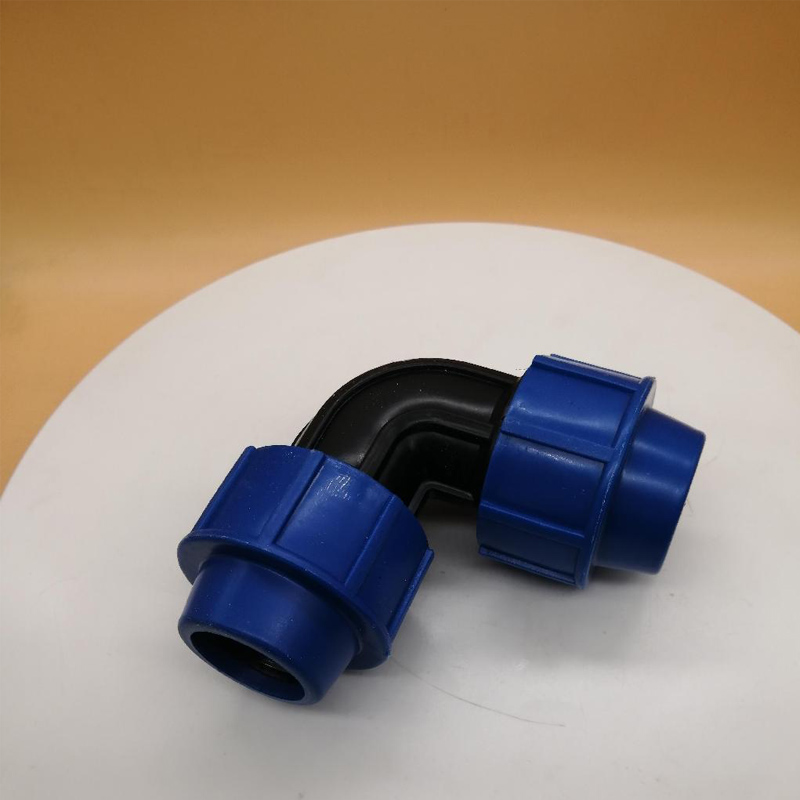
Performance & Engineering
The performance of PVC to HDPE connections is dictated by several key engineering considerations. Firstly, differential thermal expansion between PVC and HDPE necessitates a connection design that can accommodate movement without compromising the seal. HDPE expands and contracts approximately 4-5 times more than PVC for a given temperature change. Failure to account for this can induce significant stress on the coupling, leading to leaks or even joint separation. Flexible couplings with expansion joints, or couplings designed with a sliding interface, are commonly employed to mitigate this issue. Secondly, pressure ratings are critical, especially in high-pressure applications. The connection must withstand the internal pressure of the conveyed fluid, as well as external loads resulting from pipe support and soil conditions. Finite element analysis (FEA) is often used to model the stress distribution within the coupling and verify its structural integrity. Thirdly, chemical compatibility is paramount, ensuring that the coupling materials (including the seal) are not degraded by the conveyed fluid. Long-term exposure to incompatible chemicals can lead to swelling, cracking, or loss of elasticity in the seal, resulting in leaks. Finally, soil stress and burial depth influence the long-term performance, requiring appropriate bedding and backfill materials to prevent excessive deformation of the pipe and coupling.
Technical Specifications
| Parameter | PVC (Typical) | HDPE (Typical) | Connection Type |
|---|---|---|---|
| Material Density (g/cm³) | 1.40 | 0.95 | Mechanical Coupling with EPDM Seal |
| Tensile Strength (MPa) | 55 - 70 | 25 - 35 | Solvent Weld Transition Coupling |
| Thermal Expansion Coefficient (1/°C) | 0.00008 | 0.00015 | Flexible Coupling with Expansion Joint |
| Operating Temperature (°C) | 0 - 60 | -40 - 80 | Rubber Gasket Coupling |
| Pressure Rating (Bar) | Up to 16 | Up to 20 | Flanged Connection |
| Chemical Resistance | Good to Acids & Bases | Excellent to most chemicals | Electrofusion Welding (HDPE side) |
Failure Mode & Maintenance
Failure modes in PVC to HDPE connections are diverse and often interconnected. A common failure mode is seal degradation due to prolonged exposure to elevated temperatures, UV radiation, or incompatible chemicals. This leads to a gradual loss of elasticity and eventual cracking or swelling of the seal, resulting in leakage. Another prevalent issue is stress cracking induced by differential thermal expansion and contraction. If the coupling lacks sufficient flexibility, the stresses can exceed the material’s yield strength, causing cracks to initiate and propagate. Corrosion, particularly galvanic corrosion if dissimilar metals are used in the coupling construction, can also contribute to failure. Furthermore, improper installation, such as inadequate pipe preparation or insufficient tightening of bolts in flanged connections, can compromise the seal and lead to leaks. Soil settlement and ground movement can impose external stresses on the connection, inducing bending moments and potentially causing joint separation. Regular inspection is crucial for preventative maintenance. This includes visual inspection for cracks, leaks, and signs of seal degradation. Periodic pressure testing can verify the integrity of the connection. If leaks are detected, the seal should be replaced, or the coupling re-tightened. In cases of severe corrosion or cracking, the entire coupling may need to be replaced. Maintaining proper bedding and backfill around the pipes can mitigate soil-induced stresses.
Industry FAQ
Q: What are the key considerations when selecting a coupling for connecting PVC and HDPE pipes in a potable water distribution system?
A: The primary consideration is the material's compliance with potable water standards (e.g., NSF/ANSI 61). The coupling material and seal must be non-toxic and not leach any harmful substances into the water. Furthermore, the coupling should be resistant to chlorine and other disinfectants commonly used in water treatment. Pressure rating must also be carefully considered, ensuring it meets or exceeds the maximum operating pressure of the system. A flexible coupling is highly recommended to accommodate differential thermal expansion and contraction.
Q: How does the choice of elastomeric seal material impact the long-term performance of a PVC to HDPE connection in a wastewater application?
A: Wastewater applications expose couplings to a wider range of chemicals and abrasive particles. EPDM is a common choice due to its excellent resistance to many chemicals found in wastewater, but its compatibility with specific chemicals should be verified. NBR offers better resistance to oils and fuels, which may be present in industrial wastewater. The seal material must also exhibit good abrasion resistance to withstand the passage of solids. Regular inspection and replacement of the seal are essential in wastewater applications due to the potential for degradation.
Q: What are the advantages and disadvantages of using a solvent weld transition coupling versus a mechanical coupling for PVC to HDPE connections?
A: Solvent weld couplings, when compatible adhesives are used, create a rigid, monolithic joint with high strength and excellent chemical resistance. However, they are less tolerant of movement and can be susceptible to cracking due to thermal stress. Mechanical couplings, on the other hand, offer greater flexibility and can accommodate differential expansion. They are easier to install and disassemble for maintenance. However, they rely on the integrity of the seal, which can be a potential point of failure.
Q: What is the best practice for mitigating the effects of differential thermal expansion in a long-run PVC to HDPE pipeline?
A: Incorporating expansion loops or expansion joints at regular intervals along the pipeline is the most effective method. These features provide space for the HDPE section to expand and contract without inducing stress on the coupling. Using flexible couplings at the PVC to HDPE transition points also helps to absorb movement. Careful consideration of burial depth and soil conditions is also important, as these factors can influence the thermal stresses experienced by the pipeline.
Q: What are the implications of using dissimilar metal components within a PVC to HDPE connection regarding corrosion potential?
A: Dissimilar metals in contact with each other in the presence of an electrolyte (e.g., soil moisture) can create a galvanic cell, leading to accelerated corrosion of the more anodic metal. Avoid using dissimilar metal fasteners or components where possible. If dissimilar metals are unavoidable, use a dielectric barrier (e.g., plastic washer) to electrically isolate them. Consider using stainless steel or other corrosion-resistant alloys for critical components.
Conclusion
Successfully connecting PVC and HDPE piping requires a meticulous approach that acknowledges the inherent differences in their material properties and performance characteristics. The selection of appropriate coupling technologies, coupled with diligent installation practices and ongoing maintenance, is crucial for ensuring long-term system reliability and minimizing operational costs. Understanding the potential failure modes, such as seal degradation and stress cracking, allows for proactive preventative measures and timely repairs.
The future of PVC to HDPE connection technology will likely focus on the development of more robust and adaptable coupling designs that minimize stress concentrations and maximize sealing efficiency. Innovations in elastomeric seal materials will also play a key role, offering improved chemical resistance, abrasion resistance, and long-term durability. The increasing adoption of digital monitoring and predictive maintenance techniques will enable more effective identification of potential issues before they escalate into costly failures, further enhancing the lifespan and performance of these critical infrastructure components.
-
DN25 HDPE Compression Fitting-HORON INTERNATIONAL|Reliable Irrigation Solutions
NewsFeb.11,2026
-
discount hdpe pipe size chart pdf Performance Analysis
News2026-06-18
-
discount water supply line under sink Performance Analysis
News2026-06-18
-
discount ppr pipe 1 2 price Performance Analysis
News2026-06-18
-
discount ppr pipe 3 4 price Performance Analysis
News2026-06-18
-
discount grey pvc pipe Material Performance
News2026-06-18
-
discount ppr 3 4 price Performance Analysis
News2026-06-17
-
discount hdpe pipe connectors Material Performance
News2026-06-17
-
discount submersible column pipe Performance Analysis
News2026-06-17
-
discount ppr flexible pipe Performance Analysis
News2026-06-17
-
discount column pipe for submersible pump Performance Analysis
News2026-06-17
-
china flexible pvc tubing Performance Analysis
News2026-06-16
-
china water pipe kitchen sink Material Performance
News2026-06-16
-
china upvc column pipes for submersible pumps Performance Analysis
News2026-06-16
-
china 36 hdpe corrugated pipe Manufacturing Analysis
News2026-06-16
-
china kitchen sink water pipe Performance Analysis
News2026-06-16