

Feb . 11, 2026 00:01 Back to list
china dual wall corrugated pipe Performance Analysis
Introduction
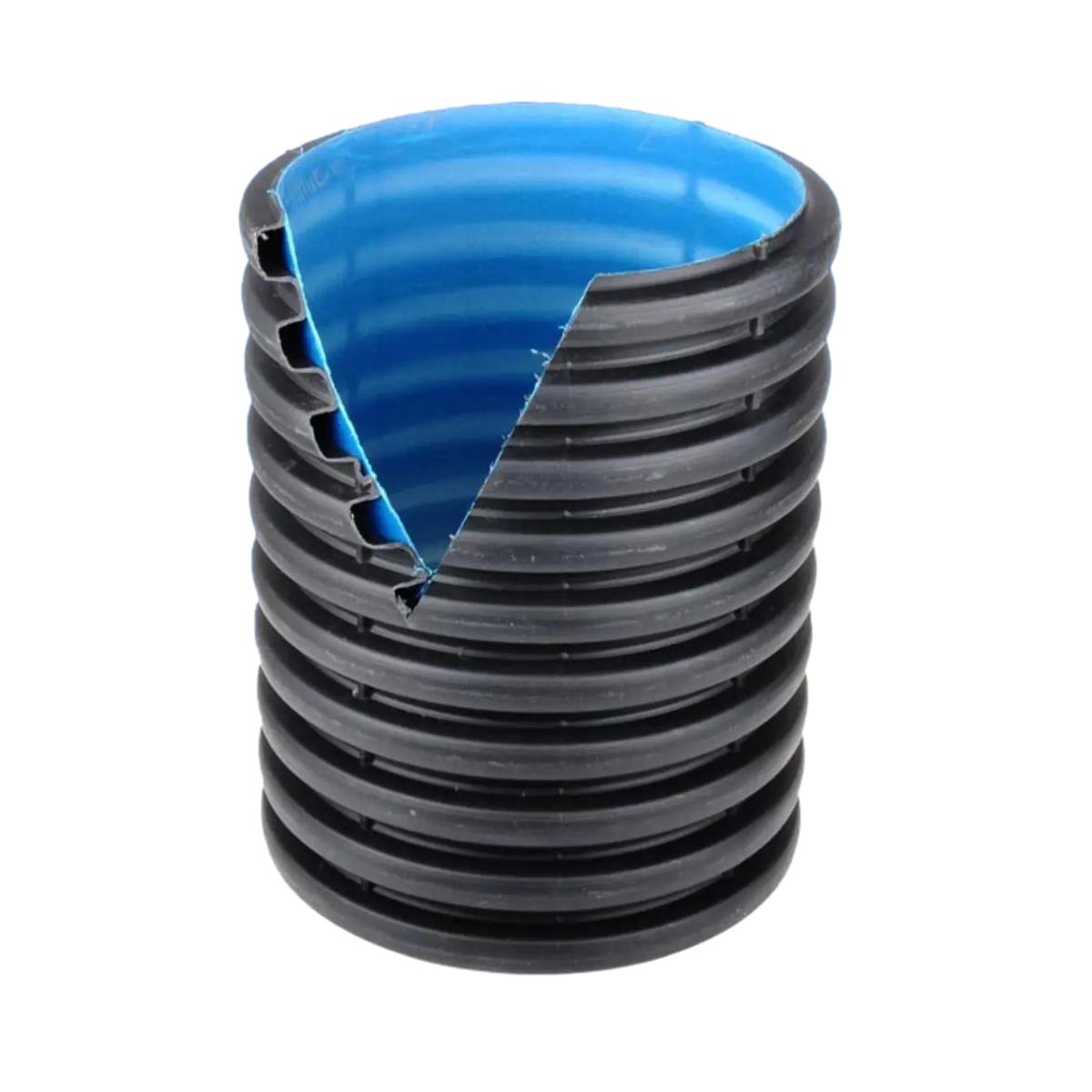
China dual wall corrugated pipe represents a significant advancement in subsurface drainage and infrastructure solutions. This product, typically manufactured from High-Density Polyethylene (HDPE) or Polypropylene (PP), is characterized by its double-layered construction, providing enhanced structural rigidity and durability compared to single-wall corrugated pipe. Positioned within the broader piping industry, it serves as a crucial component in stormwater management, agricultural drainage, sanitary sewer systems, and increasingly, as conduit for utility lines. Core performance metrics revolve around ring stiffness, load-bearing capacity (expressed as percentage deflection under specified loads), and long-term hydraulic flow efficiency, critical factors influencing service life and operational reliability. The escalating demand for effective and sustainable drainage solutions, coupled with stringent regulatory requirements regarding effluent control, drives the adoption of dual wall corrugated pipe in both domestic and international markets.
Material Science & Manufacturing
The primary raw materials for China dual wall corrugated pipe are HDPE or PP resins, chosen for their high strength-to-density ratio, chemical inertness, and flexibility. HDPE grades typically utilized exhibit a melt flow index (MFI) optimized for extrusion and corrugation processes. The manufacturing process generally involves extrusion, corrugation, and sometimes, a secondary coating application. Initially, the resin is melted and extruded through a circular die to form a continuous pipe profile. This profile is then fed into a corrugation unit, where rollers with precisely engineered profiles impart the characteristic ribbed structure. The inner layer, critical for hydraulic performance, is typically smoother than the outer layer, which provides structural support. Precise control of extrusion temperature (typically between 180-240°C depending on the resin), corrugation speed, and cooling rates are paramount. Post-corrugation, quality control involves dimensional checks (diameter, wall thickness, corrugation height/pitch), hydrostatic pressure testing to verify burst strength, and impact resistance assessments. The material's crystalline structure and molecular weight distribution heavily influence its long-term creep resistance and resistance to environmental stress cracking. The addition of UV stabilizers and antioxidants during compounding is crucial for preventing degradation from prolonged sunlight exposure. Material compatibility with surrounding soils and potential leachates must also be carefully considered.
Performance & Engineering
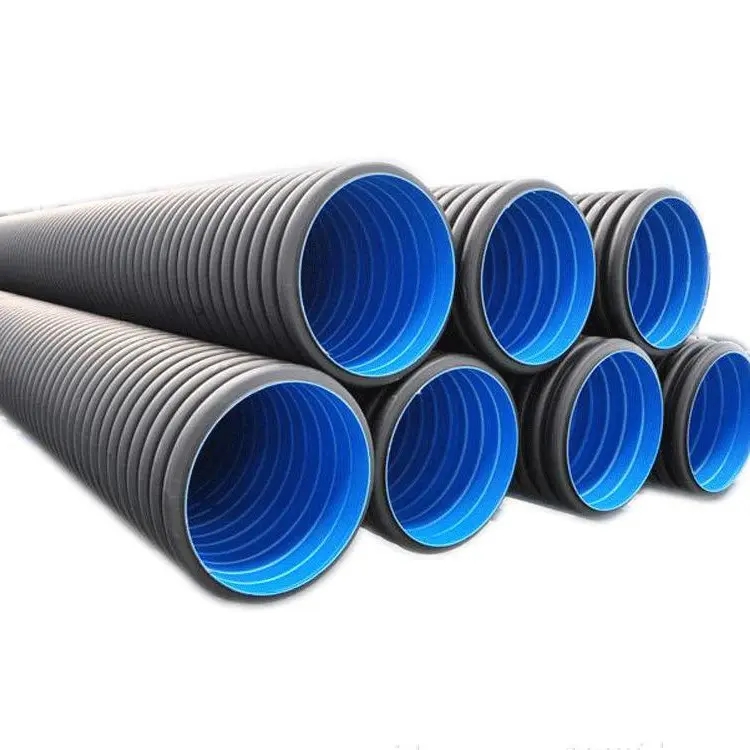
Performance of dual wall corrugated pipe is dictated by several key engineering principles. Ring stiffness, a critical parameter, is determined through short-term deflection testing under radial loads. Higher ring stiffness indicates greater resistance to flattening and long-term deformation. Load-bearing capacity, often expressed as the percentage deflection at a specified load (e.g., D25 – 25% deflection at a load corresponding to twice the standard soil fill height), is crucial for buried applications. Hydraulic performance is analyzed through calculations of Manning’s roughness coefficient, determining flow capacity and minimizing headloss. Environmental resistance is evaluated based on long-term exposure to UV radiation, temperature fluctuations, and chemical attack from soil constituents. Compliance with industry standards (ASTM F894, EN 13476) necessitates rigorous testing for these parameters. Force analysis, particularly finite element analysis (FEA), is often employed to model the structural behavior of the pipe under various loading scenarios, including soil overburden, vehicular traffic, and hydrostatic pressure. Proper installation practices – including adequate bedding and backfill compaction – are essential to achieving the designed performance characteristics. Furthermore, considerations must be made for joint integrity and the prevention of differential settlement.
Technical Specifications
| Parameter | Units | HDPE (12" Diameter) | PP (12" Diameter) |
|---|---|---|---|
| Nominal Diameter | inches | 12 | 12 |
| Ring Stiffness | psi | 60-80 | 70-90 |
| Load Bearing Capacity (D25) | % Deflection | ≤25 | ≤25 |
| Manning's Roughness Coefficient | - | 0.012 | 0.011 |
| Tensile Strength at Yield | psi | 4,000 - 5,000 | 6,000 - 7,000 |
| Impact Resistance (Izod Notched) | ft-lbs/in | 10-15 | 8-12 |
Failure Mode & Maintenance
Dual wall corrugated pipe, while durable, is susceptible to several failure modes. Common issues include creep deformation under sustained loads, leading to ovalization and reduced hydraulic capacity. Environmental stress cracking (ESC), particularly in areas with aggressive soil chemistry, can initiate cracks and ultimately cause pipe failure. Fatigue cracking can occur due to repeated loading from traffic or settlement. Joint separation, resulting from improper installation or degradation of coupling materials, is another frequent failure point. Delamination of the inner liner can reduce flow efficiency and promote sediment buildup. Maintenance is typically limited to visual inspections for cracks, deformations, and joint separations. Preventive measures include ensuring proper installation techniques (adequate bedding and compaction), minimizing exposure to aggressive chemicals, and avoiding excessive loads. Repair options range from localized patching with compatible materials to complete pipe replacement, depending on the severity of the damage. Regular CCTV inspections can identify potential problems before they escalate into significant failures. Identifying the root cause of failure through forensic analysis – examining fracture surfaces and analyzing soil conditions – is vital for preventing recurrence.
Industry FAQ
Q: What is the impact of soil corrosivity on the long-term performance of HDPE dual wall pipe?
A: Soil corrosivity, particularly the presence of sulfates, chlorides, and organic acids, can accelerate environmental stress cracking in HDPE. Higher concentrations of these substances necessitate the use of HDPE resins with enhanced ESC resistance and potentially, the application of protective coatings or the implementation of cathodic protection measures.
Q: How does temperature affect the ring stiffness of PP dual wall pipe?
A: PP exhibits a greater temperature sensitivity than HDPE. Elevated temperatures can significantly reduce the ring stiffness of PP pipe, decreasing its load-bearing capacity. Design considerations must account for the maximum anticipated operating temperature and the potential for thermal expansion and contraction.
Q: What are the key differences between smooth-walled and corrugated inner surfaces in terms of hydraulic efficiency?
A: Corrugated inner surfaces, while contributing to structural strength, generally exhibit a higher Manning’s roughness coefficient compared to smooth-walled surfaces, resulting in increased headloss and reduced flow capacity. However, the structural benefits often outweigh this minor hydraulic penalty, particularly in applications requiring high load-bearing capacity.
Q: What quality control measures are critical during the manufacturing process to ensure consistent product performance?
A: Critical quality control measures include continuous monitoring of extrusion temperatures, dimensional checks of pipe diameter and wall thickness, regular hydrostatic pressure testing, impact resistance testing, and quality assessments of the coupling systems. Statistical process control (SPC) is essential for maintaining consistency.
Q: What is the expected service life of dual wall corrugated pipe under typical installation conditions?
A: Under typical installation conditions (proper bedding, adequate compaction, non-aggressive soil environment), dual wall corrugated pipe is expected to have a service life of 50-75 years. However, this is contingent on adherence to manufacturer's recommendations and regular inspections.
Conclusion
China dual wall corrugated pipe provides a robust and cost-effective solution for a wide range of drainage and infrastructure applications. Its layered construction, combined with the inherent properties of HDPE or PP, delivers superior structural strength and durability compared to traditional piping materials. Understanding the intricacies of material science, manufacturing processes, and performance parameters is crucial for selecting the appropriate pipe for specific project requirements.
Moving forward, continued advancements in resin technology and manufacturing techniques will likely lead to further improvements in pipe performance and longevity. Focus areas include developing more resistant materials to environmental stress cracking, optimizing corrugation profiles for enhanced hydraulic efficiency, and integrating smart sensors for real-time monitoring of pipe integrity. Standardization and rigorous quality control will remain paramount to ensuring consistent product performance and widespread adoption.
-
DN25 HDPE Compression Fitting-HORON INTERNATIONAL|Reliable Irrigation Solutions
NewsFeb.11,2026
-
discount hdpe pipe size chart pdf Performance Analysis
News2026-06-18
-
discount water supply line under sink Performance Analysis
News2026-06-18
-
discount ppr pipe 1 2 price Performance Analysis
News2026-06-18
-
discount ppr pipe 3 4 price Performance Analysis
News2026-06-18
-
discount grey pvc pipe Material Performance
News2026-06-18
-
discount ppr 3 4 price Performance Analysis
News2026-06-17
-
discount hdpe pipe connectors Material Performance
News2026-06-17
-
discount submersible column pipe Performance Analysis
News2026-06-17
-
discount ppr flexible pipe Performance Analysis
News2026-06-17
-
discount column pipe for submersible pump Performance Analysis
News2026-06-17
-
china flexible pvc tubing Performance Analysis
News2026-06-16
-
china water pipe kitchen sink Material Performance
News2026-06-16
-
china upvc column pipes for submersible pumps Performance Analysis
News2026-06-16
-
china 36 hdpe corrugated pipe Manufacturing Analysis
News2026-06-16
-
china kitchen sink water pipe Performance Analysis
News2026-06-16