

Feb . 11, 2026 00:01 Back to list
china hdpe pipe price list Performance Analysis
Introduction
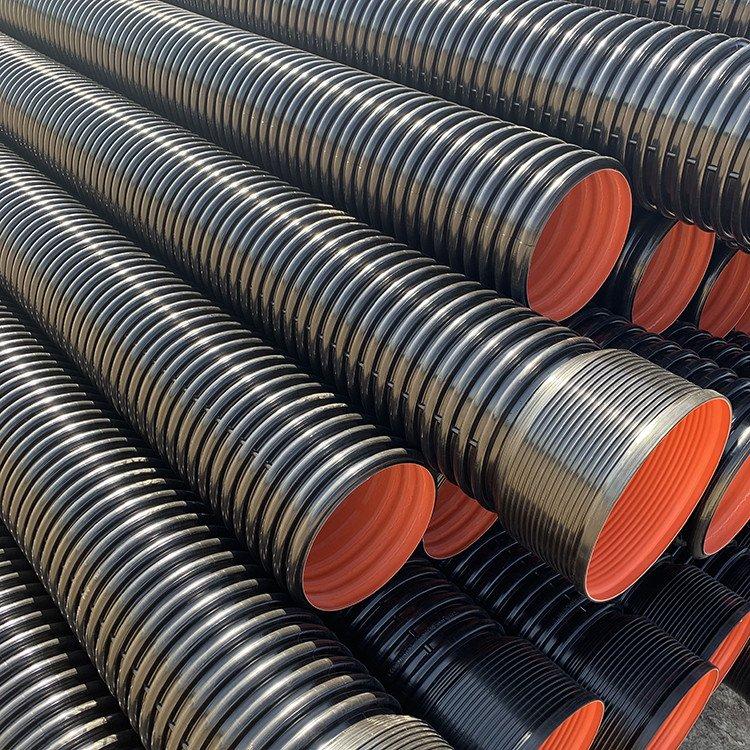
High-Density Polyethylene (HDPE) pipe represents a critical component in modern infrastructure, serving a diverse range of applications including water distribution, gas transmission, sewage conveyance, and industrial piping systems. This technical guide focuses on the parameters influencing china HDPE pipe price lists, dissecting the material science, manufacturing processes, performance characteristics, potential failure modes, and relevant industry standards. The competitive landscape of HDPE pipe manufacturing in China demands a comprehensive understanding of the factors driving cost and quality. This guide is intended for procurement managers, engineers, and industry professionals seeking to navigate the complexities of sourcing HDPE pipe and ensuring long-term operational reliability. Price variations are directly correlated to raw material costs (typically resin grade, density, and additive package), pipe diameter and Schedule number (SDR – Standard Dimension Ratio, indicating pressure bearing capacity), production volume, and adherence to international quality control certifications. Furthermore, geopolitical factors impacting resin supply and transportation costs play a significant role in determining the final price point.
Material Science & Manufacturing
HDPE pipe is produced from polyethylene resin, a thermoplastic polymer derived from the polymerization of ethylene. The resin grade significantly influences the pipe's properties. HDPE typically exhibits a density range of 0.93 to 0.97 g/cm³. Higher density generally correlates with improved tensile strength, rigidity, and chemical resistance. Critical additives include carbon black for UV resistance, antioxidants to prevent thermal degradation, and stabilizers to enhance long-term performance. The manufacturing process predominantly utilizes extrusion. Raw HDPE resin, along with additives, is melted and forced through a die to form a continuous pipe profile. Key parameters during extrusion include melt temperature (typically between 180°C and 210°C), die pressure, and cooling rate. Maintaining precise control over these parameters is crucial to ensure dimensional accuracy, uniform wall thickness, and consistent material properties. Pipe diameters are typically manufactured using conventional extrusion up to around 1800mm. Larger diameter pipes often employ spiral winding technology, where HDPE strip is heated and wound onto a mandrel. Post-extrusion processes include sizing (to achieve the desired outer diameter), cooling, and cutting to length. Quality control measures throughout the manufacturing process include regular testing of resin properties, dimensional checks, hydrostatic pressure testing, and impact resistance assessments, ensuring compliance with industry standards.
Performance & Engineering
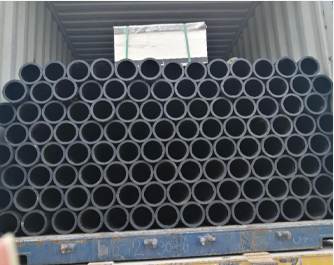
HDPE pipe exhibits excellent resistance to a wide range of chemicals, making it suitable for conveying aggressive fluids. However, prolonged exposure to strong oxidizing agents can lead to degradation. The performance of HDPE pipe is primarily governed by its pressure bearing capacity, which is directly related to its SDR. Lower SDR values indicate thicker walls and higher pressure ratings. Force analysis considers both internal hydrostatic pressure and external loads, such as soil overburden in buried applications. Finite Element Analysis (FEA) is frequently employed to model stress distribution and optimize pipe design for specific operating conditions. Environmental resistance is a key consideration. While HDPE is inherently UV resistant due to the incorporation of carbon black, long-term exposure can still cause surface oxidation and embrittlement. Buried HDPE pipe is protected from UV degradation but is susceptible to damage from sharp objects during installation. Compliance requirements vary depending on the application and geographic region. For potable water systems, HDPE pipe must comply with NSF/ANSI 61 standards to ensure it does not leach harmful contaminants into the water supply. For gas transmission, compliance with DOT regulations (in the US) and equivalent standards in other countries is mandatory. Proper jointing techniques, such as butt fusion, socket fusion, and electrofusion, are critical to maintain the structural integrity and leak-proof performance of the pipeline system. These processes require precise temperature and pressure control to achieve optimal weld strength.
Technical Specifications
| Parameter | Unit | Typical Value (DN/ID 110mm, SDR 17) | Testing Standard |
|---|---|---|---|
| Outer Diameter (OD) | mm | 125 | ISO 4437 |
| Inner Diameter (ID) | mm | 110 | ISO 4437 |
| Wall Thickness | mm | 7.5 | ISO 4437 |
| SDR (Standard Dimension Ratio) | - | 17 | ISO 4437 |
| Pressure Rating (PN) | bar | 16 | ISO 4437 |
| Tensile Strength (MRS 10) | MPa | 10 | ISO 1167 |
Failure Mode & Maintenance
Common failure modes in HDPE pipe include slow crack growth (SCG) caused by sustained tensile stresses and exposure to certain chemicals, particularly those containing surfactants. SCG manifests as brittle fractures over time. Another failure mode is third-party damage during installation or excavation, resulting in punctures or cuts. Fatigue cracking can occur in pipelines subjected to cyclic loading, such as those associated with water hammer events. Oxidation, especially in UV-exposed applications, can lead to embrittlement and reduced impact resistance. Joint failures, stemming from inadequate fusion welding or improper joint preparation, are also frequent. Maintenance strategies include regular visual inspections to identify signs of damage or degradation. Hydrostatic testing can be performed to assess the structural integrity of the pipeline. Cathodic protection is often employed in buried pipelines to mitigate corrosion risks, although HDPE is inherently corrosion resistant. For SCG prevention, careful selection of materials and avoidance of contact with incompatible chemicals are essential. Proper backfilling and bedding procedures during installation minimize stress concentrations and protect the pipe from external damage. Periodic cleaning and flushing of the pipeline system prevent the buildup of debris and maintain flow capacity. When failures occur, repairs typically involve cut-and-replace sections with properly fused joints.
Industry FAQ
Q: What is the impact of resin price fluctuations on china HDPE pipe price lists?
A: Resin, typically polyethylene, accounts for 60-80% of the total cost of HDPE pipe. Significant fluctuations in crude oil prices directly impact ethylene production costs, and consequently, the price of polyethylene resin. Increased resin prices are invariably passed on to pipe manufacturers, leading to higher price lists. Conversely, a decrease in oil prices can result in lower prices, but these reductions may be absorbed by manufacturers to maintain profit margins.
Q: How does the SDR of a pipe affect its price and application suitability?
A: Higher SDR values (e.g., SDR 21, SDR 26) signify thinner walls and lower pressure ratings, resulting in lower material costs and therefore, lower pipe prices. They are suitable for low-pressure applications such as irrigation or drainage. Conversely, lower SDR values (e.g., SDR 17, SDR 11) denote thicker walls, higher pressure ratings, and increased material costs, making them ideal for high-pressure applications like potable water distribution or gas transmission.
Q: What quality control certifications should I look for when sourcing HDPE pipe from China?
A: Key certifications include ISO 9001 (Quality Management System), ISO 14001 (Environmental Management System), and specific product certifications like NSF/ANSI 61 for potable water applications. Look for pipes certified to meet relevant international standards like ASTM D3350, EN 12201, or GB/T 13666. Third-party inspection reports from reputable agencies provide an additional layer of assurance.
Q: What are the advantages and disadvantages of butt fusion versus electrofusion jointing?
A: Butt fusion is generally faster and more cost-effective for larger diameter pipes, providing a strong, homogenous weld. However, it requires skilled operators and specific weather conditions. Electrofusion is more suitable for smaller diameters and complex geometries, offering greater control over the welding process and requiring less operator skill. Electrofusion fittings are typically more expensive than butt fusion fittings.
Q: What is the expected lifespan of a properly installed and maintained HDPE pipeline?
A: With proper installation, material selection, and maintenance, HDPE pipelines can have a service life exceeding 50 years, and often up to 100 years. Factors influencing lifespan include soil conditions, operating pressure, fluid composition, and UV exposure. Regular inspections and preventative maintenance are crucial to maximize the lifespan of the pipeline system.
Conclusion
China HDPE pipe price lists are a complex interplay of raw material costs, manufacturing processes, performance characteristics, and adherence to stringent quality standards. Understanding the material science – specifically the nuances of HDPE resin grades and additive packages – is fundamental to selecting the appropriate pipe for a given application. The SDR plays a critical role in determining the pressure bearing capacity and ultimately the cost-effectiveness of the pipe system.
Procurement professionals must prioritize quality control certifications and conduct thorough due diligence on suppliers to ensure long-term operational reliability. By focusing on material traceability, adherence to international standards (ASTM, ISO, EN, GB), and proper installation techniques, the risk of premature failure can be minimized, resulting in a cost-effective and sustainable infrastructure solution.
-
DN25 HDPE Compression Fitting-HORON INTERNATIONAL|Reliable Irrigation Solutions
NewsFeb.11,2026
-
discount hdpe pipe size chart pdf Performance Analysis
News2026-06-18
-
discount water supply line under sink Performance Analysis
News2026-06-18
-
discount ppr pipe 1 2 price Performance Analysis
News2026-06-18
-
discount ppr pipe 3 4 price Performance Analysis
News2026-06-18
-
discount grey pvc pipe Material Performance
News2026-06-18
-
discount ppr 3 4 price Performance Analysis
News2026-06-17
-
discount hdpe pipe connectors Material Performance
News2026-06-17
-
discount submersible column pipe Performance Analysis
News2026-06-17
-
discount ppr flexible pipe Performance Analysis
News2026-06-17
-
discount column pipe for submersible pump Performance Analysis
News2026-06-17
-
china flexible pvc tubing Performance Analysis
News2026-06-16
-
china water pipe kitchen sink Material Performance
News2026-06-16
-
china upvc column pipes for submersible pumps Performance Analysis
News2026-06-16
-
china 36 hdpe corrugated pipe Manufacturing Analysis
News2026-06-16
-
china kitchen sink water pipe Performance Analysis
News2026-06-16