

Feb . 11, 2026 00:01 Back to list
china pvc tubing Performance Analysis

Introduction
Polyvinyl chloride (PVC) tubing manufactured in China represents a significant portion of the global supply, serving diverse industries including construction, irrigation, plumbing, and industrial fluid transfer. PVC tubing, as a thermoplastic polymer, is characterized by its versatility, durability, and cost-effectiveness. This technical guide provides an in-depth analysis of China PVC tubing, covering material science, manufacturing processes, performance characteristics, potential failure modes, maintenance procedures, and relevant industry standards. The core performance attributes – tensile strength, chemical resistance, and flow capacity – are critical parameters driving its widespread adoption. A key pain point in the industry involves ensuring consistent quality across varying manufacturing facilities and adherence to international regulatory requirements. This guide aims to address these concerns by providing a comprehensive understanding of the material’s properties and associated engineering considerations. Furthermore, the competitive landscape demands a thorough understanding of cost optimization strategies within the Chinese manufacturing ecosystem.
Material Science & Manufacturing
The primary raw material for PVC tubing is polyvinyl chloride resin, typically produced via suspension polymerization. The resin's molecular weight and particle size distribution significantly influence the final product’s mechanical properties. Critical additives include plasticizers (e.g., phthalates, DINP, DOTP) to impart flexibility, stabilizers (e.g., calcium-zinc, lead-based – although increasingly restricted due to environmental concerns) to prevent thermal degradation during processing, lubricants (e.g., stearic acid) to facilitate extrusion, and pigments for coloration. The ratio of vinyl chloride monomer (VCM) to these additives dictates the tubing’s flexibility, impact resistance, and long-term durability. Manufacturing processes predominantly involve extrusion. PVC compound is fed into a single-screw or twin-screw extruder, where it is heated, melted, and forced through a die to create the desired tube dimensions. Critical parameters during extrusion include die temperature, screw speed, haul-off speed, and cooling water temperature. Precise control of these parameters is essential to maintain consistent wall thickness, diameter, and surface finish. Post-extrusion processes may include calendering for surface finishing, printing for identification markings, and cutting to specified lengths. Injection molding is also employed for manufacturing PVC fittings used in conjunction with the tubing. Quality control at each stage – from raw material inspection to final product testing – is paramount to ensure compliance with industry standards.
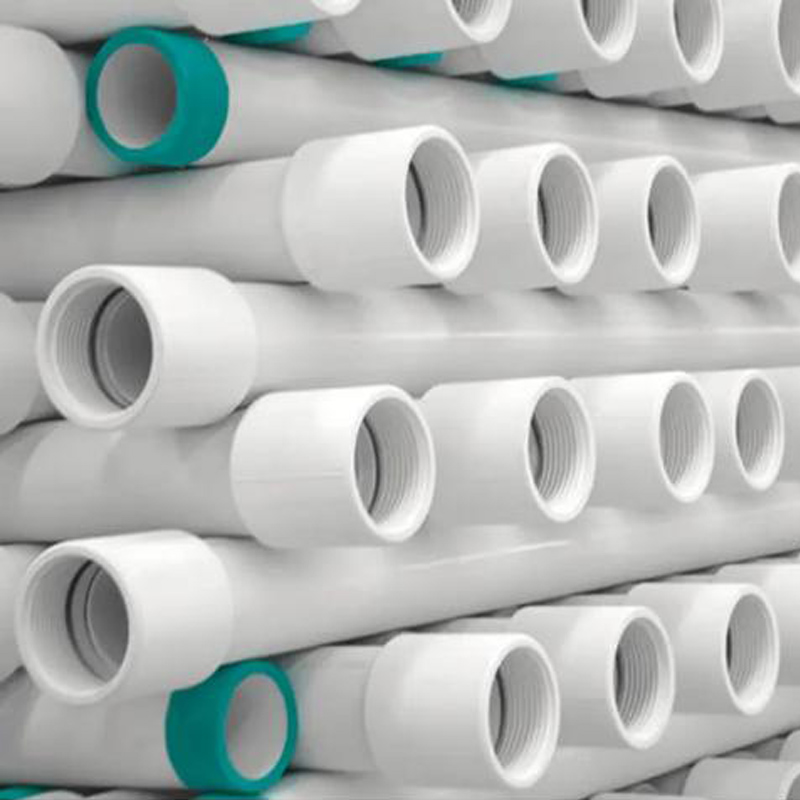
Performance & Engineering
The performance of China PVC tubing is governed by several key engineering principles. Tensile strength, measured in MPa, dictates its ability to withstand axial loads. Impact strength, often assessed using Izod or Charpy tests, determines its resistance to sudden shocks. Hydrostatic pressure rating, expressed in psi or bar, is crucial for applications involving fluid conveyance. Long-term hydrostatic strength (LTHS) is particularly important for water distribution systems, accounting for the effects of creep and temperature on performance over extended periods. Environmental resistance is another critical consideration. PVC exhibits good resistance to acids, bases, and salts, but can be susceptible to degradation by certain organic solvents and UV radiation. UV resistance is often enhanced by adding UV stabilizers to the PVC compound. Furthermore, the tubing’s thermal expansion coefficient must be accounted for in system design to prevent stress concentrations and potential leaks. Compliance with relevant building codes and industry standards (e.g., ASTM D1785 for PVC pipe) is non-negotiable. Force analysis, including hoop stress calculations for pressurized systems, is crucial to ensure structural integrity. Chemical compatibility charts are essential to verify the tubing's suitability for specific fluid applications, preventing material degradation and contamination.
Technical Specifications
| Parameter | Unit | Schedule 40 (Typical) | Schedule 80 (Typical) |
|---|---|---|---|
| Outside Diameter | mm | 21.3 | 26.7 |
| Inside Diameter | mm | 17.2 | 21.3 |
| Wall Thickness | mm | 2.05 | 2.7 |
| Tensile Strength | MPa | 55 | 60 |
| Impact Strength (Izod Notched) | kJ/m2 | 5 | 7 |
| Hydrostatic Pressure Rating (23°C) | psi | 450 | 600 |
Failure Mode & Maintenance
China PVC tubing, like any polymeric material, is susceptible to several failure modes. These include: 1) Environmental Stress Cracking (ESC): caused by the combined effects of tensile stress and exposure to certain chemicals; 2) UV Degradation: leading to discoloration, embrittlement, and loss of mechanical properties; 3) Thermal Degradation: resulting in chain scission and reduced strength, particularly at elevated temperatures; 4) Fatigue Cracking: caused by repeated cyclic loading, often occurring at stress concentrations; 5) Chemical Attack: caused by incompatible fluids dissolving or swelling the PVC matrix. Maintenance typically involves regular visual inspections for cracks, leaks, or discoloration. Periodic pressure testing can verify the system’s integrity. Protecting the tubing from direct sunlight and extreme temperatures is crucial to prevent degradation. If chemical exposure is unavoidable, selecting a PVC compound with appropriate chemical resistance is essential. For minor cracks, repair sleeves or couplings can be used. In cases of significant damage, the affected section of tubing must be replaced. Proper jointing techniques (e.g., solvent welding, threaded connections) are critical to prevent leaks and ensure long-term reliability. Preventative maintenance programs, including regular flushing to remove debris and scaling, can extend the service life of the tubing.
Industry FAQ
Q: What are the key differences between Schedule 40 and Schedule 80 PVC tubing, and when should each be used?
A: Schedule 40 PVC tubing has a thinner wall thickness and is suitable for lower-pressure applications, such as irrigation and drainage systems. Schedule 80, with its thicker wall, is designed for higher pressures and more demanding applications, including industrial fluid transfer and chemical processing. The higher schedule number indicates greater pressure-bearing capacity and impact resistance.
Q: How does the type of plasticizer used in PVC tubing affect its long-term performance and environmental impact?
A: Historically, phthalates were commonly used as plasticizers, but concerns regarding their potential health effects have led to a shift towards alternative plasticizers like DINP and DOTP. These alternatives offer improved toxicity profiles but may have slightly different performance characteristics. The type of plasticizer influences the tubing's flexibility, low-temperature performance, and resistance to extraction by certain fluids.
Q: What testing methods are used to verify the chemical resistance of China PVC tubing?
A: Chemical resistance is typically evaluated through immersion testing, where samples of the tubing are exposed to various chemicals for extended periods. Changes in weight, dimensions, tensile strength, and visual appearance are monitored to assess the material’s resistance to degradation. Standard test methods include ASTM D1785 and ISO 17542.
Q: What are the common causes of environmental stress cracking (ESC) in PVC tubing, and how can it be prevented?
A: ESC is caused by the combined effects of tensile stress, exposure to certain chemicals (e.g., chlorinated hydrocarbons, ketones), and temperature. Prevention involves selecting a PVC compound with inherent resistance to the specific chemicals involved, minimizing stress concentrations, and avoiding prolonged exposure to damaging substances. Proper installation practices are also crucial to prevent excessive stress on the tubing.
Q: What quality control measures should be implemented when sourcing PVC tubing from Chinese manufacturers?
A: Implementing rigorous quality control measures is essential. This includes conducting thorough factory audits, requesting material test reports (MTRs) for each batch, performing independent laboratory testing, and establishing clear acceptance criteria based on relevant industry standards. Focus should be given to verifying the consistency of material properties, dimensional accuracy, and compliance with safety regulations.
Conclusion
China PVC tubing remains a dominant force in the global market due to its cost-effectiveness and versatility. However, ensuring consistent quality and adhering to stringent industry standards is paramount. A comprehensive understanding of the material science, manufacturing processes, and potential failure modes outlined in this guide is essential for engineers, procurement managers, and end-users. The selection of appropriate PVC compounds, coupled with meticulous quality control and proper installation practices, will maximize the tubing’s performance and longevity.
Future developments in PVC technology will likely focus on the incorporation of bio-based plasticizers, the development of more durable and UV-resistant formulations, and the implementation of advanced recycling technologies to minimize environmental impact. Furthermore, the increasing demand for high-performance PVC tubing in specialized applications will drive innovation in materials and manufacturing techniques, solidifying its position as a critical component in numerous industries.
-
DN25 HDPE Compression Fitting-HORON INTERNATIONAL|Reliable Irrigation Solutions
NewsFeb.11,2026
-
discount hdpe pipe size chart pdf Performance Analysis
News2026-06-18
-
discount water supply line under sink Performance Analysis
News2026-06-18
-
discount ppr pipe 1 2 price Performance Analysis
News2026-06-18
-
discount ppr pipe 3 4 price Performance Analysis
News2026-06-18
-
discount grey pvc pipe Material Performance
News2026-06-18
-
discount ppr 3 4 price Performance Analysis
News2026-06-17
-
discount hdpe pipe connectors Material Performance
News2026-06-17
-
discount submersible column pipe Performance Analysis
News2026-06-17
-
discount ppr flexible pipe Performance Analysis
News2026-06-17
-
discount column pipe for submersible pump Performance Analysis
News2026-06-17
-
china flexible pvc tubing Performance Analysis
News2026-06-16
-
china water pipe kitchen sink Material Performance
News2026-06-16
-
china upvc column pipes for submersible pumps Performance Analysis
News2026-06-16
-
china 36 hdpe corrugated pipe Manufacturing Analysis
News2026-06-16
-
china kitchen sink water pipe Performance Analysis
News2026-06-16