

Feb . 11, 2026 00:01 Back to list
china type of hdpe pipe Technical Performance Analysis

Introduction
High-Density Polyethylene (HDPE) pipe, commonly manufactured in China, represents a significant segment of the global plastic piping industry. Positioned within the infrastructure supply chain, specifically for fluid and gas transport, Chinese-manufactured HDPE pipe has gained prominence due to cost-effectiveness and increasing quality standards. This guide provides an in-depth technical overview of these pipes, encompassing material science, manufacturing processes, performance characteristics, potential failure modes, and relevant industry standards. Core performance attributes include high chemical resistance, durability, flexibility, and a long service life, making them suitable for a wide range of applications, including water distribution, gas transmission, sewage systems, and industrial processes. A key industry pain point involves discerning genuine HDPE meeting rigorous specifications from lower-quality imitations, necessitating a thorough understanding of material composition and manufacturing controls.
Material Science & Manufacturing
Chinese HDPE pipes are primarily composed of polyethylene resin, typically sourced from ethylene obtained through steam cracking of ethane or naphtha. The resin’s density, generally ranging from 0.93 to 0.97 g/cm³, dictates its mechanical properties. Higher density corresponds to increased stiffness and tensile strength. Additives such as carbon black are often incorporated for UV resistance, while stabilizers (e.g., hindered amine light stabilizers - HALS) enhance long-term durability. Manufacturing typically employs extrusion processes. Raw HDPE pellets are fed into an extruder, melted, and forced through a die to create a continuous pipe. Crucial parameters during extrusion include melt temperature (typically 180-210°C), die pressure, and cooling rate. Butt fusion, electrofusion, and socket fusion are common joining techniques. Proper weld parameter control – temperature, pressure, and dwell time – is critical for achieving joint strength equivalent to the pipe body. Variations in resin molecular weight distribution (MWD) and the degree of short-chain branching significantly impact processability and final product performance. Poor control of these parameters can lead to pipe wall thickness inconsistencies and reduced long-term hydrostatic strength. Quality control often involves hydrostatic testing to verify pressure resistance and dimensional checks to ensure compliance with standards.
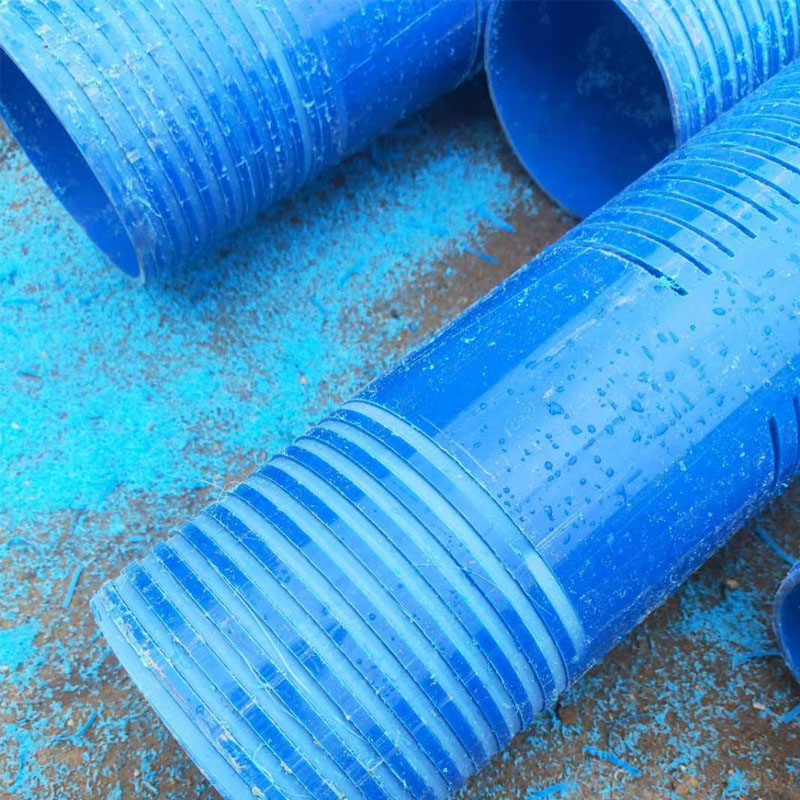
Performance & Engineering
The performance of Chinese HDPE pipe is governed by several engineering principles. Hydrostatic strength, determined by the hoop stress formula (σ = PD/2t, where P is pressure, D is diameter, and t is wall thickness), is a primary design consideration. Sustained Pressure Rating (SPR) and Pressure Surge Capacity (PSC) are vital performance metrics. The ductile nature of HDPE allows for some degree of deformation under stress, but exceeding the material’s yield strength can lead to creep rupture over time. Environmental stress cracking (ESC) is a significant concern, particularly in applications involving exposure to aggressive chemicals or sustained tensile stress. The pipe’s flexibility enables it to accommodate ground movement and thermal expansion/contraction. This flexibility is quantified by the pipe’s bending modulus. For buried pipelines, soil loading and backfill compaction are critical factors influencing pipe performance. Proper bedding and backfill materials are essential to prevent excessive stress concentrations. Compliance with relevant codes and standards (see section 7) ensures structural integrity and safe operation. The long-term performance also depends on UV stability, which is why carbon black is frequently added as a UV inhibitor. Lack of adequate UV protection will lead to embrittlement and cracking.
Technical Specifications
| Parameter | Unit | Typical Value (DN/ID 110mm, SDR17) | Testing Standard |
|---|---|---|---|
| Outside Diameter | mm | 126.4 | GB/T 5817 |
| Inside Diameter | mm | 110 | GB/T 5817 |
| Wall Thickness | mm | 7.7 | GB/T 5817 |
| SDR (Standard Dimension Ratio) | - | 17 | GB/T 5817 |
| Hydrostatic Stress Rating (20°C) | MPa | 12.4 | ISO 1167 |
| Long-Term Hydrostatic Strength (50 years, 20°C) | MPa | 8.26 | ISO 1167 |
Failure Mode & Maintenance
Common failure modes in Chinese HDPE pipe include slow crack growth (SCG) induced by sustained tensile stress and aggressive environments, particularly in areas with poor weld quality. Environmental Stress Cracking (ESC) caused by contact with certain chemicals can also lead to brittle failure. Fatigue cracking can occur under cyclic loading, especially at stress concentrators like fittings or joints. Oxidation, accelerated by high temperatures and exposure to oxygen, degrades the polymer matrix. UV degradation causes surface embrittlement and cracking if sufficient UV stabilizers aren't present. Ground movement can induce bending stresses exceeding the pipe’s allowable limits, resulting in cracking or joint separation. Maintenance strategies include regular visual inspections for cracks, leaks, and deformations. Non-destructive testing (NDT) methods, such as ultrasonic testing, can detect subsurface flaws. Proper jointing procedures, including thorough surface preparation and accurate weld parameter control, are crucial for preventing joint failures. Backfilling procedures should minimize stress concentrations. For applications involving aggressive chemicals, selecting HDPE grades with enhanced chemical resistance is essential. Periodic pressure testing can identify leaks and assess the pipe's overall integrity. Regular cleaning to remove internal deposits can also prolong service life.
Industry FAQ
Q: What is the impact of varying molecular weight distribution (MWD) on the long-term creep resistance of HDPE pipe?
A: A broader MWD generally improves creep resistance. Higher molecular weight fractions contribute to increased chain entanglement, hindering polymer chain slippage under sustained stress. However, excessively broad MWD can also increase melt viscosity, making processing more difficult. Chinese manufacturers often balance MWD to optimize both processability and long-term performance.
Q: How does the level of carbon black pigmentation affect the UV resistance of HDPE pipe, and what are the trade-offs?
A: Higher carbon black content provides greater UV protection by absorbing harmful UV radiation. However, excessive carbon black can reduce the pipe's flexibility and potentially affect its weldability. The optimal carbon black loading is a balance between UV protection, mechanical properties, and processing requirements.
Q: What are the specific challenges associated with joining HDPE pipe in cold weather conditions?
A: Cold temperatures increase the viscosity of the HDPE, making it more difficult to achieve complete fusion during butt or electrofusion welding. This can result in weaker joints. Preheating the pipe and fittings is crucial to ensure proper fusion. Additionally, the cooling rate is slower in cold weather, potentially leading to increased residual stresses in the weld.
Q: What are the common causes of pinhole leaks in HDPE pipe, and how can they be prevented?
A: Pinhole leaks can be caused by contamination during the extrusion process, small imperfections in the resin, or localized overheating during welding. Preventing contamination, ensuring proper resin quality control, and carefully controlling welding parameters are critical for minimizing pinhole leaks.
Q: How do different soil types impact the long-term performance of buried HDPE pipe, and what mitigation strategies are recommended?
A: Aggressive soils (e.g., those with high clay content or high acidity) can accelerate corrosion of metallic components associated with the pipeline or contribute to external stress. Poorly compacted backfill can lead to uneven loading and stress concentrations. Mitigation strategies include selecting appropriate bedding materials, providing adequate soil cover, and utilizing corrosion protection measures for metallic components.
Conclusion
Chinese-manufactured HDPE pipe offers a cost-effective and durable solution for a wide range of fluid and gas transport applications. Understanding the intricacies of material science, manufacturing processes, and performance characteristics is crucial for ensuring long-term reliability. Careful attention to weld quality, environmental factors, and proper installation practices is essential to mitigate potential failure modes.
Continued advancements in HDPE resin technology and extrusion techniques are expected to further enhance the performance and longevity of these pipes. Adherence to international standards and rigorous quality control procedures will be paramount in maintaining the growing reputation of Chinese HDPE pipe within the global infrastructure market.
-
DN25 HDPE Compression Fitting-HORON INTERNATIONAL|Reliable Irrigation Solutions
NewsFeb.11,2026
-
discount hdpe pipe size chart pdf Performance Analysis
News2026-06-18
-
discount water supply line under sink Performance Analysis
News2026-06-18
-
discount ppr pipe 1 2 price Performance Analysis
News2026-06-18
-
discount ppr pipe 3 4 price Performance Analysis
News2026-06-18
-
discount grey pvc pipe Material Performance
News2026-06-18
-
discount ppr 3 4 price Performance Analysis
News2026-06-17
-
discount hdpe pipe connectors Material Performance
News2026-06-17
-
discount submersible column pipe Performance Analysis
News2026-06-17
-
discount ppr flexible pipe Performance Analysis
News2026-06-17
-
discount column pipe for submersible pump Performance Analysis
News2026-06-17
-
china flexible pvc tubing Performance Analysis
News2026-06-16
-
china water pipe kitchen sink Material Performance
News2026-06-16
-
china upvc column pipes for submersible pumps Performance Analysis
News2026-06-16
-
china 36 hdpe corrugated pipe Manufacturing Analysis
News2026-06-16
-
china kitchen sink water pipe Performance Analysis
News2026-06-16