Introduction
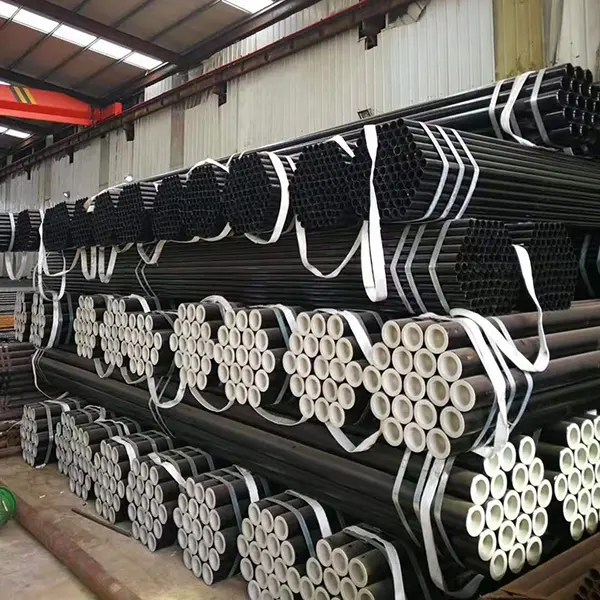
Carbon steel seamless pipes are critical components in a wide range of industries, including oil and gas, petrochemicals, construction, and power generation. Distinguished by their manufacturing process—extruded or drawn without a weld seam—they offer superior strength, pressure-bearing capacity, and resistance to corrosion compared to welded pipes. This guide provides an in-depth technical overview of carbon steel seamless pipe manufacturing, material properties, performance characteristics, failure modes, and relevant industry standards, targeted at engineers, procurement professionals, and quality assurance personnel. The core performance aspects revolve around maintaining structural integrity under high pressure and temperature, ensuring reliable fluid transport, and minimizing the risk of catastrophic failure. A key industry pain point is maintaining consistent material properties across varying pipe diameters and wall thicknesses, impacting weldability and long-term operational safety. Addressing this requires stringent quality control throughout the manufacturing process and comprehensive material certification.
Material Science & Manufacturing
The primary raw material for carbon steel seamless pipes is carbon steel billets, typically produced via continuous casting. The specific grade of carbon steel (e.g., A53 Grade B, API 5L X52) dictates the chemical composition, primarily varying in carbon content (0.05%-2.1%), manganese (0.04%-1.35%), silicon (0.02%-0.30%), phosphorus (max 0.04%), and sulfur (max 0.03%). Lower carbon content enhances weldability and ductility, while higher carbon content increases strength and hardness. Manufacturing processes generally fall into two categories: hot extrusion and cold drawing. Hot extrusion involves heating the billet to a temperature range of 1100-1300°C and forcing it through a die with a mandrel, creating a hollow pipe. Critical parameters include extrusion temperature, reduction ratio (area of billet to area of pipe), and die angle. Cold drawing further refines the pipe's dimensions and mechanical properties by pulling it through a die at room temperature. This process increases tensile strength and improves surface finish. Parameters controlling cold drawing include drawing force, die lubrication, and reduction percentage per pass. Heat treatment processes like normalizing, quenching, and tempering are often employed post-manufacturing to achieve desired mechanical properties and relieve residual stresses. Precise control of cooling rates during heat treatment is crucial to prevent cracking and distortion. Chemical compatibility with the transported fluid is paramount; selection of appropriate steel grade minimizes corrosion and maintains pipe integrity.
Performance & Engineering
Performance of carbon steel seamless pipes is fundamentally governed by their ability to withstand internal and external pressures, axial loads, bending moments, and thermal stresses. Force analysis typically involves applying principles of thin-walled pressure vessel theory, considering Barlow’s formula (S = (PD)/2t, where S=stress, P=pressure, D=diameter, t=wall thickness) and Lamé’s equations for hoop and longitudinal stresses. Environmental resistance is a critical factor, particularly in applications exposed to corrosive media. Galvanic corrosion can occur when dissimilar metals are in contact, necessitating the use of compatible materials or protective coatings. The design must account for thermal expansion and contraction, especially in high-temperature applications, to prevent stress concentrations and potential cracking. Compliance requirements vary depending on the application and jurisdiction, with standards like ASME B31.3 (Process Piping) and API 5L (Line Pipe) dictating allowable stresses, inspection procedures, and material specifications. Finite element analysis (FEA) is commonly employed to simulate stress distribution under various loading conditions and optimize pipe geometry for maximum performance. Consideration must be given to fatigue resistance, particularly in cyclical loading scenarios, and the potential for stress corrosion cracking (SCC) in the presence of specific corrosive environments.
Technical Specifications
| Parameter | Grade A53 Grade B | Grade API 5L X52 | Grade ASTM A106 Grade C |
|---|---|---|---|
| Outer Diameter (inch) | 0.5 - 8 | 4 - 48 | 0.5 - 10 |
| Wall Thickness (inch) | 0.065 - 0.5 | 0.125 - 1.0 | 0.080 - 0.438 |
| Yield Strength (psi) | 36,000 | 52,000 | 35,000 |
| Tensile Strength (psi) | 58,000 | 65,000 | 58,000 |
| Elongation (%) | 23 | 22 | 22 |
| Hydrostatic Test Pressure (psi) | 600 | 750 | 600 |
Failure Mode & Maintenance
Carbon steel seamless pipes are susceptible to several failure modes, including general corrosion, pitting corrosion, stress corrosion cracking (SCC), fatigue cracking, and erosion-corrosion. General corrosion occurs uniformly over the pipe surface, while pitting corrosion is localized and can lead to rapid penetration. SCC is a particularly insidious failure mode, occurring when tensile stress and a corrosive environment combine. Fatigue cracking initiates from stress concentrators (e.g., welds, dents) and propagates under cyclical loading. Erosion-corrosion results from the combined effect of abrasive particles and a corrosive environment. Regular inspection using non-destructive testing (NDT) methods like ultrasonic testing (UT), radiographic testing (RT), and magnetic particle inspection (MPI) is crucial for detecting flaws and preventing failures. Preventive maintenance includes applying protective coatings (e.g., epoxy, polyethylene), implementing cathodic protection, and ensuring proper fluid filtration to minimize erosion. If cracks are detected, the pipe should be removed from service and either repaired using welding (following stringent welding procedures and post-weld heat treatment) or replaced. Monitoring corrosion rates through coupon testing or electrochemical techniques provides valuable insights into the effectiveness of corrosion control measures. Proper storage and handling are also critical to prevent damage and maintain pipe integrity.
Industry FAQ
Q: What is the primary difference between a seamless pipe and a welded pipe in terms of mechanical properties?
A: Seamless pipes generally exhibit superior mechanical properties, particularly in terms of burst strength and fatigue resistance, due to the absence of a weld seam. The weld seam in a welded pipe introduces a potential point of weakness and can be susceptible to cracking under high stress. However, advancements in welding technology have significantly reduced these disparities, and high-quality welded pipes can often meet the same performance requirements as seamless pipes for many applications.
Q: How does the carbon content in steel affect its susceptibility to corrosion?
A: Generally, higher carbon content increases hardness and strength but reduces corrosion resistance. Carbon forms carbides, which are less noble than iron and promote localized corrosion. Lower carbon steels are more corrosion-resistant but may exhibit lower mechanical strength. Alloying elements, such as chromium and nickel, are often added to carbon steel to enhance corrosion resistance and improve other properties.
Q: What are the typical acceptance criteria for hydrostatic testing of seamless pipes?
A: Hydrostatic testing involves pressurizing the pipe to a specified test pressure (typically 1.3 to 1.5 times the design pressure) for a predetermined duration. Acceptance criteria typically require no visible leaks, permanent deformation exceeding a specified limit (e.g., 0.05% of the outer diameter), or crack initiation. Detailed acceptance criteria are outlined in relevant industry standards like API 5L and ASME B31.3.
Q: How can you identify stress corrosion cracking (SCC) in a carbon steel pipe?
A: SCC often manifests as fine, branched cracks propagating perpendicular to the tensile stress. It requires metallographic examination, often using scanning electron microscopy (SEM), to confirm. Nondestructive testing methods like phased array ultrasonic testing (PAUT) can detect SCC but may require careful calibration and interpretation. Visual inspection may reveal slight discoloration or surface roughening in the affected area.
Q: What is the role of normalizing heat treatment in the manufacturing of seamless pipes?
A: Normalizing is a heat treatment process used to refine the grain structure of the steel, improving its machinability, ductility, and impact toughness. It involves heating the steel to a temperature above its critical transformation range and then cooling it in air. This process reduces internal stresses and homogenizes the material, resulting in a more uniform and predictable mechanical behavior.
Conclusion
Carbon steel seamless pipes remain a foundational material in numerous critical industries due to their inherent strength, durability, and cost-effectiveness. Understanding the nuances of material science, manufacturing processes, and potential failure modes is paramount for ensuring reliable performance and mitigating risks. The ongoing challenge lies in balancing performance requirements with cost considerations and increasingly stringent environmental regulations. Continued advancements in NDT technologies, protective coatings, and corrosion-resistant alloys will further enhance the longevity and safety of these vital components.
Optimizing pipe selection for specific applications requires a detailed understanding of the operating conditions, fluid characteristics, and relevant industry standards. Implementing robust inspection and maintenance programs, coupled with a proactive approach to corrosion control, is crucial for maximizing the lifespan of carbon steel seamless pipe systems. Future trends will likely focus on the development of more sustainable manufacturing processes and the utilization of advanced materials to meet the evolving demands of the energy, infrastructure, and manufacturing sectors.
