
Introduction
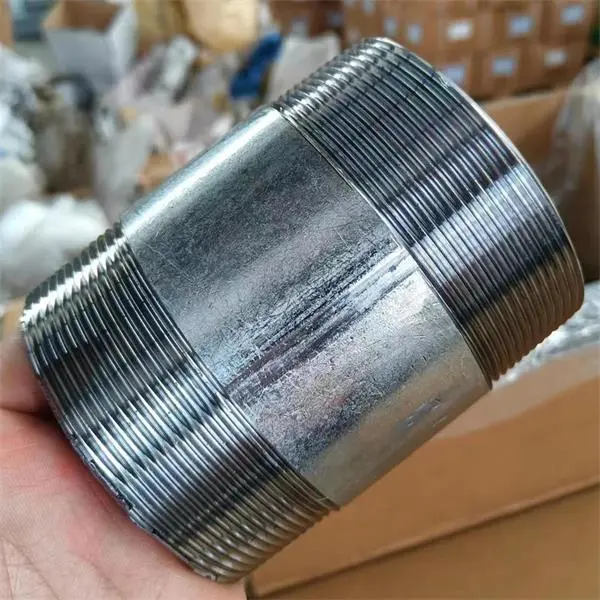
Galvanized corrugated steel pipe (GCSP) is a widely utilized conduit for fluid and gas transport, electrical cabling, and structural support across diverse industries including construction, agriculture, and infrastructure. Positioned as a cost-effective alternative to solid steel pipe and PVC, GCSP comprises a longitudinally formed and spirally wound steel strip, subsequently galvanized to provide corrosion resistance. Its corrugated profile imparts significant bending radius flexibility, easing installation in complex terrains or existing infrastructure. The primary performance characteristics of GCSP are determined by its gauge (steel thickness), galvanization coating weight, and corrugation profile, directly influencing its pressure bearing capacity, structural rigidity, and longevity. This guide provides a comprehensive technical overview of GCSP, encompassing material science, manufacturing processes, performance analysis, failure modes, and applicable industry standards. A key pain point within the industry centers around inconsistent galvanization quality leading to premature corrosion, and accurately predicting long-term performance based on varying installation conditions and transported media.
Material Science & Manufacturing
GCSP begins with a base material typically comprised of low-carbon steel conforming to ASTM A653 or equivalent standards (e.g., EN 10219). Common steel grades include ASTM A653 Grade 33 (0.28% yield strength) and Grade 60 (0.35% yield strength), selected based on the required hoop strength and application demands. The steel strip’s chemical composition dictates its formability, weldability, and susceptibility to corrosion. Key elements influencing corrosion resistance include manganese, silicon, and phosphorus content. Manufacturing commences with slitting the steel coil to the desired width. The strip is then fed through a roll-forming machine where a series of contoured rollers progressively shape the steel into a sinusoidal corrugated profile. This corrugation significantly increases the pipe’s bending flexibility and structural rigidity compared to a smooth-walled pipe of the same gauge. Following corrugation, the pipe is longitudinally welded using either resistance spot welding or a continuous seam welding process, with weld quality meticulously controlled via non-destructive testing (NDT) methods like ultrasonic testing. The critical parameter is ensuring full penetration and consistent weld bead geometry to prevent failure under pressure or stress. Finally, the pipe undergoes hot-dip galvanization, immersing it in a molten zinc bath (typically 98% pure zinc) to create a protective zinc coating. The coating weight, measured in ounces per square foot (oz/ft²), is a crucial determinant of corrosion resistance. Post-galvanization treatments, such as chromate conversion coating, may be applied to enhance corrosion protection, although environmental regulations are increasingly limiting their use. Maintaining consistent zinc bath temperature and immersion time are paramount for achieving uniform coating thickness and adhesion. The galvanization process relies on a metallurgical reaction, creating layers of zinc-iron alloy followed by a pure zinc outer layer.
Performance & Engineering
The performance of GCSP is governed by several engineering principles. Hoop strength, the pipe’s resistance to collapsing under external pressure or internal pressure, is directly related to the steel gauge, corrugation profile, and diameter. Calculations are typically based on thin-walled cylinder theory, considering factors like radial stress and circumferential strain. Bending radius, a critical consideration during installation, is determined by the corrugation geometry and the steel’s ductility. Exceeding the minimum bending radius can induce stress concentrations and lead to kinking or cracking. Environmental resistance is primarily dictated by the galvanization coating. The zinc coating provides sacrificial protection, corroding preferentially to the underlying steel. However, the rate of zinc corrosion is influenced by factors such as pH, chloride concentration, temperature, and exposure to pollutants. In highly corrosive environments (e.g., saltwater, acidic soils), the galvanized coating may deplete over time, necessitating supplementary corrosion protection measures like epoxy coatings or cathodic protection. GCSP must also meet relevant compliance requirements, including those stipulated by DOT (Department of Transportation) for drainage applications, UL (Underwriters Laboratories) for electrical conduit, and NSF (National Sanitation Foundation) for potable water applications. These standards mandate specific testing protocols for pressure resistance, structural integrity, and material compatibility. Force analysis needs to account for axial loads, bending moments, and shear forces during operation. Finite element analysis (FEA) is often employed to simulate stress distributions under various loading conditions, optimizing pipe design and ensuring structural safety.
Technical Specifications
| Diameter (in) | Gauge (AWG) | Zinc Coating Weight (oz/ft²) | Minimum Bending Radius (in) |
|---|---|---|---|
| 4 | 16 | 1.25 | 12 |
| 6 | 14 | 1.5 | 18 |
| 8 | 12 | 1.8 | 24 |
| 10 | 10 | 2.0 | 30 |
| 12 | 8 | 2.25 | 36 |
| 18 | 6 | 2.5 | 48 |
Failure Mode & Maintenance
GCSP is susceptible to several failure modes. Corrosion is the most prevalent, manifesting as localized pitting, uniform thinning, or galvanic corrosion at weld seams. Insufficient galvanization, damage to the coating during handling, or exposure to corrosive environments accelerate this process. Fatigue cracking can occur under cyclic loading, particularly at points of stress concentration like corrugation peaks or weld defects. Delamination of the galvanization coating, often caused by poor surface preparation prior to galvanization, reduces corrosion resistance. Mechanical damage, such as dents or punctures, compromises structural integrity. Joint failures, particularly at couplings, can result from improper installation, excessive load, or material incompatibility. Oxidation of the zinc coating, forming white rust (zinc oxide), while not immediately detrimental, indicates corrosion is occurring. Regular maintenance is crucial for extending the service life of GCSP. Visual inspections should be conducted periodically to identify signs of corrosion, damage, or coating degradation. Damaged coatings should be repaired with zinc-rich paint or re-galvanized. Joints should be inspected for tightness and integrity. In highly corrosive environments, periodic cleaning and application of protective coatings may be necessary. Proper backfilling and compaction around buried GCSP are essential to prevent external loads and promote uniform support. Avoid direct contact between GCSP and dissimilar metals to minimize galvanic corrosion.
Industry FAQ
Q: What is the primary difference between Schedule 40 and corrugated galvanized steel pipe in terms of pressure handling capabilities?
A: Schedule 40 steel pipe is a solid-walled pipe with a defined wall thickness, offering superior pressure handling capabilities compared to GCSP. GCSP's corrugated design, while offering flexibility, reduces its overall structural strength and pressure bearing capacity. Schedule 40 is suited for high-pressure applications, while GCSP is generally used for low to moderate pressure drainage, ventilation, and conduit applications.
Q: How does the soil resistivity affect the corrosion rate of buried GCSP?
A: Lower soil resistivity indicates higher soil moisture and ion content, accelerating the corrosion rate of GCSP. Soils with high chloride or sulfate concentrations are particularly corrosive. Increasing the galvanization coating weight, applying protective coatings, or utilizing cathodic protection are essential mitigation strategies in low-resistivity soils.
Q: What are the limitations of using GCSP for potable water applications?
A: While some GCSP is NSF-certified for potable water, concerns exist regarding zinc leaching and the potential for biofilm formation within the corrugations. Long-term exposure to acidic water can accelerate zinc dissolution. PVC or stainless steel pipe are often preferred for potable water systems where water quality is paramount.
Q: What NDT methods are commonly used to inspect GCSP weld seams?
A: Ultrasonic testing (UT) is the most prevalent NDT method for inspecting GCSP weld seams, detecting subsurface defects like porosity, lack of fusion, and cracks. Visual inspection is also routinely performed to identify surface imperfections. Radiographic testing (RT) can provide a more detailed assessment but is less commonly used due to cost and safety concerns.
Q: Can GCSP be used in direct burial without any additional protection?
A: While GCSP’s galvanization offers some protection, direct burial without supplementary protection is not recommended in aggressive soil environments. Backfilling with non-corrosive materials, applying an external coating (e.g., epoxy), or utilizing a sacrificial anode cathodic protection system are crucial for mitigating corrosion and extending the pipe’s service life.
Conclusion
Galvanized corrugated steel pipe remains a prevalent and cost-effective solution for a broad spectrum of applications, leveraging its inherent flexibility and reasonable corrosion resistance. However, understanding its material properties, manufacturing nuances, and potential failure modes is critical for ensuring long-term performance and structural integrity. Accurate selection of pipe gauge, galvanization coating weight, and appropriate corrosion protection measures, tailored to the specific environmental conditions and application demands, are paramount.
Future advancements in GCSP technology may focus on developing enhanced galvanization techniques, incorporating advanced corrosion-resistant alloys, and implementing smart monitoring systems to detect early signs of degradation. Continued research into the long-term behavior of GCSP in diverse environments will further refine design guidelines and maintenance protocols, solidifying its position as a reliable and sustainable infrastructure component.
