
Introduction
Galvanized ditch pipe, typically manufactured from carbon steel and coated with a zinc layer, serves as a crucial component in subsurface drainage systems for agricultural, residential, and industrial applications. Positioned within the broader civil engineering and drainage infrastructure supply chain, its primary function is to effectively convey water away from sensitive areas, preventing erosion, waterlogging, and structural damage. Core performance metrics center around hydraulic capacity, structural integrity under load, and long-term corrosion resistance. Unlike purely plastic alternatives, galvanized steel offers superior compressive strength, making it suitable for installations subject to heavy surface loads from vehicles or equipment. The service life, however, is heavily dependent on the quality of the galvanization process, soil conditions, and the presence of aggressive chemical compounds. This guide provides a comprehensive technical overview of galvanized ditch pipe, encompassing material science, manufacturing techniques, performance characteristics, failure modes, and relevant industry standards.
Material Science & Manufacturing
The primary raw material for galvanized ditch pipe is typically carbon steel, most commonly AISI 1018 or equivalent, chosen for its balance of strength, weldability, and cost-effectiveness. The steel’s composition includes iron as the base, with controlled amounts of carbon (typically 0.18-0.25%), manganese (0.60-0.90%), and phosphorus and sulfur kept to minimal levels. These elements influence the steel’s ductility and impact resistance. The galvanization process, typically hot-dip galvanizing, involves immersing the steel pipe in a molten zinc bath (98% pure zinc with minor additives like aluminum) at temperatures around 450-460°C. This process creates a metallurgical bond between the zinc and the steel, forming a series of zinc-iron alloy layers followed by a pure zinc outer layer. Critical manufacturing parameters include precise temperature control during the galvanizing process to ensure uniform coating thickness and adhesion. Surface preparation prior to galvanizing is also vital; this usually involves acid pickling to remove mill scale and rust, followed by fluxing to promote zinc adhesion. Pipe forming is usually accomplished through roll forming of steel strips followed by longitudinal seam welding. Welding parameters, specifically heat input and shielding gas composition, influence the weld's strength and corrosion resistance. The galvanizing process must fully encapsulate the welded seam to prevent corrosion initiation. Post-galvanizing inspection includes coating thickness measurement (using non-destructive techniques like magnetic induction), visual inspection for defects (e.g., runs, drips, or incomplete coating), and potentially salt spray testing to assess corrosion resistance.
Performance & Engineering
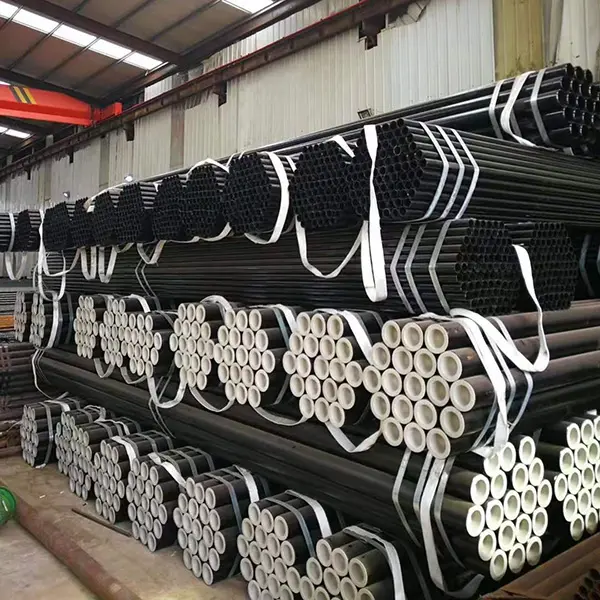
The performance of galvanized ditch pipe is dictated by its ability to withstand both hydrostatic pressure from water flow and external loads from soil overburden and surface traffic. Force analysis focuses on hoop stress in the pipe wall due to internal pressure, bending stress due to soil load, and axial stress due to thermal expansion and contraction. Design calculations utilize formulas derived from thin-walled pressure vessel theory and beam bending equations, incorporating factors of safety to account for material variability and uncertainties in loading conditions. Environmental resistance is paramount; galvanized coating acts as a barrier protection, preventing corrosive elements in the soil from reaching the steel substrate. However, the rate of zinc corrosion is influenced by soil pH, moisture content, chloride concentration, and the presence of sulfate-reducing bacteria. Low pH (acidic soil) and high chloride concentrations accelerate corrosion. Compliance requirements vary by region, but generally involve adherence to standards for pipe dimensions, coating thickness, and structural integrity. For example, in the US, specifications may reference AASHTO M36 or ASTM A760. Functional implementation requires careful consideration of installation slopes to ensure adequate drainage velocity and prevent sediment buildup. Proper jointing techniques, using appropriate couplings and sealants, are essential to maintain hydraulic integrity and prevent leakage. Geotextile filtration fabric is often used around the pipe to prevent soil intrusion and maintain long-term drainage capacity.
Technical Specifications
| Parameter | Unit | Typical Value | Testing Standard |
|---|---|---|---|
| Nominal Diameter | inches | 6, 8, 10, 12, 15, 18 | ASTM D1785 |
| Wall Thickness | mm | 1.5 - 3.0 | ASTM A53 |
| Zinc Coating Thickness | µm | 85 - 140 | ASTM A123 |
| Minimum Yield Strength (Steel) | MPa | 250 | ASTM A53 |
| Minimum Tensile Strength (Steel) | MPa | 400 | ASTM A53 |
| Corrosion Resistance (Salt Spray Test) | hours | >500 | ASTM B117 |
Failure Mode & Maintenance
Galvanized ditch pipe is susceptible to several failure modes. The most common is corrosion, particularly localized corrosion at weld seams or areas with damaged coating. Corrosion can lead to wall thinning and eventual perforation, resulting in leakage and loss of structural integrity. Another failure mode is fatigue cracking, caused by repeated loading and unloading cycles, especially under heavy traffic conditions. This is more likely to occur at stress concentrators, such as bends or connections. Delamination of the zinc coating, caused by poor adhesion during manufacturing or mechanical damage, exposes the steel substrate to corrosion. Hydrogen embrittlement can also occur during the galvanizing process, especially with high-strength steels, reducing ductility and increasing susceptibility to cracking. Maintenance strategies focus on preventative measures and early detection of defects. Regular visual inspections should be conducted to identify areas with damaged coating, corrosion, or signs of deformation. Repairing damaged coating with zinc-rich paint can prolong the service life. For severely corroded sections, replacement is often the only viable option. Maintaining proper drainage slopes and removing sediment buildup can minimize hydrostatic pressure and reduce the risk of fatigue failure. Avoiding the use of aggressive chemicals near the pipe can also prevent accelerated corrosion. Cathodic protection techniques, such as sacrificial anodes, can be employed in highly corrosive environments to provide additional corrosion protection.
Industry FAQ
Q: What is the expected service life of galvanized ditch pipe in typical agricultural soil?
A: The service life varies considerably depending on soil conditions, but a conservatively estimated lifespan in typical agricultural soil is 30-50 years. Factors like soil pH, moisture content, and the presence of fertilizers significantly influence corrosion rates. More aggressive soil conditions can reduce this lifespan considerably, while well-drained, neutral pH soils can extend it.
Q: How does the quality of the galvanizing process affect the pipe's performance?
A: The galvanizing process is critical. Coating thickness, uniformity, and adhesion are paramount. A thicker, more uniform coating provides better barrier protection. Poor adhesion, often resulting from inadequate surface preparation, allows corrosion to initiate beneath the coating. A properly executed hot-dip galvanizing process, meeting ASTM A123 standards, is essential for long-term performance.
Q: What are the limitations of using galvanized ditch pipe compared to HDPE alternatives?
A: HDPE (High-Density Polyethylene) offers superior corrosion resistance and is lighter in weight, making installation easier. However, galvanized steel boasts significantly higher compressive strength, allowing it to withstand heavier loads. Galvanized pipe is also less susceptible to deformation or puncture during installation. The cost is also often lower upfront for galvanized steel.
Q: What is the effect of stray electrical currents on galvanized ditch pipe?
A: Stray electrical currents from nearby underground utilities (e.g., railways, pipelines) can accelerate corrosion through a process called electro-chemical corrosion. This is a significant concern and requires mitigation strategies, such as insulating the pipe or using cathodic protection. Soil resistivity also plays a role; lower resistivity increases the risk of stray current corrosion.
Q: How should galvanized ditch pipe be stored prior to installation to prevent corrosion?
A: Galvanized pipe should be stored in a dry, well-ventilated area, protected from direct contact with the ground or other corrosive materials. Stacking pipes directly on top of each other can cause abrasion and damage the coating. Using wooden spacers or pallets is recommended. Covering the pipes with a waterproof tarp can provide additional protection from the elements.
Conclusion
Galvanized ditch pipe remains a robust and cost-effective solution for subsurface drainage, offering a favorable balance of strength, durability, and corrosion resistance when properly specified and installed. Its performance is intrinsically linked to the quality of the galvanization process, the environmental conditions, and the structural loading it endures. Understanding the material science, manufacturing nuances, and potential failure modes is crucial for ensuring long-term reliability and minimizing maintenance requirements.
Continued advancements in coating technologies, such as the application of supplementary corrosion inhibitors and duplex coating systems (e.g., galvanizing followed by epoxy coating), are expected to further enhance the service life and broaden the application range of galvanized ditch pipe in demanding environments. Careful consideration of soil characteristics, load requirements, and adherence to relevant industry standards are paramount for maximizing the lifespan and minimizing the lifecycle cost of this vital drainage infrastructure component.
