Introduction
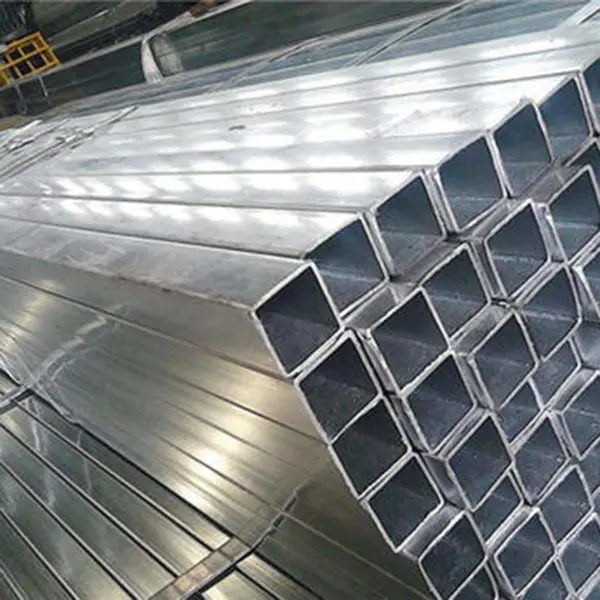
Galvanized driveway pipe, typically manufactured from carbon steel, serves as a critical component in residential and light commercial driveway access systems. Its primary function is to provide a durable and structurally sound transition point where a driveway meets a public roadway, preventing damage to the lawn or landscaping and accommodating vehicular traffic. This guide details the material science, manufacturing processes, performance characteristics, potential failure modes, and maintenance protocols associated with galvanized driveway pipe. Its technical position within the infrastructure chain resides between raw material production (steel and zinc) and final installation by contractors and homeowners. Core performance is defined by load-bearing capacity, resistance to corrosion, and longevity under repeated stress from vehicle passage and environmental exposure. The industry faces persistent challenges including ensuring adequate zinc coating thickness for long-term corrosion protection, maintaining dimensional accuracy to prevent stress concentrations, and mitigating cracking caused by ground movement and heavy loads. Increasingly stringent environmental regulations concerning zinc runoff also present a significant concern.
Material Science & Manufacturing
The base material for galvanized driveway pipe is typically A36 carbon steel, chosen for its balance of strength, weldability, and cost-effectiveness. Its chemical composition generally comprises 0.25-0.35% carbon, 0.60-0.90% manganese, 0.04% phosphorus, and 0.05% sulfur, balanced with iron. The steel's mechanical properties, including yield strength (around 36,000 psi) and tensile strength (around 58,000 psi), dictate its load-bearing capacity. The galvanization process, most commonly hot-dip galvanizing, involves immersing the steel pipe in a bath of molten zinc (98% pure). This creates a metallurgical bond, forming layers of zinc-iron alloy and a final outer layer of pure zinc. The thickness of the zinc coating is critical, typically specified as G90 (0.90 oz/ft2) or G100 (1.00 oz/ft2) according to ASTM A123. Manufacturing involves steel pipe forming via electric resistance welding (ERW) or seamless extrusion. Critical parameters during pipe forming include maintaining consistent wall thickness, minimizing weld seam imperfections (in ERW pipes), and ensuring accurate diameter. Surface preparation prior to galvanizing is paramount; this includes pickling (acid cleaning) to remove mill scale and rust, followed by fluxing to promote zinc adhesion. Cooling rates during galvanizing also impact the microstructure and coating quality. Post-galvanizing inspections assess coating thickness, uniformity, and adhesion via visual inspection, magnetic thickness testing, and salt spray testing (ASTM B117).
Performance & Engineering
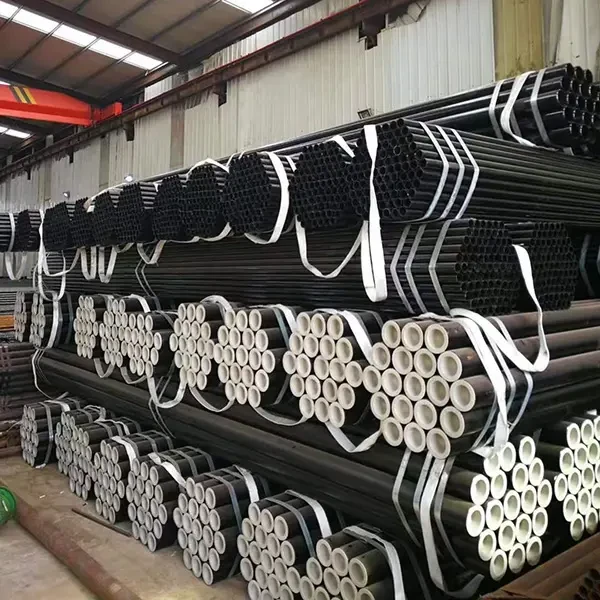
The performance of galvanized driveway pipe is governed by its ability to withstand static and dynamic loads. Load analysis considers both vertical loads from vehicles and potential lateral forces from ground movement or impact. The pipe's cross-sectional geometry (typically circular) and wall thickness are primary factors in determining its bending moment resistance and compressive strength. Finite Element Analysis (FEA) is frequently employed to model stress distribution under various loading scenarios. Environmental resistance is crucial, particularly corrosion protection. The zinc coating acts as a sacrificial anode, corroding preferentially to the steel substrate, thereby preventing rust formation. However, the rate of zinc corrosion depends on environmental factors such as pH, salinity, and temperature. Crevice corrosion can occur in areas where water and debris accumulate, accelerating corrosion. Compliance requirements typically include adherence to local building codes and AASHTO (American Association of State Highway and Transportation Officials) standards for driveway access. Specific considerations include minimum burial depth to prevent frost heave, and proper slope to ensure adequate drainage. The functional implementation relies on a secure connection to the existing stormwater infrastructure and a stable backfill material to prevent settling and movement. Engineers must also account for potential thermal expansion and contraction of the pipe due to temperature fluctuations.
Technical Specifications
| Parameter | Specification (Typical) | Testing Standard | Unit |
|---|---|---|---|
| Nominal Diameter | 18", 24", 30", 36" | ASTM F450 | inches |
| Wall Thickness | 0.188", 0.25", 0.375" | ASTM A53 | inches |
| Minimum Yield Strength (Steel) | 36,000 | ASTM A36 | psi |
| Minimum Tensile Strength (Steel) | 58,000 | ASTM A36 | psi |
| Zinc Coating Thickness | 0.90 - 1.00 | ASTM A123 | oz/ft2 |
| Corrosion Resistance (Salt Spray) | >500 hours | ASTM B117 | hours |
Failure Mode & Maintenance
Common failure modes for galvanized driveway pipe include corrosion-induced weakening, fatigue cracking due to repeated loading, and physical damage from impact or ground movement. Uniform corrosion occurs gradually over time, reducing the pipe's wall thickness and load-bearing capacity. Pitting corrosion, localized and accelerated by contaminants, can lead to perforation. Galvanic corrosion can arise if the pipe is in contact with dissimilar metals. Fatigue cracking typically initiates at stress concentrators, such as weld seams or dents. Ground movement (settling, frost heave) can induce bending stresses exceeding the pipe's yield strength. Maintenance involves periodic visual inspections to identify signs of corrosion, cracks, or deformation. Regular cleaning to remove debris and salt accumulation can slow down corrosion. Application of a zinc-rich paint or coating can provide additional corrosion protection. If significant corrosion is detected, replacement is recommended. For minor damage, localized repairs using welding (performed by a qualified welder) may be possible, but the repaired area should be re-galvanized to prevent corrosion. Backfilling around the pipe with properly compacted, non-corrosive material is crucial to maintain stability and prevent stress. Addressing drainage issues promptly prevents water accumulation and accelerates corrosion.
Industry FAQ
Q: What is the expected service life of a properly installed and maintained galvanized driveway pipe?
A: The service life varies depending on environmental conditions and loading frequency, but typically ranges from 20 to 50 years. In areas with high salinity or acidic soil, the service life will be shorter. Regular maintenance, including cleaning and protective coatings, can significantly extend the lifespan.
Q: What are the advantages of using galvanized steel over plastic (HDPE) for driveway pipes?
A: Galvanized steel offers superior structural strength and rigidity compared to HDPE, allowing for wider spans and heavier loads. It also exhibits greater resistance to impact damage. While HDPE is corrosion-resistant, it lacks the load-bearing capacity of steel and can deform under sustained stress.
Q: How does the quality of the backfill material impact the performance of the driveway pipe?
A: Poorly compacted or corrosive backfill material can lead to settling, instability, and accelerated corrosion. The backfill should be granular, well-drained, and non-corrosive (e.g., gravel, sand). Avoid using clay or organic materials.
Q: What are the common causes of cracking in galvanized driveway pipes?
A: Cracking is often caused by a combination of factors, including excessive loading, stress concentrations (weld seams, dents), ground movement, and fatigue. Improper installation or inadequate support can also contribute to cracking.
Q: How can I assess the remaining service life of an existing galvanized driveway pipe?
A: A thorough visual inspection should be performed, looking for signs of corrosion, cracks, or deformation. Measuring the remaining wall thickness using ultrasonic testing can provide a quantitative assessment of structural integrity. Consulting with a structural engineer is recommended for a detailed evaluation.
Conclusion
Galvanized driveway pipe remains a robust and cost-effective solution for managing driveway-roadway transitions. Its performance hinges on a careful consideration of material selection (A36 steel and appropriate zinc coating), meticulous manufacturing processes (ERW/seamless forming, hot-dip galvanizing), and proper installation techniques. Understanding the potential failure modes, primarily corrosion and fatigue, is critical for implementing effective maintenance strategies.
Future trends may focus on the development of enhanced zinc coatings (e.g., zinc-nickel alloys) offering superior corrosion resistance, as well as improved non-destructive testing methods for assessing the condition of in-service pipes. Furthermore, advancements in polymer composite materials may provide alternative solutions with comparable structural performance and longer service life. Ultimately, a proactive approach to inspection and maintenance is essential for maximizing the longevity and safety of galvanized driveway pipe installations.
