
Introduction
Galvanized drop pipe, typically manufactured from carbon steel and coated with zinc, represents a critical component in fluid transfer systems across numerous industries including plumbing, fire suppression, and industrial processing. Its position within the industry chain lies between steel production and final system installation, functioning as a conduit for liquids and gases. Core performance characteristics center on corrosion resistance, pressure handling capabilities, and structural integrity. The galvanization process, applying a protective zinc layer, fundamentally addresses the inherent susceptibility of carbon steel to corrosion, extending service life and minimizing maintenance requirements. Understanding the nuances of material selection, manufacturing tolerances, and potential failure modes is paramount for ensuring safe and reliable operation. This guide provides a comprehensive technical overview of galvanized drop pipe, covering material science, manufacturing processes, performance engineering, technical specifications, failure analysis, and relevant industry standards.
Material Science & Manufacturing
The foundational material for galvanized drop pipe is typically carbon steel, specifically grades like ASTM A53 Grade B or A106 Grade B. These steels possess a relatively low carbon content, balancing strength with weldability. The key chemical elements influencing performance include carbon (C), manganese (Mn), phosphorus (P), sulfur (S), and silicon (Si). Raw material quality is rigorously controlled through mill certifications verifying chemical composition and mechanical properties. The galvanization process, most commonly hot-dip galvanizing, is central to the pipe’s corrosion resistance. This involves immersing the steel pipe in a molten zinc bath, creating a metallurgical bond between the zinc coating and the steel substrate. The resulting coating comprises distinct layers: the Gamma, Delta, Zeta, and Eta phases, each exhibiting different zinc-iron alloy compositions. Manufacturing involves seamless or welded construction. Seamless pipe, produced through processes like extrusion or piercing, generally offers higher pressure ratings and uniform structural integrity. Welded pipe, utilizing electric resistance welding (ERW) or submerged arc welding (SAW), is more cost-effective but requires stringent quality control of weld seams. Critical parameters during manufacturing include controlled cooling rates post-welding to minimize residual stress, accurate dimensional tolerances to ensure proper coupling, and consistent zinc coating thickness – typically ranging from 0.002 to 0.006 inches (50-150 microns). Post-galvanization, hydrostatic testing verifies the pipe's ability to withstand internal pressure without leakage or deformation. The surface finish post-galvanization is a key determinant of coating longevity, with smooth finishes promoting even distribution and adhesion of protective coatings.
Performance & Engineering
The performance of galvanized drop pipe is governed by several engineering considerations. Force analysis, particularly stress analysis under internal pressure, dictates the allowable operating pressure. According to ASME B31.1, the maximum allowable stress in the pipe wall must remain below the specified yield strength of the steel, considering a safety factor. Corrosion resistance, the primary benefit of galvanization, is dependent on the zinc coating's ability to act as a sacrificial anode, corroding preferentially to the underlying steel. However, this protection is most effective in environments where the zinc remains intact. Exposure to chlorides, sulfates, and acidic conditions can accelerate zinc corrosion. Environmental resistance is further enhanced through the application of supplemental coatings, such as epoxy or polyurethane, providing a barrier against aggressive chemical environments. Compliance requirements, specifically those related to potable water systems, demand adherence to NSF/ANSI 61 standards, certifying the pipe’s suitability for contact with drinking water. The pipe’s rigidity and ability to resist bending moments are critical for maintaining structural integrity during installation and operation. Factors influencing bending resistance include pipe diameter, wall thickness, and support spacing. Finite Element Analysis (FEA) is often employed to optimize pipe design and ensure adequate performance under various loading conditions. Thermal expansion and contraction are also important considerations, particularly in long pipe runs, necessitating the incorporation of expansion joints or flexible connectors to prevent stress concentration and potential failure.
Technical Specifications
| Parameter | ASTM A53 Grade B (Typical) | ASTM A106 Grade B (Typical) | Galvanizing Thickness (Standard) |
|---|---|---|---|
| Material | Carbon Steel | Carbon Steel | Zinc Coating |
| Yield Strength (MPa) | 250 | 250 | N/A |
| Tensile Strength (MPa) | 400 | 400 | N/A |
| Wall Thickness (mm) | Schedule 40: 2.77 - 6.43 | Schedule 40: 2.77 - 6.43 | N/A |
| Outer Diameter (inches) | 1/2" to 12" | 1/2" to 12" | N/A |
| Coating Weight (g/m²) | N/A | N/A | 500-800 (Hot-Dip Galvanizing) |
Failure Mode & Maintenance
Galvanized drop pipe, despite its corrosion resistance, is susceptible to several failure modes. Uniform corrosion, although slow, occurs when the zinc coating is depleted, exposing the underlying steel to the environment. Pitting corrosion, a localized form of corrosion, can initiate at imperfections in the zinc coating or due to chloride attack. Galvanic corrosion can occur when the galvanized pipe is connected to dissimilar metals in the presence of an electrolyte, accelerating corrosion of the less noble metal. Hydrogen embrittlement, a phenomenon where hydrogen atoms diffuse into the steel, can reduce ductility and lead to cracking, particularly in high-strength steels. Mechanical damage, such as impact or excessive bending, can compromise the integrity of the pipe and its coating. Fatigue cracking can develop under cyclical loading, particularly at weld seams. Maintenance strategies include regular visual inspections for signs of corrosion, coating damage, or mechanical stress. Periodic cleaning to remove dirt, debris, and corrosive contaminants is also crucial. For damaged coatings, localized repairs using zinc-rich paints or re-galvanization techniques can extend service life. In areas with high chloride exposure, supplemental coatings or cathodic protection may be necessary. Leak detection programs, utilizing ultrasonic or pressure testing methods, can identify developing leaks before they escalate into major failures. Careful handling during installation and operation, avoiding excessive bending or impact, is essential for preventing mechanical damage.
Industry FAQ
Q: What is the impact of water pH on the lifespan of galvanized pipe?
A: Lower pH (acidic water) significantly accelerates zinc corrosion, reducing the lifespan of the galvanized coating. Maintaining a neutral to slightly alkaline pH is crucial for maximizing corrosion resistance. Water treatment and pH adjustment may be necessary in corrosive water environments.
Q: How does thread sealant affect the corrosion resistance of galvanized connections?
A: Certain thread sealants, particularly those containing chlorides, can accelerate corrosion at threaded connections. It's recommended to use thread sealants specifically formulated for galvanized pipe, such as PTFE tape or non-chloride-containing pipe dope.
Q: What is the difference between Schedule 40 and Schedule 80 galvanized pipe?
A: Schedule 80 pipe has a thicker wall than Schedule 40 pipe, offering higher pressure handling capabilities and increased resistance to mechanical damage. However, it's also more expensive and heavier. The selection depends on the specific application's pressure and structural requirements.
Q: Can galvanized pipe be used for natural gas lines?
A: While previously common, the use of galvanized pipe for natural gas lines is now often restricted or prohibited by many codes and standards due to concerns about internal corrosion and the formation of zinc oxide deposits that can interfere with gas appliance operation. Polyethylene (PE) or black steel pipe are typically preferred for natural gas applications.
Q: What are the best practices for storing galvanized pipe to prevent corrosion during storage?
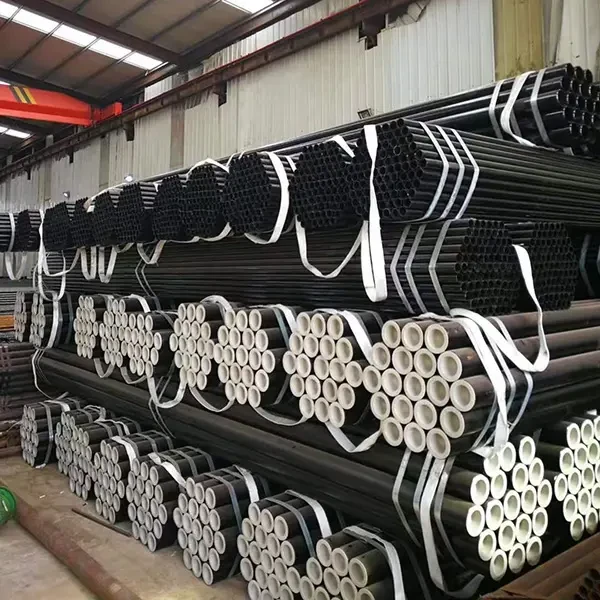
A: Galvanized pipe should be stored in a dry, well-ventilated area, protected from direct contact with the ground. Stacking pipes directly on top of each other can damage the coating; using pallets or spacers is recommended. Covering the pipes with a waterproof tarp can further protect them from the elements.
Conclusion
Galvanized drop pipe remains a widely utilized solution for fluid conveyance due to its cost-effectiveness and inherent corrosion resistance. However, achieving optimal performance and longevity requires a thorough understanding of the underlying material science, manufacturing processes, and potential failure mechanisms. Careful consideration of operating conditions, including fluid chemistry, temperature, and pressure, is paramount for ensuring safe and reliable operation.
Proactive maintenance, including regular inspections and appropriate coating repairs, is essential for maximizing service life and minimizing the risk of failures. As regulations and industry best practices evolve, staying abreast of the latest standards and advancements in corrosion protection technologies will be crucial for maintaining the integrity and efficiency of galvanized piping systems.
