Introduction
Galvanized pipe in concrete represents a widely utilized system for fluid and gas conveyance within building foundations, underground infrastructure, and structural elements. The combination leverages the inherent compressive strength of concrete with the corrosion resistance of galvanized steel. Galvanization, typically employing a zinc coating applied to steel pipe, mitigates corrosion – a primary concern when steel is embedded in the alkaline environment of concrete. This guide provides an in-depth technical analysis of galvanized pipe used within concrete structures, covering material science, manufacturing processes, performance characteristics, potential failure modes, and relevant industry standards. Its application spans across water distribution, drainage systems, and structural supports where longevity and resistance to environmental degradation are paramount. A key industry pain point revolves around the long-term performance prediction of galvanized steel in varied concrete mixes and exposure conditions, coupled with ensuring consistent galvanization quality and appropriate installation practices to maximize service life and minimize premature corrosion.
Material Science & Manufacturing
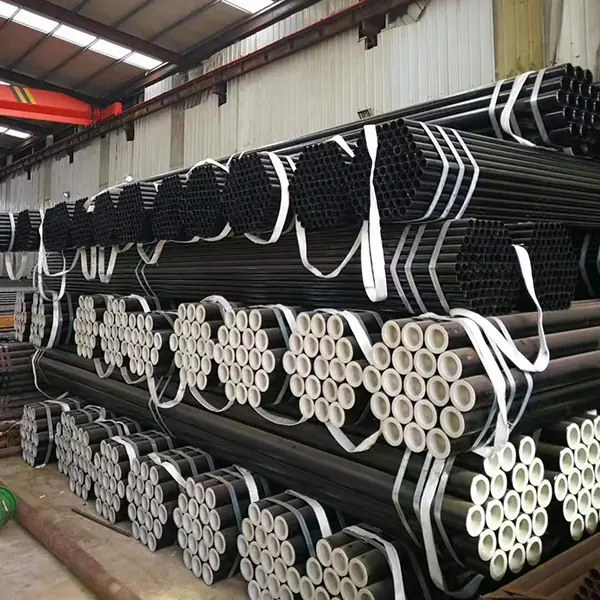
The core material is typically carbon steel conforming to ASTM A53 Grade B or A106 Grade B, selected for its weldability and formability. The galvanization process most commonly employs hot-dip galvanizing, where the steel pipe is immersed in a molten zinc bath (typically 98% pure zinc) at approximately 450°C (842°F). This creates a metallurgical bond forming a series of zinc-iron alloy layers, followed by an outer layer of pure zinc. The resulting coating thickness is a critical parameter, usually specified in terms of zinc coating weight (e.g., G90, G100 representing 0.90 and 1.00 oz/ft² respectively). Concrete itself is a composite material primarily composed of cement, aggregates (sand and gravel), water, and potentially admixtures. The cement hydration process creates calcium silicate hydrate (C-S-H) gel, responsible for concrete's strength. The pH of concrete is generally high (around 12.5-13.5) due to the presence of calcium hydroxide, providing a passive layer for steel reinforcement. Manufacturing tolerances of the pipe (diameter, wall thickness, straightness) as per ASTM F467 are crucial for proper concrete encasement. Parameter control during galvanizing is vital; inconsistent cooling rates can lead to uneven zinc distribution and localized weaknesses in the coating. Pre-treatment of the steel surface (pickling, fluxing) also impacts adhesion and coating quality. Variations in concrete mix design – water-cement ratio, aggregate type, and the use of chloride admixtures – significantly influence corrosion rates and the effectiveness of the galvanized coating.
Performance & Engineering
The primary function of galvanized pipe within concrete is to provide a durable and reliable conduit for fluids or gases while resisting corrosion. The performance is governed by several factors including the concrete’s permeability, chloride ion ingress, oxygen diffusion, and the integrity of the galvanization layer. Force analysis considerations include hydrostatic pressure (for fluid conveyance), external loads from surrounding concrete and soil, and thermal expansion/contraction stresses. Galvanized steel exhibits a coefficient of thermal expansion similar to concrete, minimizing stress concentrations at the interface. The zinc coating acts as a sacrificial anode, preferentially corroding to protect the underlying steel. However, this protection is finite and dependent on the coating thickness and the rate of zinc consumption. Environmental resistance considerations include exposure to sulfates, acids, and de-icing salts, which can accelerate corrosion. Compliance requirements often dictate minimum coating thicknesses, material specifications, and installation procedures. For example, AWWA C219 specifies standards for galvanized steel water pipe. Long-term performance prediction requires modeling corrosion rates based on electrochemical principles and considering the specific environmental conditions. The cover depth of concrete surrounding the pipe is critical; inadequate cover increases the risk of chloride ingress and corrosion. Proper joint design and installation practices are essential to prevent water penetration and localized corrosion at connections.
Technical Specifications
| Parameter | Specification (Typical) | Testing Method | Units |
|---|---|---|---|
| Pipe Material | ASTM A53 Grade B / A106 Grade B | ASTM A53, ASTM A106 | - |
| Galvanization Coating | Hot-Dip Galvanized, G90 / G100 | ASTM A123 | oz/ft² |
| Minimum Coating Thickness | 55 μm (2.2 mils) | ASTM A123 | μm (mils) |
| Yield Strength (Steel) | 250 MPa (36 ksi) | ASTM A53, ASTM A106 | MPa (ksi) |
| Tensile Strength (Steel) | 415 MPa (60 ksi) | ASTM A53, ASTM A106 | MPa (ksi) |
| Concrete Cover (Minimum) | 75 mm (3 inches) | Project Specifications | mm (inches) |
Failure Mode & Maintenance
Several failure modes can affect galvanized pipe in concrete. Uniform corrosion occurs when the zinc coating is consumed evenly, providing limited long-term protection. Pitting corrosion is localized corrosion resulting from defects in the galvanization or the presence of chlorides, creating small holes that penetrate the pipe wall. Crevice corrosion can occur at joints or under deposits, where oxygen depletion leads to localized corrosion. Hydrogen embrittlement can occur under specific conditions where atomic hydrogen diffuses into the steel, reducing its ductility and increasing its susceptibility to cracking. Galvanic corrosion can arise when the galvanized pipe is in contact with dissimilar metals in the concrete, creating a corrosion cell. Fatigue cracking can occur due to cyclic loading, particularly in structures subject to vibrations or dynamic forces. Maintenance strategies include regular inspections for signs of corrosion (visual inspection, electrochemical testing), monitoring concrete permeability, and implementing corrosion mitigation techniques. Protective coatings (epoxy or polyurethane) can be applied to the external surface of the pipe to provide additional barrier protection. Cathodic protection, although less common for embedded pipes, can be considered in highly corrosive environments. Addressing leaks promptly is crucial to prevent further corrosion and structural damage. Repair options may involve patching the pipe with corrosion-resistant materials or replacing the damaged section. Preventing chloride ingress through proper concrete mix design and the use of corrosion inhibitors is a proactive maintenance strategy.
Industry FAQ
Q: What is the expected lifespan of galvanized pipe embedded in concrete, and how does concrete quality influence this?
A: The expected lifespan varies significantly, ranging from 50 to 100+ years, heavily influenced by concrete quality. Higher-quality concrete with a low water-cement ratio, proper consolidation, and the absence of chloride admixtures minimizes corrosion rates and extends lifespan. Conversely, permeable concrete allows for faster chloride ingress and oxygen diffusion, significantly reducing service life. Factors like ground water chemistry and proximity to de-icing salts also play a crucial role.
Q: How does the presence of stray electrical currents affect the corrosion of galvanized pipe in concrete?
A: Stray electrical currents, often originating from nearby DC traction systems or welding operations, can accelerate corrosion through electro-migration. This phenomenon induces a current flow through the pipe, causing metal dissolution at the anode and deposition at the cathode, leading to localized corrosion and potential failure. Proper grounding and bonding practices are crucial to minimize the risk of stray current corrosion.
Q: What are the advantages and disadvantages of using stainless steel pipe versus galvanized pipe in concrete applications?
A: Stainless steel offers superior corrosion resistance compared to galvanized steel, particularly in aggressive environments. However, it's significantly more expensive. Galvanized steel provides a cost-effective solution for many applications where corrosion rates are moderate. Stainless steel is preferred in situations where long-term reliability and minimal maintenance are critical, or where chloride exposure is high.
Q: What role do coatings play in extending the life of galvanized pipe in concrete, and what types are most effective?
A: Coatings serve as a barrier to prevent moisture, chlorides, and oxygen from reaching the steel surface, slowing down the corrosion process. Epoxy and polyurethane coatings are commonly used, offering good adhesion and chemical resistance. The effectiveness of the coating depends on proper surface preparation, application thickness, and the absence of defects. Fusion-bonded epoxy (FBE) coatings are also used, providing excellent corrosion protection.
Q: How important is proper installation, specifically regarding backfill material and compaction, to the longevity of galvanized pipe in concrete?
A: Proper installation is paramount. Poorly compacted backfill can create voids, allowing for differential settlement and stress concentrations on the pipe. Aggressive backfill materials containing chlorides or sulfates can accelerate corrosion. Compaction should be performed in layers to achieve a consistent density and provide adequate support for the pipe. The use of non-corrosive bedding material is highly recommended.
Conclusion
Galvanized pipe continues to be a viable and cost-effective solution for fluid and gas conveyance within concrete structures, offering a balance between corrosion resistance and affordability. However, long-term performance is critically dependent on a holistic consideration of material selection, manufacturing quality, concrete mix design, installation practices, and environmental exposure conditions. Understanding the potential failure modes and implementing appropriate maintenance strategies are essential for maximizing service life and ensuring the structural integrity of the system.
Future advancements in corrosion-resistant alloys, improved galvanization techniques, and the development of self-healing concrete could further enhance the longevity and reliability of embedded piping systems. Continued research into the electrochemical behavior of galvanized steel in concrete, coupled with the adoption of advanced monitoring technologies, will contribute to more accurate performance prediction and proactive maintenance planning.
